MP Assembly Passes UCC Bill 2026 Amid Noisy Protest by Congress

MP becomes 4th BJP-ruled state to pass such legislation
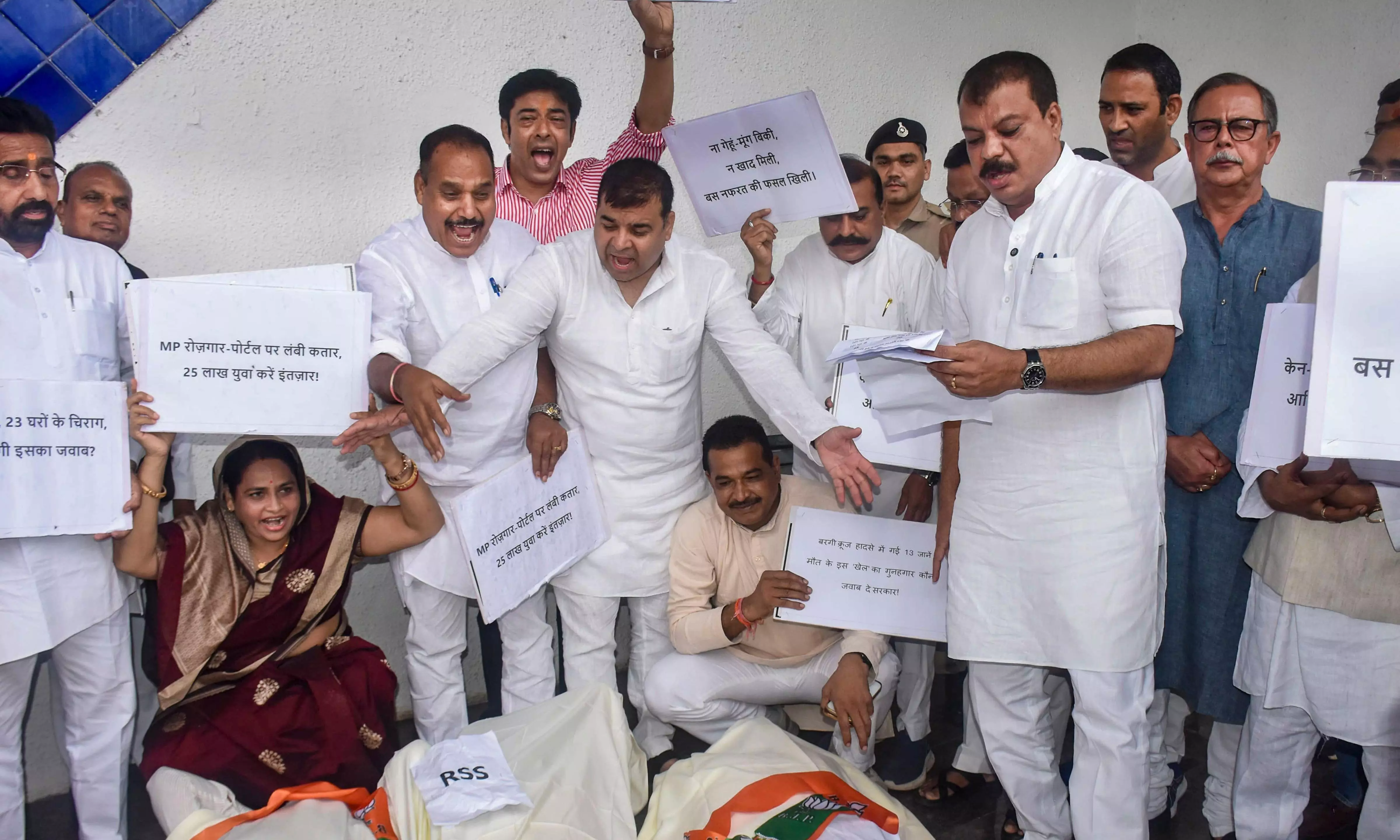
Bhopal: The Madhya Pradesh Assembly on Tuesday passed the MP Uniform Civil Code (UCC) Bill 2026 amid noisy protests by the Opposition Congress.
Madhya Pradesh is the fourth BJP-ruled state after Uttarakhand, Gujarat and Assam to pass such legislation.
The demand by the Congress Legislature Party (CLP) leader Umang Singhar to refer the bill to the select committee was rejected by the government, triggering vehement protests from the Opposition bench.
The bill was passed in the House on a voice vote.
It will be sent to president of India, Draupadi Murmu, for her assent for implementation.
Chief Minister Mohan Yadav said that a ‘golden chapter’ is being written in Madhya Pradesh Assembly by bringing the UCC Bill 2026.
He said that the decision to implement UCC will strengthen equality, social justice and Constitutional values.
The bill will prove to be a milestone for women empowerment, he said.
Accusing the Congress party of double standards over the issue, Mr. Yadav alleged that the Congress party views Hindus and Muslims through two different lenses as vote banks, and the party will pay the price for it.
“The Congress has already disappeared from more than 80 percent of the geographical area of the country due to its minority appeasement policy”, he said.
He said that with the implementation of the bill, there will be no discrimination in the state.
“Religious ceremonies, rituals, traditions and customs of the citizens will be respected and continue as before. There will be no interference in them”, he said.
The Congress, however, alleged that the state government flouted the parliamentary norms by passing the bill.
“Parliamentary norms are not respected while passing the bill”, Congress MLA Arif Masood said.
Instead of passing the UCC Bill, the state government should implement a 27 percent reservation for the other backward classes (OBC), the Congress MLAs said.
The bill prohibits polygamy and makes registration of live-in relations mandatory.
The bill also provides penalties, including imprisonment, for married couples who enter into live-in relationships in spite of their spouses being alive.
