9 Botswana Cheetahs Land in Kuno; India's Total Reaches 48

The cheetahs were shifted to the Kuno National Park from the Gwalior Air Force base in choppers and later released in the quarantine bomas (enclosures) in the Park by Union minister for environment, forest and climate change Bhupendra Yadav.
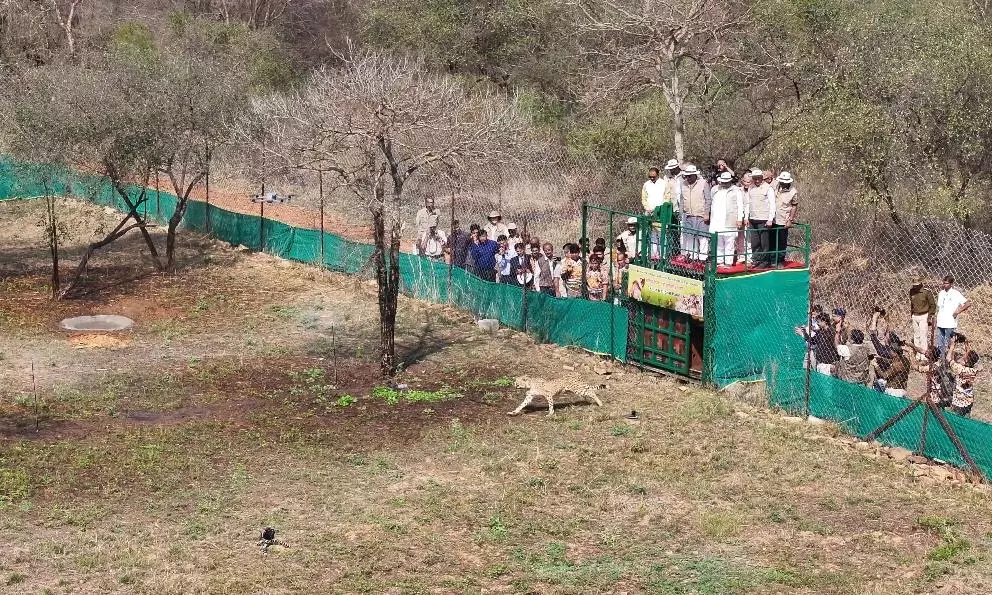
Bhopal: Nine cheetahs from Botswana on Saturday landed in the Kuno National Park in Madhya Pradesh’s Sheopur district, taking the population of the big cats in the country to 48.
This was the third batch of cheetahs translocated from Africa to the Kuno National Park in the past four years under the Project Cheetah.
The nine cheetahs- six females and three males- were transported from Mokolodi Nature Reserve to the Gaborone Airport in Botswana from where they were airlifted to Gwalior Air Force base in Madhya Pradesh in an Indian Air Force special plane in an eight-hour journey.
The cheetahs were shifted to the Kuno National Park from the Gwalior Air Force base in choppers and later released in the quarantine bomas (enclosures) in the Park by Union minister for environment, forest and climate change Bhupendra Yadav.
“After eight cheetahs from Namibia were first reintroduced to India on September 17, 2022, and 12 were brought from South Africa in February 2023, I am thrilled to announce the arrival of nine cheetahs from Botswana- six females and three males- at Madhya Pradesh’s Kuno National Park”, Mr. Yadav said in a post on X.
He added “With a thriving population of 39 cheetahs in India, including 28 India-born cubs, the ambitious Project Cheetah, undertaken under the environment conscious leadership of PM Narendra Modi, has been a great success”.
Sources said that eight cheetahs were first identified in Botswana for translocation to the Kuno National Park. Later, a male cheetah was added in the batch for translocation.
“The cheetahs (translocated from Botswana) will undergo mandatory health monitoring and acclimatization protocols as per established guidelines before their eventual release into the wild”, Field Director, Project Cheetah, Uttam Kumar Sharma, told this newspaper.
The arrival of the third batch of cheetahs from the African continent has improved sex ratio of the big cat population in the Kuno National Park, raising the prospects of boosting the natural reproduction of the species.
With the arrival of nine cheetahs from Botswana, the population of the big cats increased to 45, including 28 India-born cubs, in the Kuno National Park.
Three cheetahs -two males and one female- were earlier shifted to the Gandhi Sagar Wildlife Sanctuary in Madhya Pradesh’s Mandsaur district from Kuno.
Cheetahs went extinct in India in 1952.
