At G7, Modi Pushes Secure Sea Lanes Amid Gulf Crisis

Calls for diplomacy, respect for global law, equal ties
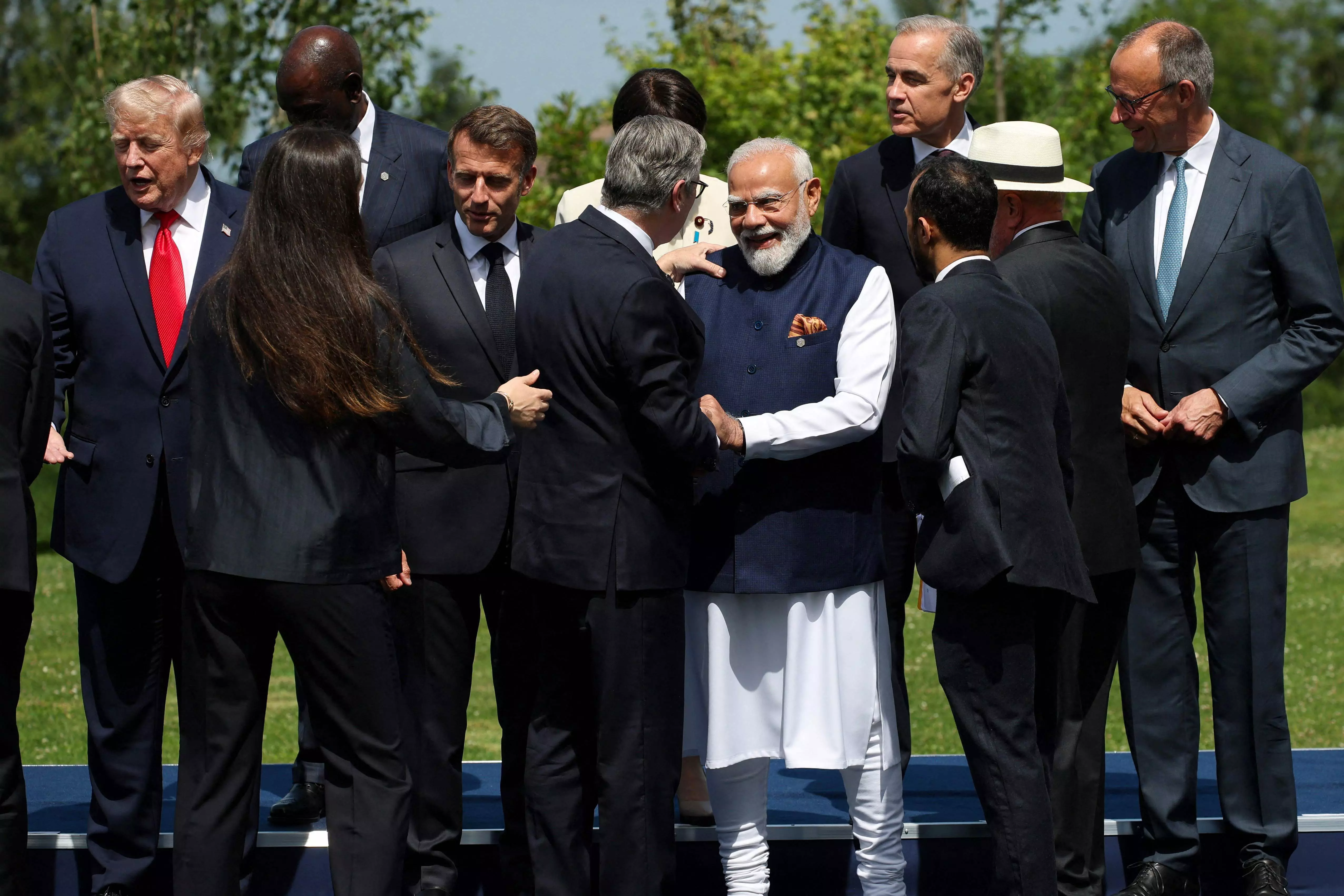
New Delhi: In a thinly veiled message to warring nations in West Asia, including the United States, while speaking at the G-7 summit in France in the presence of US President Donald Trump, Prime Minister Narendra Modi said that it was the collective duty of all to ensure the safety and security of seafarers who connect the world through maritime trade so that they can perform their tasks without fear. He pointed out that Indian civilians have lost their lives in the West Asian conflict.
Addressing the outreach session on “Forging New Partnerships and Rebuilding International Solidarity” at the summit, Modi said India welcomed progress in the West Asia peace talks. He pointed out that the conflict had caused destruction in the region and harmed the global economy through blockage of the Hormuz Straits.
In another strong message on the issue of tariffs, of which the Trump administration has been a leading advocate, Modi remarked that in an uncertain world, trade and technology were being misused for narrow interests, leading to a trust deficit in the international arena.
In an obvious reference to the global strife, Modi said, “Mutual trust is the most important strategic asset today. But, sadly, today, the world does not suffer from a shortage of resources…it suffers from a shortage of trust. And the future of our partnerships depends on rebuilding this trust.”
The Prime Minister stated that lack of respect for international law is the biggest hurdle to building international solidarity and needs to be addressed as a priority, and also emphasised that international partnerships need to prioritise dialogue and diplomacy for ensuring peace and stability, New Delhi said in a statement.
Strengthening its role as the voice of the Global South at the G-7 summit, Modi told the grouping that the Global South “seeks partnership more than support” and that nations “must move beyond the donor-recipient mindset and work as equal partners”. He said “partnerships must be linked to dignity, not dependency”.
“Emphasised that the Global South has immense expectations from the world. More than support, it seeks partnership. We must move beyond the donor-recipient mindset and work as equal partners! We must walk together and not merely alongside one another,” Modi later posted on X.
“Highlighted India’s efforts in Africa, including the focus on training, capacity building, water resources, agriculture and energy. These are strengthening the capacities of African nations and helping them provide solutions to pressing global challenges,” the PM posted.
Highlighting that India had always followed the principle of “humanity first”, the Prime Minister said, “India believes that the true test of partnership is not what we build for others but what we enable others to build for themselves. Our development partnerships reflect the same spirit. Our efforts have focused on capacity building and skill development in partner countries.”
According to the statement, Modi said that this “inclusive approach has led India to be the first responder when natural disasters have struck various parts of the world – be it a cyclone in Sri Lanka, an earthquake in Afghanistan, floods in Mozambique or a hurricane in Jamaica”.
Modi further said, “We, in India, view the world as one family. Our experience shows that development is most effective when it is connected to the aspirations of people. This principle also forms the basis of our international partnerships like the International Solar Alliance, Coalition for Disaster Resilient Infrastructure, Global Biofuels Alliance, Mission LiFE, and ‘Ek Ped Maa Ke Naam’."
