Urges tapping universities for fresh policy ideas
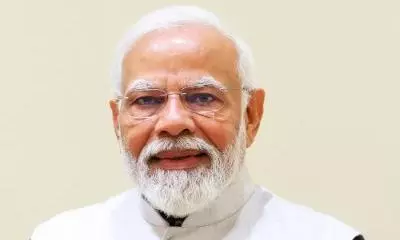
New Delhi: Prime Minister Narendra Modi on Thursday called for greater engagement between government departments, universities and young people to bring fresh and unconventional perspectives to policymaking.
Chairing the third high-level meeting with secretaries to the Government of India at his official residence, Modi discussed the future agenda of ministries and departments dealing with infrastructure and connectivity, security and external affairs, and governance.
Noting that deliberations had already been held with two groups of secretaries, he said officials should look beyond immediate issues and statistics and take a long-term view of how the country’s future should be shaped.
Discussing the challenge of overcoming silos, Modi said they were not merely an organisational problem but also reflected a mindset. Silos could be horizontal or vertical, and officials must take ownership of their responsibilities and work with a sense of belonging, he added.
Emphasising collective effort, the Prime Minister cited the Covid-19 pandemic and the West Asia crisis, during which officials from different departments worked together effectively. Such coordination should become a natural part of the government’s working culture, he said.
Modi called for the effective use of artificial intelligence while retaining human intervention and judgment. He asked officials to explore innovative ways of combining AI’s capabilities with human expertise.
Describing data as a national asset and a resource for the future, he said the government invested heavily in collecting, storing and managing data, but its full potential was not always realised because of departmental silos and fragmented systems.
He pointed to differences in the ways data was collected and managed and called for solutions that would enable greater interoperability and more effective use of information.
Modi also called for greater focus on research and innovation, particularly in defence. He stressed the need to make India’s defence industry more globally competitive, develop innovative defence courses and strengthen human resource development in the sector.
Calling for a comprehensive approach to strengthening India’s maritime sector, he recalled that shipbuilding had been granted infrastructure status and sought an assessment of whether the intended objectives were being achieved in mission mode.
He reiterated the need for India to move from port development to port-led development and called for better connectivity between manufacturing and export-oriented units to maximise the benefits of maritime infrastructure.
The Prime Minister also encouraged senior officers to interact more informally with junior colleagues and build stronger networks across cadres and departments.
He reiterated the need for a whole-of-government approach, closer coordination, innovative thinking and collective ownership to address complex challenges and shape India’s future.