MDR on UPI Transactions May Bring Back Cash Payments

Petrol pump owners across India have threatened to stop accepting UPI payments of ₹2,000 and above if they are forced to pay ₹5 as MDR per transaction.
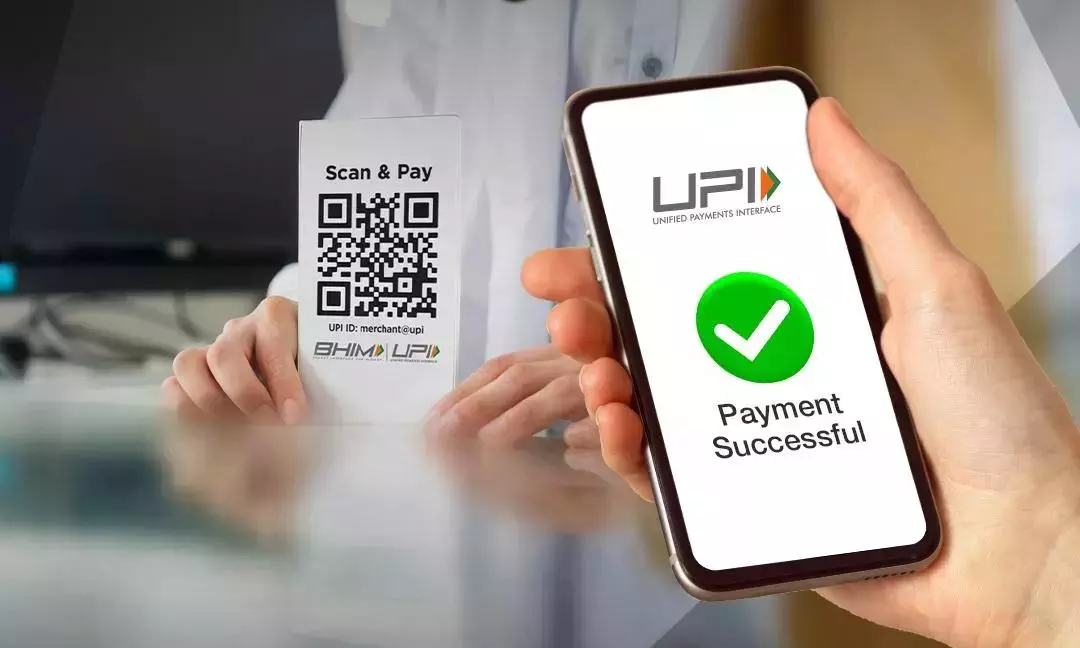
Mumbai: With the government introducing a Merchant Discount Rate (MDR) of 0.4 per cent on UPI transactions above Rs 2,000, traders associations and fuel retailers have announced that they would push for cash payments to avoid additional costs on digital payments.
"Small merchants will now think twice about whether to accept cash or UPI," said Kumar Rajagopalan, CEO, Retailers Association of India.
"During the festive season, a large share of transactions crosses the Rs 2,000 mark, and the moment a fee attaches itself to digital payment, cash becomes the path of least resistance," added Rajagopalan.
The Retailers Association of India is the national body representing India’s retail industry across all channels and formats, from large format and specialty retail to e-commerce, quick commerce, and connected commerce businesses.
In the same vein, petrol pump owners across India too have threatened that they would stop accepting UPI payments of Rs 2,000 and above, if they are forced to pay Rs 5 as MDR per transaction.
They said that they would switch to only cash payments, for any transaction above Rs 2,000.
The All India Petroleum Dealers Association (AIPDA) has requested the government on Wednesday to exempt petroleum retail outlets from any MDR or other transaction charges on UPI payments, particularly for transactions exceeding Rs 2,000. The association said, "Petrol and diesel are essential commodities, and fuel purchases are inherently high-value transactions. Consequently, payments exceeding Rs 2,000 are routine at petrol pumps, making UPI one of the most widely used digital payment modes by customers."
The Association argued that even a seemingly small fixed MDR of Rs 5 on UPI transactions above Rs 2,000 could have a significant cumulative impact.
"Petrol pumps process a very large number of transactions every day, and the multiplication of even a small charge across thousands of transactions would create a significant recurring financial burden.
A percentage-based MDR of up to 0.4 per cent would be even more disproportionate to the economics of petroleum retailing.
The petroleum dealer community has historically raised similar concerns regarding MDR on card-based fuel transactions, and appropriate relief/exemptions have been provided in recognition of the unique nature of fuel transactions.
The same principle should apply to UPI payments for petrol and diesel," it said.
The Akhila Karnataka Federation of Petroleum Traders too has written to the Union government, as well as the state-run Oil marketing companies asking for exemptions for petrol pumps.
They have argued that unlike other retail businesses, petrol pump dealers do not have the freedom to increase the Retail Selling Price of petrol or diesel merely because the cost of accepting a particular digital-payment mode increases.
Santosh Katariya, President, Clothing Manufacturers Association of India (CMAI) said that introducing MDR at the onset of the festive season in India, risks putting further pressure on merchants, retailers and consumer-facing businesses who are already struggling to revive demand and improve margins.
Rajagopalan warned that the MDR charge could undo years of progress in digital payment adoption among India's smallest retailers, just as the festive season gets underway.
For MSME retailers already running on thin margins, that burden creates a straightforward incentive to steer transactions back toward cash. His concern extends past retailer margins.
"Every transaction that slips off the UPI rail and back into cash disappears from the formal trail that feeds GST reporting, the opposite of what a decade of digitisation policy has tried to build.
This cuts against the government's own formalisation agenda," Kumar Rajagopalan said.
The Retailer Association of India (RAI) also pushed back on treating all UPI transactions as one category. "Where UPI is linked to a credit line, a fee is easier to defend, because the cost structure genuinely resembles a credit product.
We urge that the government should bear the cost of normal UPI transactions since it repays the government with GST and traceable transactions instead of cash transactions."
The NPCI on Tuesday announced that effective October 15 an MDR of 0.4 per cent will be introduced on Person-to-Merchant (P2M) UPI transactions above ₹2,000 while high value purchases of ₹75,000 and above will attract MDR fee of ₹300 per transaction.
For specific merchant categories such as railways, telecom services, insurance, and fuel, among others, a flat MDR of Rs 5 per transaction shall be applicable for transactions above Rs 2,000. However, there will be no impact on small-value UPI transactions up to ₹2,000.
