Mahanadi water dispute: Tribunal bench begins ground assessment in Odisha

The Mahanadi water-sharing dispute centres on allegations by Odisha that upstream constructions by Chhattisgarh — including barrages and other water diversion structures — have adversely affected the flow of water into the Hirakud reservoir, particularly during the lean season.
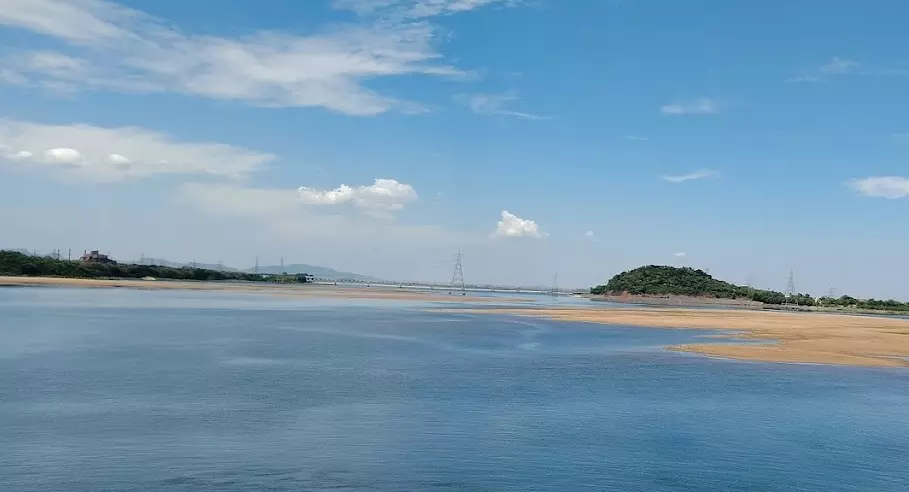
Bhubaneswar: A three-member bench of the Mahanadi Water Disputes Tribunal on Friday began a crucial field assessment in Odisha, marking a significant step in the adjudication of the protracted inter-state river water-sharing dispute with Chhattisgarh.
The bench, led by newly appointed chairperson Justice Bela M. Trivedi, arrived in the state on Thursday. The visit is being closely watched by political and administrative stakeholders, as it signals renewed momentum in proceedings that have stretched on for years.
The tribunal members are scheduled to inspect key river infrastructure, including the iconic Hirakud Dam in Sambalpur district — one of the longest earthen dams in the world and the lifeline of western Odisha. The inspection will cover the right spillway, power house facilities and the extensive command area dependent on the reservoir. The team will also assess conditions at the Chipilima Power House, which plays a vital role in hydroelectric generation downstream of Hirakud.
According to sources familiar with the itinerary, the field visit will focus on evaluating the volume of water reaching Hirakud during the non-monsoon season — a period that has been central to Odisha’s concerns. The tribunal is expected to examine how stored water is being utilised for irrigation, drinking water supply and industrial purposes. Issues relating to upstream river-linking projects and barrages constructed in Chhattisgarh are also likely to come under scrutiny, as these have figured prominently in earlier submissions before the tribunal.
What the Mahanadi dispute is about
The Mahanadi water-sharing dispute centres on allegations by Odisha that upstream constructions by Chhattisgarh — including barrages and other water diversion structures — have adversely affected the flow of water into the Hirakud reservoir, particularly during the lean season. Odisha maintains that reduced inflows threaten irrigation, drinking water supply and industrial needs across several districts.
Chhattisgarh, on the other hand, contends that its projects are within permissible limits and that it is entitled to utilise waters flowing through its territory. With no mutually agreed water-sharing formula in place, the Centre constituted the tribunal in 2018 under the Inter-State River Water Disputes Act to adjudicate competing claims and determine an equitable allocation framework.
The political context has added another dimension to the proceedings. With the Bharatiya Janata Party currently in power at the Centre as well as in both Odisha and Chhattisgarh, speculation has surfaced in political circles about the possibility of a negotiated settlement. However, Odisha’s Advocate General Pitambar Acharya underscored that the state’s position remains firm.
“Whatever is being done is aimed at safeguarding the interests of the people of Odisha. The long-standing dispute will be resolved,” Acharya said.
Beyond official engagements, members of the tribunal are also scheduled to visit the revered Maa Samaleswari Temple in Sambalpur.
The tribunal’s on-ground assessment is expected to inform its evaluation of technical submissions and hydrological data placed on record. Observers believe the findings from this visit could significantly shape the final award on the sharing of Mahanadi waters — a decision with far-reaching implications for agriculture, industry and drinking water security in both states.
