Madhya Pradesh: No Breeding At Gandhi Sagar Leaves Cheetah Experts Puzzled

All the three cheetahs were translocated to the Kuno National Park (KNP) of Madhya Pradesh from South Africa : Reports
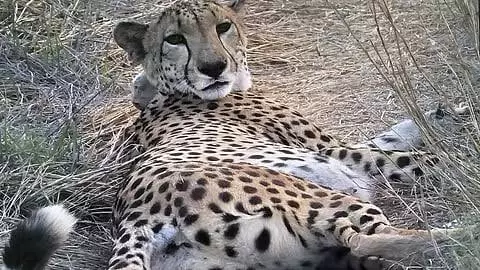
BHOPAL: It has been almost over a year since female cheetah Dheera was released in the Gandhi Sagar Wildlife Sanctuary (GSWS) of Madhya Pradesh to join two male cheetahs, Prabhas and Pavak, but there is no sign of a baby boom in the reserve as yet.
This has left the conservationists puzzled.
All the three cheetahs were translocated to the Kuno National Park (KNP) of Madhya Pradesh from South Africa around four years ago and later relocated to the GSWS in two phases to develop it as the second home of cheetahs in the state.
A Botswanan female cheetah Radha aka CCB-2 was later shifted to the GSWS from the KNP in September this year to boost the prospect of a baby boom and create a metapopulation of the endangered wild cat.
According to a senior forest officer of the GSWS, Dheera and the two male cheetahs, Prabhas and Pavak, are kept in the adjoining separate enclosures.
The other female cheetah, Radha, is also kept in a separate enclosure close to that of the two male cheetahs in the sanctuary.
Dheera was spotted coming close to the two male cheetahs several times and showed signs of ‘interest’ in Pavak as she was sighted making eye contact with him for a long time, the forest officer said.
“There are provisions in the two enclosures to facilitate mating between the female cheetah and a male cheetah. Matings between them have taken place but there is no breeding as yet”, the forest officer told this newspaper, unwilling to be quoted.
“We hope to hear good news of breeding soon”, he added.
The absence of breeding in the second home of cheetahs so far has however puzzled the conservationists.
There are many factors which contribute to breeding in a cheetah habitat, another forest officer closely associated with the Project Cheetah said.
They included a stress-free environment, and a good prey base for the cheetahs in the habitat.
The authorities in the GSWS need to study to find out what is lacking and correct it immediately to ensure breeding in the habitat which is crucial for the expansion of the Project Cheetah, the forest officer said, requesting not to be quoted.
“In the KNP, the cheetah population has more than doubled from 29 to 59 since their introduction four years ago. The breeding took place in the first year of the introduction itself in Kuno. But GSWS is yet to report breeding”, the forest officer said.
Susan Yannetti of the South Africa- based Metapopulation Initiative, explained that there are several possible explanations, including the number and sex of animals present, reproductive compatibility, age, health, stress and opportunities for mating.
It is important to establish whether any biological or management factors may be affecting reproductive success, the cheetah expert said.
She however noted that the GSWS is still in the early stages of establishing its cheetah population and it is premature to draw any conclusion.
Both the male cheetahs of the GSWS have previously sired cubs at Kuno and hence, that makes it important not to jump into conclusions about reproductive failure, she said.