Life Remains Disrupted in Kashmir Amid Protests and Restrictions

The administration announced that precautionary restrictions would remain in force across all districts of Kashmir on Friday as well, citing fresh protests reported from several areas. Officials said the decision was aimed at preventing any escalation and ensuring that the situation remained under control.
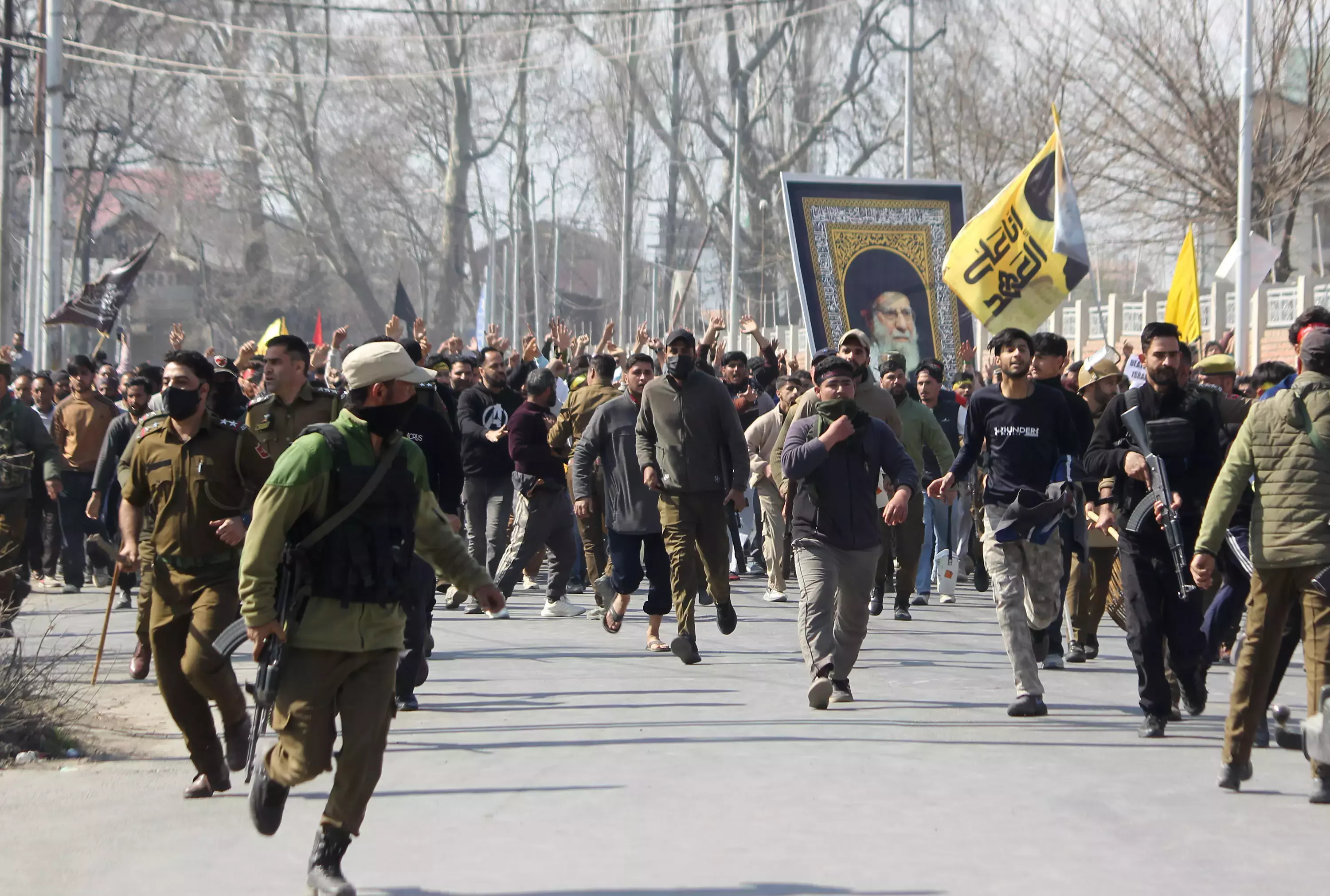
SRINAGAR: Life across the Kashmir Valley remained severely disrupted for the fifth consecutive day on Thursday as sweeping security restrictions, communication curbs, and heightened deployments continued in response to widespread protests over the killing of Iran’s Supreme Leader Ayatollah Ali Khamenei in joint U.S.–Israel airstrikes.
The Valley, along with parts of Jammu and Ladakh—particularly the Shia‑majority Kargil district—had witnessed massive anti‑America and anti‑Israel demonstrations on Sunday, prompting authorities to impose stringent measures in vast Valley areas even though the initial protests were largely peaceful.
The administration announced that precautionary restrictions would remain in force across all districts of Kashmir on Friday as well, citing fresh protests reported from several areas. Officials said the decision was aimed at preventing any escalation and ensuring that the situation remained under control. According to senior officers, the overall atmosphere on Thursday was comparatively calm, but the risk of renewed gatherings—especially after Friday prayers—necessitated continued curbs.
Security forces, including J&K Police and Central Armed Police Forces (CAPFs) personnel, maintained a heavy presence across the Valley. Concertina wires, barricades, and checkpoints were placed at key intersections, while Srinagar’s city centre, Lal Chowk, remained sealed off for the fifth day. The iconic Ghanta Ghar area was declared a no‑go zone after thousands had gathered there on Sunday to mourn Khamenei’s death. This marked the first time since August 2019 that such large‑scale protests had taken place in the heart of the city. In several Shia‑dominated localities, authorities enforced stricter movement controls to prevent processions or marches toward central Srinagar.
Communication restrictions remained a central component of the government’s response. Internet services continued to be suspended or throttled, with mobile data restricted to 2G speeds. Prepaid mobile services—including outgoing calls, data, and SMS—faced intermittent shutdowns. Officials described these measures as essential to curb the spread of rumours and prevent mobilisation through social media. The administration stated that decisions on restoring services would depend on ground assessments in the coming days.
Educational institutions across Kashmir—including schools, colleges, and universities—remained closed, with examinations postponed. Shops and business establishments in many areas stayed shuttered due to both restrictions and public apprehension. Reports from parts of Baramulla and Bandipora indicated sporadic clashes earlier in the week, including stone‑pelting incidents that left several people, including a police officer, injured. Security forces used tear gas and batons to disperse crowds when protests turned confrontational. Dozens of protesters were detained.
Sunday’s demonstrations had spanned Srinagar, Budgam, Bandipora, Baramulla, and even parts of Jammu and Ladakh, where thousands expressed grief and anger over Khamenei’s killing. Protesters at Sonwar submitted a memorandum to the United Nations Military Observers Group for India and Pakistan (UNMOGIP) office demanding international action against the U.S. and Israeli leadership. While the initial gatherings were peaceful, tensions rose after authorities prevented marches toward central Srinagar on Monday, triggering confrontations in some areas.
Political and civil society outreach continued in parallel. Jammu and Kashmir Chief Minister Omar Abdullah held multiple meetings with legislators, religious leaders, and community representatives, urging people to maintain peace while expressing their sentiments in mosques, shrines, and Imambaras.
However, National Conference Lok Sabha member Aga Syed Ruhullah Mehdi sharply questioned the Chief Minister’s remarks, arguing that the demonstrations held on Sunday were entirely peaceful and reflected a collective expression of grief and political sentiment over Ayatollah Khomeini’s killing, not any form of communal discord. In a post on ‘X’, he asked how and when communal harmony had been disturbed by the mourners, and why this was being used as a justification for convening a so‑called group to issue appeals for calm. He challenged the intent behind such messaging, asking whose position the Chief Minister was reinforcing and whether he was allowing himself to become an instrument of the establishment to rationalise actions that, in Mehdi’s view, were unjustifiable.
Mehdi argued that the only meaningful appeal the Chief Minister and the group should have made was for the immediate release of detained youth and the unconditional withdrawal of FIRs filed against them. He noted that it took a journalist’s question for the Chief Minister to even make a brief, reluctant reference to the detentions, and that he failed to raise the issue on his own in his opening remarks. This, Mehdi said, raised a deeper question about representation—whether the elected leadership was truly speaking for the people who had placed their trust in them, or whether it was aligning itself with administrative narratives at the expense of those it was meant to defend.
Officials on Thursday reiterated that the situation was being closely monitored and that restrictions would be reviewed after Friday prayers.
