Legislative, Executive, Judiciary Must Follow Constitution To Avoid Conflict: CJI

The CJI’s felicitation was attended by chief minister Devendra Fadnavis, his deputies Eknath Shinde and Ajit Pawar, Union minister of state for social justice and empowerment Ramdas Athawale among others.
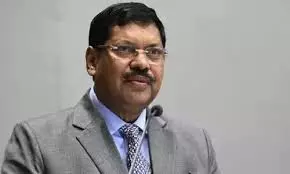
Mumbai: Chief Justice of India (CJI) Bhushan Gavai on Tuesday said that if the Constitution of India is followed by Legislative, Executive and Judiciary, there will be no conflict among all three wings of the Constitution. The CJI made this remark while addressing the members of both the Houses of state legislature. Mr Gavai was felicitated by Maharashtra Legislature.
Earlier in the day, Maharashtra legislature unanimously passed a congratulatory motion to felicitate the CJI Bhushan Gavai on his elevation to the country’s highest Court.
The CJI’s felicitation was attended by chief minister Devendra Fadnavis, his deputies Eknath Shinde and Ajit Pawar, Union minister of state for social justice and empowerment Ramdas Athawale among others.
In his 40 minutes of speech, the CJI spoke on separation of power, fundamental rights, the directive principles of state policy (DPSP) among others topics of the Constitution of India. Addressing the lawmakers, Mr Gavai said, “Legislative, Executive and Judiciary are three pillars of the Indian Constitution….All of them are expected to work in the spheres allotted to them in the Constitution. It is the duty of the Indian Parliament and state legislatures to enact laws for the citizens. The executive will have to work within the framework of the Constitution. The judiciary will examine whether the laws enacted by legislature are within the framework of the Constitution or not,” he said.
Referring to Dr. BR Ambedkar, the CJI said, “Baba Saheb said we all believe in the supremacy of the Constitution. The bifurcation of powers are given in the Constitution for each wing. If the powers are being utilised within the framework of the Constitution, there will be no conflict.”
Speaking on the independence of judiciary, Mr Gavai said that Dr. Ambedkar had emphasised on supremacy of the constitution and believed that the judiciary should be free from interference of the Executive. “On the independence of the judiciary, Babasaheb said that if the country needs to be strong then the judiciary has to work as a watchdog. It is the custodian of the rights of the citizens under the constitution. Therefore, the judiciary should be independent from the Executive interference. Hence, we see that if the constitutional court judge has to be removed then there is a stringent provision — a two third majority of both the houses is required without which such a judge cannot be removed by impeachment,” he said.
The CJI’s remarks came amid the ongoing process of introduction of the impeachment motion against Justice Yashwant Varma, a judge of the Allahabad High Court, in the upcoming monsoon session of Parliament, scheduled from July 21 to August 21. Sacks of burnt currency were allegedly discovered from his house in March 2025.
Quoting Babasaheb Ambedkar, Mr. Gavai said the country got independence after a lot of struggle. If the freedom has to be sustained then the political parties of the country will have to keep aside all the differences including caste and creed and work on how the country would remain united, he said amid applause from the lawmakers.
