Ladakh Shuts Down to Honour Victims of Last Year’s Unrest

Leh and Kargil honour four civilians killed during protests over statehood demands
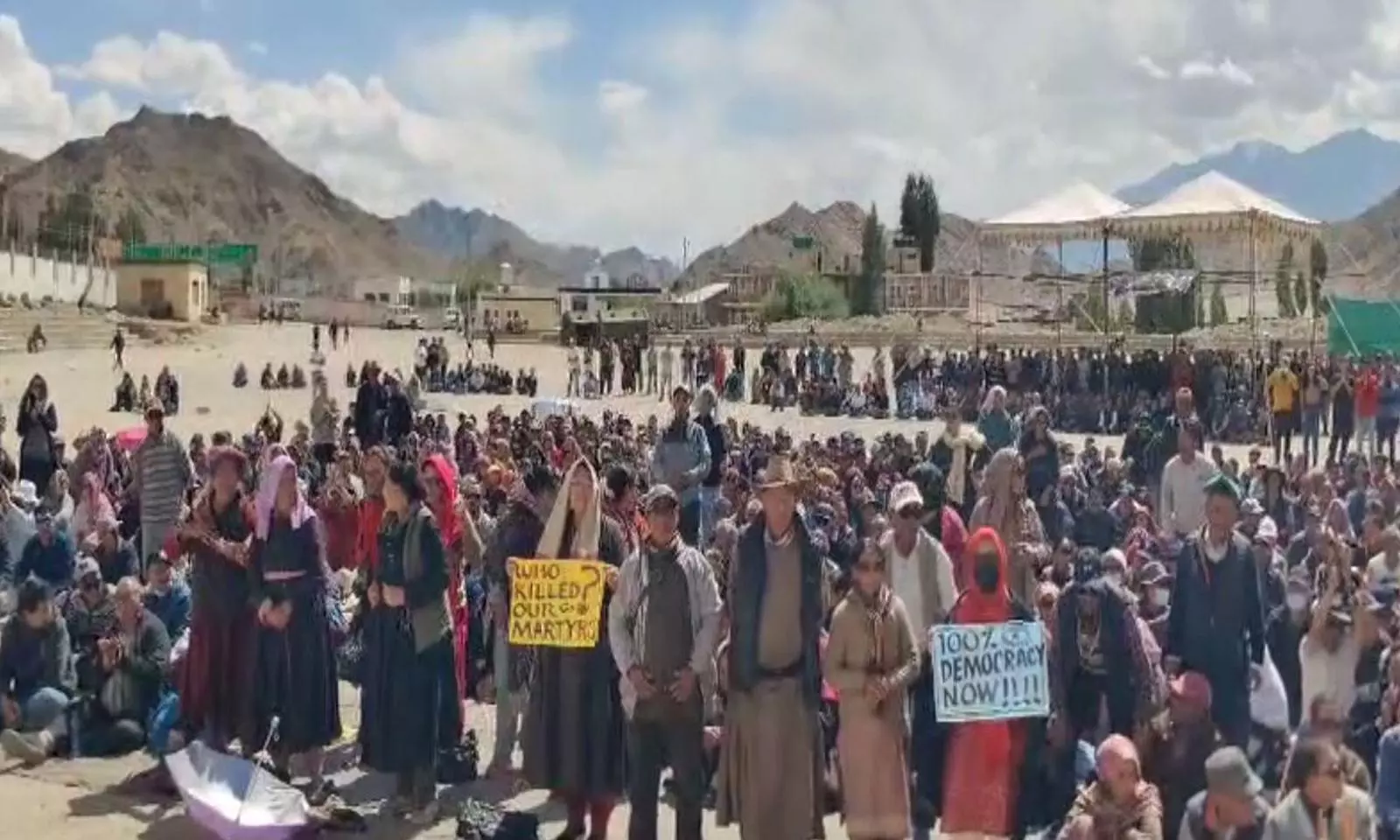
Srinagar: Leh, Kargil and several other parts of Ladakh observed a shutdown on Thursday to commemorate the civilians killed in violent incidents a year ago.
On September 24 last year, Ladakh’s main town was engulfed in turmoil when protests demanding statehood and inclusion under the Sixth Schedule of the Indian Constitution escalated into violence.
The unrest on the streets of Leh, nestled in the western Himalayas and serving as one of the joint capitals of the Union Territory of Ladakh, resulted in four civilian deaths and more than 80 injuries, nearly half of them involving police personnel.
Shops and business establishments remained closed in the two major towns of Leh and Kargil, as well as in neighbouring townships, while only limited transport operated on the roads. Some places saw only a partial shutdown, reports said.
Various local groups and climate activist Sonam Wangchuk had called for the day to be observed as ‘Shaheed Diwas’, or Martyrs’ Day, to pay tribute to those killed. Prayer meetings for the deceased were held at several places, according to a report from Leh.
Ahead of the first anniversary of the violent unrest, Ladakh Lieutenant Governor Vinai Kumar Saxena announced on Wednesday the withdrawal of criminal cases against 20 people.
An official statement issued in Leh described the decision as a significant step towards fostering peace, public tranquillity and social harmony in Ladakh. “He has approved the withdrawal of criminal cases against 20 individuals in connection with the unfortunate violence that erupted in Leh on September 24 last year. The cases have been withdrawn under Section 360 of the Bharatiya Nagarik Suraksha Sanhita (BNSS), 2023, on the recommendation of the Ladakh Police following a comprehensive review of the investigations,” the statement said.
The severe unrest witnessed in Leh on September 24 last year prompted police to register several cases of rioting and arson. Of the 87 accused identified in the rioting cases, 81 were arrested and criminal proceedings were initiated against them. After reviewing the cases, the Ladakh Police recommended the formal withdrawal of charges against 20 people named in FIR No. 144/2005, registered at Police Station Leh. The proposal was sent to the Lt. Governor, who approved it in the “larger interest of peace and public tranquillity.”
Saxena said the decision would enable the 20 individuals, now discharged from the criminal cases, to move forward positively with their lives and careers. “By prioritising justice and healing over protracted litigation, the decision aims to foster a more peaceful, united and harmonious society in Ladakh. I extend my sincere gratitude to Union Home Minister Amit Shah for his constant guidance and sympathetic approach to matters concerning the victims and their families,” he said.
The development came days after the Lt. Governor sanctioned compensation on September 13 of Rs 15 lakh for the next of kin of each of the four people killed in the September 24 violence. He also approved ex gratia assistance of Rs 3 lakh for those who suffered major injuries and Rs 1 lakh for those with minor injuries, reaffirming the administration’s solidarity with the victims and their families as they recover and cope with their loss.
Earlier on Wednesday, Wangchuk led a symbolic padyatra in Leh to commemorate the first anniversary of the September 24, 2025, violence, an episode that continues to shape Ladakh’s political mobilisation. He said the march, organised ahead of Thursday’s Shaheed Diwas, was shortened because of changing weather conditions.
Reports from Leh said that, despite Wangchuk’s presence and participation by members of the Leh Apex Body (LAB), the padyatra drew limited participation from local residents. Organisers said this was intentional, as many people in Ladakh had urged that the commemorative programme be led primarily by locals rather than become a large-scale mobilisation drawing participants from outside the region.
Earlier, Wangchuk wrote on ‘X’ that Ladakh was ‘calling the nation’, saying that its people had always stood for the country and that it was now time for the nation to stand with Ladakh. Wednesday’s symbolic and Thursday’s shutdown followed weeks of fluctuating momentum in Ladakh’s agitation. Earlier this month, the Kargil–Leh Peace and Justice Padyatra—originally planned as a 15-day mobilisation from September 10 to 24—was postponed after fresh talks between representatives of the LAB–Kargil Democratic Alliance (KDA) and the Ministry of Home Affairs (MHA) were announced and held in New Delhi on September 9. Wangchuk described the postponement as a strategic pause to “allow space for dialogue”, while cautioning that the agitation would resume if the Centre resorted to “delays or dilly-dallying tactics”.
The planned march was intended to highlight Ladakh’s four-point agenda- full statehood, Sixth Schedule protections, a robust constitutional framework and the restoration of democratic institutions. It was also scheduled to culminate in a candlelight vigil marking the first anniversary of the 2025 protest deaths.
The September 9 talks, however, failed to produce substantial progress. The MHA later asked the LAB and the KDA to build consensus on eight to ten unresolved issues before the Centre drafted a special constitutional framework for Ladakh under Article 371. Ladakh Chief Secretary Ashish Kundra said discussions had moved towards creating a Union Territory-level elected body, chosen through direct elections and positioned above the panchayats and Hill Development Councils. However, key questions remained about the division of powers between the proposed institution and the existing Ladakh Autonomous Hill Development Councils (LAHDCs), as well as the subjects each body would control.
Kundra also noted that preliminary drafting work had begun, emphasising that no governance model would be imposed and that agreement on core principles must precede legal drafting. The proposed arrangement, he said, aimed to safeguard Ladakh’s land, culture, heritage, environment, mineral resources and jobs, with Article 371 offering stronger and more durable protections than the Sixth Schedule. He clarified that the new body would not amount to statehood but would constitute a sui generis model with legislative, executive and financial powers.
During a recent visit to Leh, Minister of Parliamentary Affairs Kiren Rijiju reiterated the Modi government’s commitment to granting Ladakh a special constitutional provision under Article 371, while noting that Prime Minister Narendra Modi would soon visit Ladakh to review development projects and meet local communities. However, Ladakh’s representative bodies remain firm on their “non-negotiable” demands- full statehood, Sixth Schedule safeguards, the restoration of a legislature, a separate Public Service Commission, job security, early recruitment and separate Lok Sabha constituencies for Leh and Kargil.
