Kolkata Port Starts Night Navigation in Hooghly River

With the introduction of night navigation, the port is expected to witness a notable increase in the number of vessels that can be handled daily, significantly improving berth availability and port throughput.
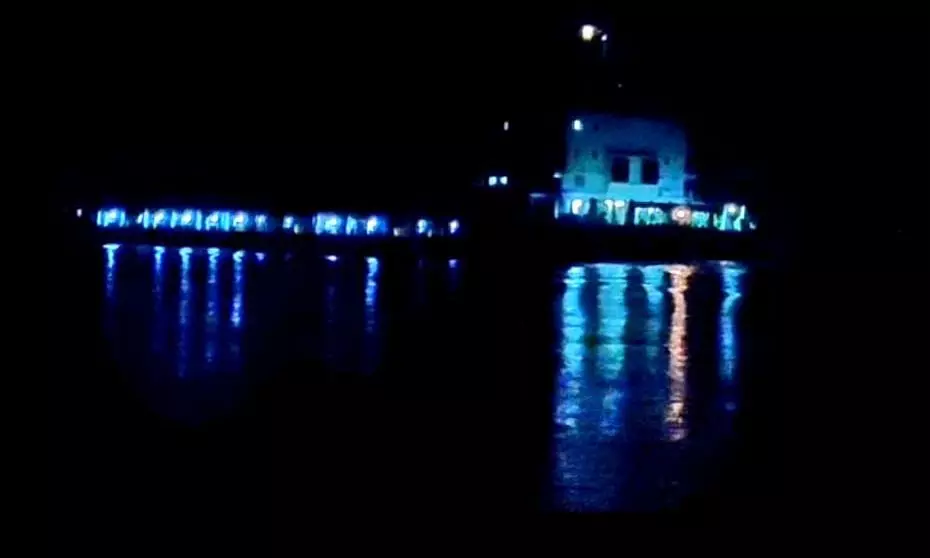
Kolkata: Syama Prasad Mookerjee Port, Kolkata (SMPK) launched night navigation on Saturday in the upper reaches of Hooghly river— from Budge Budge to the sea— a crucial development aimed at reducing turn round time and pre-berthing detention of vessels.
SMPK chairman Rathendra Raman said, “The successful introduction of night navigation in the upper stretches of the river Hooghly is a testament to the scientific and technological approach adopted by the port. It will significantly improve operational efficiency and turnaround time, paving the way for enhanced trade throughput.”
He added, “With further acclimatization of pilots and continuous technological upgradation, we look forward to enabling night navigation for larger vessels with deeper drafts, ultimately transforming SMPK into a more agile and future-ready port.”
The inaugural run, conducted in the early hours today, saw the successful transit of the container vessel M V SinarPenida, with a length overall of 117 meters and a draft of six meters, carrying a cargo quantity of 8000 MT from Budge Budge to the sea during complete darkness. This successful transit marks the beginning of a new era for navigation on the Hooghly.
Historically, the long and meandering 232-km river channel from sea to Kolkata Dock System (KDS), marked by restrictions in navigable depth and strong cross-tidal currents, posed a significant challenge for continuous vessel movement. The absence of night navigation between Diamond Harbour in South 24 Parganas and Kolkata was a longstanding impediment to optimal maritime operations.
Leveraging modern electronic aids like electronic charts and navigational simulators, and backed by significant improvements in navigational infrastructure—including track lights, transit lights and illuminated channel buoys —SMPK has now enabled seamless nighttime vessel transit through the river channel.
The National Technology Centre for Ports, Waterways and Coasts and IIT Madras prepared a comprehensive study and roadmap for night navigation in collaboration with the Port of Antwerp A navigational simulator, jointly installed by IIT Madras and ARI, is now operational to support pilot training and real-time scenario analysis.
With the introduction of night navigation, the port is expected to witness a notable increase in the number of vessels that can be handled daily, significantly improving berth availability and port throughput.
The ability to operate round the clock will decongest the channel, facilitate quicker vessel turnaround, and directly impact critical key performance indicators such as pre-berthing delay, berth occupancy rate and ship-day productivity.
This strategic enhancement is poised to make SMPK a more attractive and competitive hub for global shipping lines, said SMPK deputy chairman Samrat Rahi. The introduction of night navigation is poised to significantly reduce vessel turnaround time, ease river traffic congestion, and enhance overall port efficiency.
