J&K Ramadan Zakat Order Sparks Widespread Political & Community Backlash

However, BJP defends the directive as a “welcome and praiseworthy step”
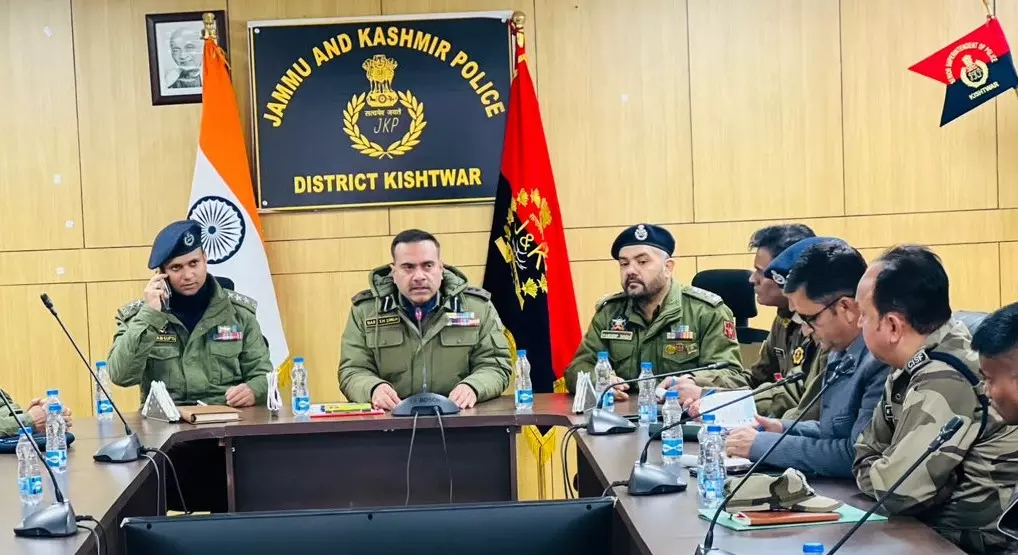
Srinagar: An administrative order issued by the Deputy Commissioner of Jammu and Kashmir’s eastern Kishtwar district to regulate Zakat donations during the Islamic fasting month of Ramadan has rapidly escalated into a major political flashpoint.
The directive—intended, according to officials, to ensure transparency and prevent misuse of charitable funds—has instead drawn sharp criticism from political leaders, religious bodies, and civil society groups, who view it as an insensitive intrusion into the religious affairs of the region’s Muslim majority.
The controversy began after District Magistrate Kishtwar, Pankaj Kumar Sharma, issued a detailed order on February 18 under Section 163 of the Bharatiya Nagarik Suraksha Sanhita (BNSS), 2023. The order mandates strict regulation and monitoring of all charitable collections—including Zakat and Sadaqah—during Ramadan. It stipulates that no individual, NGO, trust, society, or committee may collect donations in cash, kind, or digital form without valid registration and prior written clearance from designated authorities such as the Executive Officer of the Waqf Board Unit Kishtwar, the Imam of Jamia Masjid Kishtwar, the President of the Majlis Shura Committee, or the concerned tehsildars.
The directive further requires authorised collectors to carry identification, registration documents, and official receipt books, while maintaining transparent records of all collections and expenditures. It explicitly prohibits coercive solicitation, harassment, obstruction of public movement, or fraudulent practices. A district vigilance helpline has also been activated to report suspicious activities. While the order acknowledges Zakat and Sadaqah as sacred Islamic obligations, it frames the regulatory mechanism as a safeguard against fraud, misrepresentation, and the potential diversion of funds to unlawful or subversive activities—concerns that security agencies have reportedly raised in recent months.
Senior police and administrative officers, including the Senior Superintendent of Police Kishtwar and all SDMs and Tehsildars, have been instructed to enforce the order strictly. Violations, the administration warned, would invite action under the Bharatiya Nyaya Sanhita (BNS), 2023, and other applicable laws.
Despite these official justifications, the order has triggered strong political reactions. Zakat—calculated as 2.5 percent of a Muslim’s surplus wealth held for a full lunar year above the Nisab threshold—is one of the five pillars of Islam. It is a mandatory act of worship aimed at purifying wealth, reducing inequality, and strengthening community bonds. The Nisab is traditionally based on the value of 87.48g of gold or 612.36g of silver, though some interpretations use 85g of gold or 595g of silver. Sadaqah, by contrast, is a voluntary form of charity rooted in personal piety and compassion, with no fixed rate or restrictions on beneficiaries. Many critics argue that both practices are deeply personal and community-managed, and therefore should remain free from administrative oversight.
Deputy Chief Minister Surinder Kumar Choudhary, responding to the growing uproar, cautioned government officers against overstepping into religious domains. He stressed that matters of faith must be approached with sensitivity and restraint, noting that every religion has its own internal systems and established traditions. While reaffirming the government’s commitment to transparency and accountability, he warned that such objectives should not translate into actions perceived as encroachments on religious freedoms. Officers, he said, must operate strictly within constitutional and administrative boundaries.
Opposition voices have been even more forceful. People’s Democratic Party (PDP) legislator Aga Syed Muntazir Mehdi condemned the order as unconstitutional, arguing that it infringes upon the religious freedoms guaranteed under Articles 25 and 26 of the Constitution of India. He asserted that charitable obligations like Zakat fall squarely within the domain of community-managed religious practice and should not be subjected to arbitrary administrative control. Mehdi described the directive as authoritarian and demanded its immediate withdrawal.
Congress leaders, including former minister Ghulam Ahmad Mir and Nizam-ud-Din Bhat, echoed these concerns, calling the order “unconstitutional,” “provocative,” and “bad in law.” Bhat emphasised that charity in Islam is meant to be discreet—“the left hand should not know what the right hand gives”—and argued that subjecting such acts to administrative scrutiny undermines their spiritual essence. The Congress legislators urged the Chief Minister to revoke the order without delay.
In contrast, the Leader of the Opposition in the J&K Assembly, Sunil Sharma of the BJP, defended the directive as a “welcome and praiseworthy step.” He argued that verification and oversight are essential to prevent the misuse of charitable donations, particularly in a region where anti-national or subversive elements may attempt to exploit religious charity for unlawful purposes.
As the debate intensifies, the order has become a focal point for broader questions about governance, religious autonomy, and the balance between security concerns and constitutional freedoms. With Ramadan beginning in the country including J&K on Thursday, the administration faces mounting pressure to revisit or clarify the directive, even as political and community groups continue to mobilise around the issue.
