J&K Poised For Major Expansion In Hydropower Capacity

Citing external and policy-related constraints, the IPP has sought to withdraw from the project and requested a refund of its premium, he said, adding that the matter is now under review by the J&K Power Development Corporation in line with the Hydro Electric Power Policy of 2011.
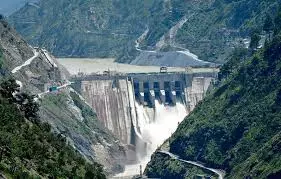
JAMMU: Jammu and Kashmir is on the brink of a significant leap in its hydropower generation capabilities, with the total installed capacity projected to rise to 7,314.85 MW by 2030–31. This ambitious expansion was outlined by Chief Minister Omar Abdullah in the Legislative Assembly, where he detailed the Union Territory’s current energy profile and future development roadmap.
In his written reply to National Conference (NC) legislator Khurshid Ahmad, the Chief Minister noted that J&K presently operates 32 hydropower projects with a combined installed capacity of 3,540 MW. These include 13 Union Territory–sector projects generating 1,197 MW, six central-sector projects contributing 2,250 MW, and 12 private Independent Power Producer (IPP) projects with a cumulative capacity of 92.75 MW. The Chief Minister, who also heads the Power Development Department, emphasised that the government has laid out a comprehensive plan to add 3,704.5 MW through eight proposed and six ongoing hydropower projects scheduled for commissioning between 2026–27 and 2030–31.
According to the projections, the UT will see a capacity addition of 1,685.7 MW in 2026–27, followed by 577.5 MW in 2027–28, 1,370 MW in 2029–30, and 141 MW in 2030–31. These increments will collectively elevate the installed generation capacity to 7,314.85 MW, marking a transformative phase in the region’s energy infrastructure.
Responding to a separate query regarding delays in the Ans (Nandoli) Hydroelectric Project in Gulabgarh constituency, Abdullah explained that the 40 MW project—tendered in 2011–12 and allotted in November 2012—had been hindered by persistent non-performance on the part of the IPP. Although the implementation agreement was finalised in March 2013, progress stalled, prompting the corporation to issue a notice of default in August 2025. The IPP subsequently submitted the Detailed Project Report in October 2025, followed by a financial analysis in January indicating that the project would require a 40-year levelised tariff of ₹7.30 per kWh, rendering it economically unviable under current market conditions.
Citing external and policy-related constraints, the IPP has sought to withdraw from the project and requested a refund of its premium, he said, adding that the matter is now under review by the J&K Power Development Corporation in line with the Hydro Electric Power Policy of 2011.
During the session, Abdullah also addressed concerns regarding rural electrification. He affirmed that all villages in the Jammu division are electrified, either through on-grid or off-grid systems. While no village remains entirely without electricity, he acknowledged that some newly developed habitations or scattered households are yet to be connected. Efforts are underway to electrify these areas under the centrally sponsored DA-JGUA/UT Capex scheme, he said.
The Chief Minister further stated that remote habitations such as Thingen, Kanodi, and Hanok in Billawar remain partially electrified due to earlier cost escalations that led to their exclusion from the sanctioned DPR. Fresh project reports for these areas are now being prepared, and most other unelectrified households in the constituency have already been approved for coverage under the ongoing scheme.
Reiterating J&K's hydropower status, the government informed the Assembly that J&K currently operates 32 hydropower projects with a total installed capacity of 3,540.15 MW. Of these, 13 projects (1,197 MW) fall under the Central Sector, six projects (2,250 MW) under the State Sector, and 13 IPP-operated projects (72.75 MW) contribute the remainder. The government further highlighted that 3,704.5 MW of additional capacity is expected to come online through new and under-construction projects between 2026–27 and 2030–31, reinforcing the UT’s long-term vision of becoming a major hydropower hub in the region.
