J&K Liquor Revenue Surges Past ₹2,100 Crore in Two Years

Cultural and Religious Factors Behind Valley’s Low Alcohol Use: Reports
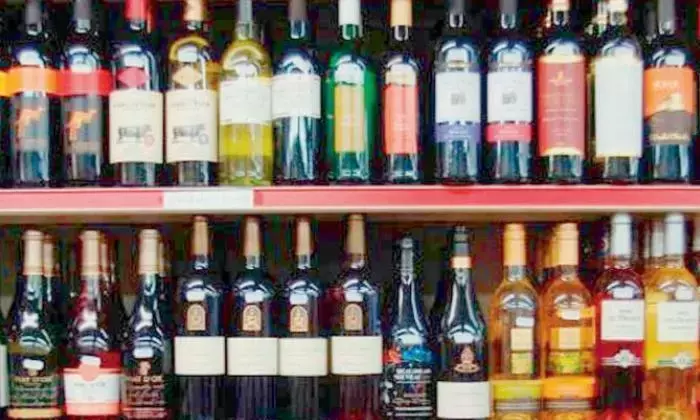
JAMMU: Jammu and Kashmir generated approximately ₹2,152 crore in revenue from the auction of liquor shops over the past two financial years.
However, despite this substantial income, the administration has clarified that it has no proposal to open new wine shops during the 2026–27 financial year.
According to the Finance Department, revenue collections stood at ₹1,03,462.49 lakh in 2023–24 and rose to ₹1,11,816.07 lakh in 2024–25, reflecting a steady upward trend.
A closer look at the figures reveals a stark regional contrast. The Jammu division contributed the overwhelming majority of the revenue—₹1,96,830.06 lakh over the two years—while the Kashmir division accounted for ₹18,448.50 lakh. This disparity is consistent across districts. Jammu district alone generated ₹48,350.15 lakh in 2023–24, increasing to ₹50,913.93 lakh in 2024–25. Other Jammu-region districts such as Udhampur, Kathua, Samba, Rajouri, and Reasi also reported strong and rising revenues.
In contrast, Kashmir’s revenue figures, though growing, remain significantly lower. Srinagar generated ₹5,489.67 lakh in 2023–24 and ₹6,557.66 lakh in 2024–25. Districts such as Anantnag, Baramulla, Kupwara, and Ganderbal reported modest but upward-moving numbers.
The government also reiterated that all JKEL‑2 licences are issued strictly to domiciles of J&K under the J&K Excise Act, 1958, and that no complaints of benami licences have been received.
The consistently lower liquor revenue from Kashmir Valley is not merely an economic statistic—it reflects deep-rooted cultural, religious, and social dynamics. A predominantly Muslim region, Kashmir has long maintained conservative attitudes toward alcohol consumption. Islamic teachings discourage the use of intoxicants, and this religious influence shapes household norms, social expectations, and community behaviour.
As a result, drinking is generally viewed as socially unacceptable, and many families consider it taboo. Even among those who may not be strictly observant, the cultural environment discourages open consumption.
Additionally, Kashmir’s social fabric places strong emphasis on community reputation and collective identity. In close-knit societies, behaviours that attract social scrutiny—such as drinking—tend to be avoided. Limited nightlife, fewer social spaces where alcohol is served, and the absence of a drinking culture further reduce demand. Historically, conflict and political instability have also played a role- economic priorities and social habits evolved around resilience and conservatism rather than leisure-oriented consumption patterns.
Together, these factors explain why liquor sales in Kashmir remain low despite the presence of licensed shops and a gradual rise in revenue. The government’s decision not to open new wine shops in 2026–27 aligns with both the region’s cultural sensitivities and its existing excise policy framework.
