Jantar Mantar to Host India Biennale 2026 After Protest Site Denotification

Historic Delhi observatory, known for hosting demonstrations on social and political issues, joins the list of venues for a major international art and design event.
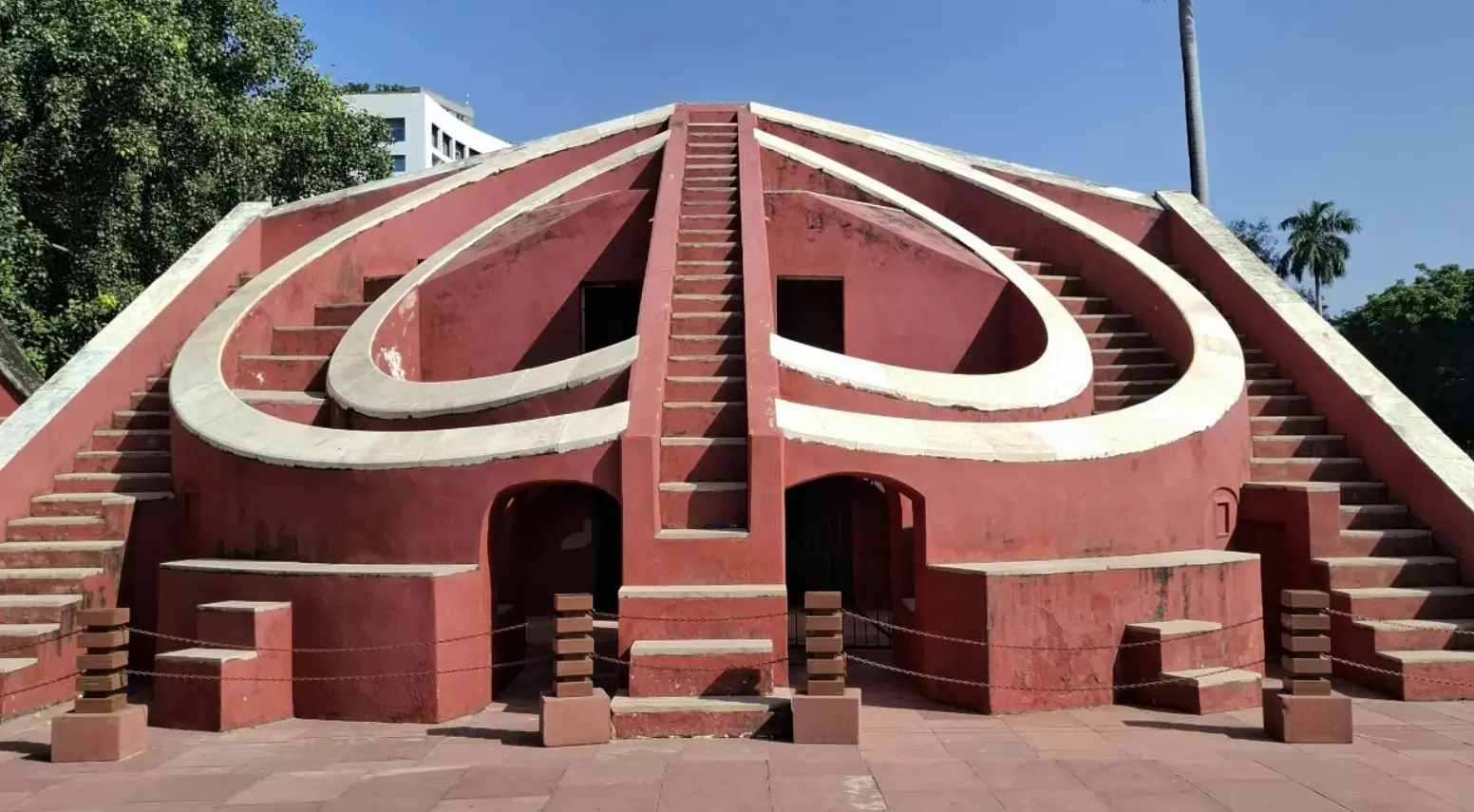
Days after the Centre denotified the area around Jantar Mantar as a designated protest site, the historic monument has been selected as one of the key venues for the India Art, Architecture and Design Biennale 2026, which will run from December 4 to March 21, 2027.
The event, organised on a larger scale than its 2023 inaugural edition, will feature exhibitions and programmes across more than a dozen monuments and prominent locations. The Culture Ministry has envisioned the biennale as an international platform showcasing art, architecture and design from across India and more than 20 other countries.
The selection of Jantar Mantar comes against the backdrop of its long-standing role as a prominent site for public demonstrations in the national capital. Built in 1724 by Maharaja Sawai Jai Singh II of Jaipur, Jantar Mantar is an 18th-century astronomical observatory featuring a collection of large masonry instruments designed to observe celestial movements and measure time. Located in central Delhi, the monument is protected by the Archaeological Survey of India and is recognised for its historical and scientific significance.
Over the years, the area around Jantar Mantar has also become an important gathering point for protesters, trade unions, civil society groups and social movements seeking to draw the government's attention to their demands. Demonstrations on issues ranging from workers' rights and farmers' concerns to corruption, public policy and other political and social matters have taken place at the site.
The venue has hosted several high-profile protests, including demonstrations associated with the anti-corruption movement led by Anna Hazare in 2011 and subsequent campaigns over social and political issues. Its proximity to Parliament and other government institutions has made it a significant location for organised public expression in Delhi.
However, protests at Jantar Mantar have also been subject to restrictions and regulatory measures concerning public order, crowd management and the use of designated demonstration spaces. The area has consequently remained an important point of discussion in debates over the balance between public demonstrations and administrative control in the capital.
The Centre's recent decision to denotify the area around Jantar Mantar as a protest site has brought renewed attention to its future use. The monument's inclusion in the biennale now places it within a major cultural programme intended to showcase India's artistic and architectural heritage.
The first India Art, Architecture and Design Biennale was held at the Red Fort in 2023. While the inaugural edition was limited in scale, the 2026 event is being planned with a wider international reach and a broader programme of exhibitions and cultural activities.
With Jantar Mantar among its proposed venues, the biennale will bring a new focus to a location known both for its historic scientific architecture and its role in Delhi's tradition of public demonstrations.
