Jaishankar: US Is Becoming A ‘Lonelier Power’ By Choice

S. Jaishankar said the US is deliberately taking a more independent global role and called for greater cooperation among emerging and middle powers.
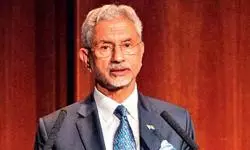
External affairs minister S. Jaishankar on Sunday said the United States was “deliberately becoming a lonelier power” as part of a conscious rebalancing of its global role, while pitching for greater convergence among emerging and middle powers to shape a new global architecture.
Speaking at the Munich Leaders’ Meeting in New Delhi, organised by the Munich Security Conference, Jaishankar said the changing posture of the US and the rise of China were among the major forces reshaping the global order.
“The rebalancing of the United States is a posture of choice,” he said, adding that Washington was “deliberately becoming a lonelier power”. He also pointed to the rise of China, which, he said, “sees itself as unique”.
The minister described Europe as an important “pole” in an increasingly multipolar world and said India needed to deepen engagement with European sub-groups, including the technologically advanced Nordic countries.
Jaishankar also strongly defended India’s ties with Russia, telling the European audience that Moscow had stood by New Delhi at critical moments in its history.
“Russia and the Soviet Union before that was a country that stood by us in many ways when our security, when our territorial integrity was under threat,” he said, noting that this was at a time when “much of the world preferred backing a military regime next to us”, an apparent reference to Western support for Pakistan during the Cold War.
He said India-Russia ties, which had been strong since the 1950s, were shaped by that historical experience and had since expanded beyond defence.
“Today, the relationship has widened beyond that. It is very much more today an economic relationship as well,” he said, citing cooperation in defence, nuclear energy, space, trade, investment, energy and natural resources.
Jaishankar said India wanted the Russia-Ukraine conflict to end, but stressed that New Delhi’s experience of its relationship with Moscow had been “quite positive and consistently positive”.
Turning to cooperation among emerging and middle powers, the minister said countries were increasingly seeking to diversify and de-risk their economies and security arrangements while building resilient supply chains.
“The operating principle for emerging and middle powers should be, and perhaps is already, a reasonable degree of convergence,” he said. “The days when you have to have an identity of views or a very strong congruence of interest, I think that’s too high a bar today.”
He said countries could cooperate if they had enough common ground, even without complete agreement.
“In this process of de-risking, diversifying and hedging, slowly a new architecture is coming into place,” he said, referring also to a “third way” of engaging with major powers while simultaneously hedging and diversifying.
On reform of the United Nations, Jaishankar said the institution needed fixing rather than abandoning.
“We need a better UN rather than no UN,” he said. “We don’t want to throw out the UN but rather fix it.”
