International Shakti Museum, Major Reforms Announced for Mata Vaishno Devi Shrine

In a move aimed at strengthening institutional capacity, the Board decided to fill vacant positions, with the recruitment process set to begin soon. It also approved the establishment of free NEET coaching centres for youth from nearby areas, reflecting a commitment to educational empowerment. Another major decision involved the phased implementation of a rehabilitation plan for service providers on the Vaishno Devi track—such as ponywallas—in accordance with National Green Tribunal directives.
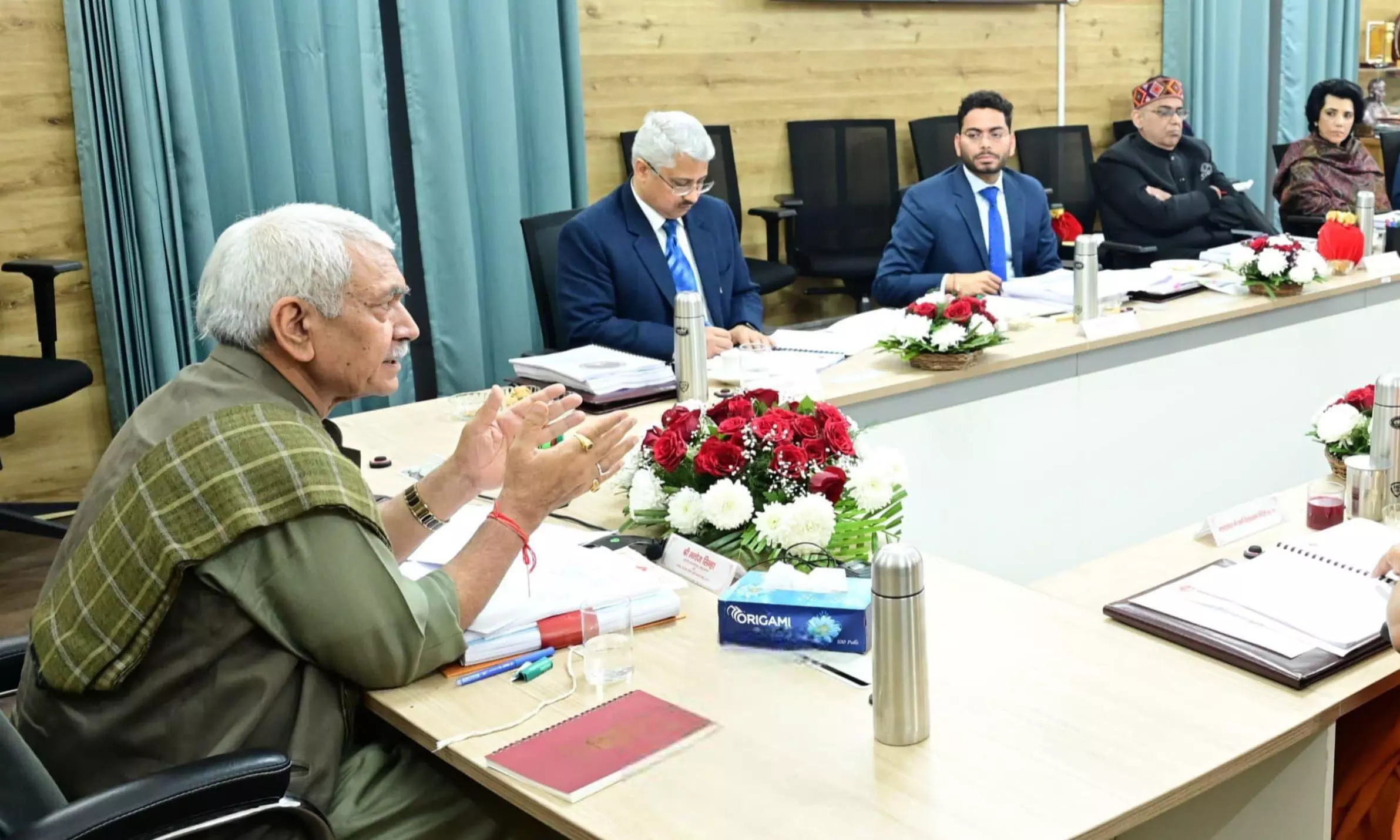
Jammu: A landmark cultural and spiritual initiative is set to take shape at Natali in Katra, the basecamp of the revered Mata Vaishno Devi Shrine in Jammu and Kashmir’s Reasi district.
The Shri Mata Vaishno Devi Shrine Board (SMVDSB) has approved the establishment of an International Museum dedicated to Mata Vaishno Devi—an embodiment of Mahakali, Mahalakshmi, and Mahasaraswati. Developed in consultation with the Asian Heritage Foundation, the proposed Shakti Museum will be the first of its kind, envisioned as a vibrant religious, educational, and cultural centre that celebrates the spiritual heritage of Maa Shakti, a spokesman of the board said.
Alongside the museum, the Shrine Board has also sanctioned a state-of-the-art light and sound show near the holy shrine. Designed to blend mythology with modern technology, the spectacle aims to bring ancient narratives to life through an innovative fusion of tradition and contemporary storytelling. The Board will additionally sponsor a documentary on Mata Vaishno Devi, further enriching the spiritual and cultural documentation of the shrine.
These decisions were taken during a high-level meeting of the SMVDSB chaired by Lieutenant Governor, Manoj Sinha, who also serves as the Board’s Chairman. He emphasised that the Board is committed to transforming the shrine and its surrounding region into one of India’s most vibrant and globally acclaimed spiritual destinations. The Board approved a series of high-impact initiatives, including the museum, the light-and-sound show, and the documentary, marking a significant step toward enhancing the pilgrimage experience, an official statement issued here said.
In a move aimed at strengthening institutional capacity, the Board decided to fill vacant positions, with the recruitment process set to begin soon. It also approved the establishment of free NEET coaching centres for youth from nearby areas, reflecting a commitment to educational empowerment. Another major decision involved the phased implementation of a rehabilitation plan for service providers on the Vaishno Devi track—such as ponywallas—in accordance with National Green Tribunal directives.
A dedicated committee has been constituted to explore strategies for increasing pilgrimage numbers and improving the overall pilgrim experience. The Board also resolved to prioritise procurement from self-help groups, women entrepreneurs, and young local business owners, ensuring that the shrine’s economic footprint directly benefits the regional community. In line with this, offerings for the Mata will now be sourced locally, channeling revenue into grassroots development.
Recognizing Katra’s global prominence as the gateway to the shrine, the Board committed to contributing directly to the city’s transformation. The Lt. Governor reiterated the Board’s resolve to make Katra clean, vibrant, and equipped with modern infrastructure for both residents and millions of pilgrims. The Board also announced plans to promote sports development across the Jammu region, aiming to nurture young talent and position the Union Territory as a national sporting hub alongside its spiritual significance. Specialised training for Pujaris was also emphasised to enhance the quality of religious services.
During the meeting, the Board reviewed progress on major infrastructure projects, including the construction of the Exit Track at Bhawan, the New Vaishnavi Bhawan, widening of the Yatra track from Sanjichhat to Bhawan, slope stabilisation works, and the construction of the Shri Shankaracharya Ji Temple and allied amenities at Katra. The Board also assessed progress on the School for Divyangjan at Chaitanya Ashram in Jammu, directing strict adherence to timelines and quality standards.
Regarding the newly developed helipad at Village Hutt, the Board approved a one-time financial grant to the Shri Shiv Khori Shrine Board for upgrading pilgrim infrastructure, following a revised MoU. It was also decided that heli-services for both shrines would operate from the same helipad for the convenience of devotees. The Board appreciated the rapid renovation of 15 schools in Reasi and Udhampur districts that were damaged during the heavy rains of August–September 2025.
According to the statement, the establishment of a Sadhna Kaksh (Meditation Hall) at Bhawan was lauded as a significant step toward enriching the spiritual well-being of pilgrims. The Board also approved grant-in-aid for institutions under the SMVD Charitable Society, including the Gurukul, Hospital, Sports Complex, and College of Nursing. Environmental sustainability remained a priority, with the Board approving a comprehensive Annual Green Plan for 2026–27 and reaffirming its commitment to a clean and green Katra.
On the sidelines of the meeting, Sinha laid foundation stones for several pilgrim-centric facilities, including three new temples in Reasi district and the restoration of two ancient temples in Jammu district at a cost of ₹1.21 crore. He also inaugurated newly constructed cottages at Katra and launched an enhanced Pouch Prasad containing dry fruits, an engraved coin depicting the Holy Pindies, and a sacred Mouli (Kalava) for free distribution among pilgrims. Additionally, redevelopment of the Bhairon Temple Complex and construction of staff accommodation at Bhawan and Bhairon were approved.
Earlier, the Chief Executive Officer of SMVDSB presented a detailed overview of the Board’s activities and progress on decisions taken in previous meetings. The meeting was attended by all Board Members, including Mahamandleshwar Swami Vishveshvaranand Giriji Maharaj, Baleshwar Rai, Dr. Ashok Bhan, Sudha Murty, Gunjan Rana, Dr. K.K. Talwar, Kulbhushan Ahuja, Lalit Bhasin, and Suresh Kumar Sharma, along with Dr. Mandeep K. Bhandari, Principal Secretary to the Lt. Governor, and Sachin Kumar Vaishya, CEO of SMVDSB.
