India, Uzbekistan Elevate Ties, Set $5-Bn Trade Target

The two sides inked 11 agreements for boosting engagement in several key sectors, including mining and tourism and agreed to establish a framework for long-term supply of Uranium from Uzbekistan to India in line with cooperation in the civil-nuclear energy sector.
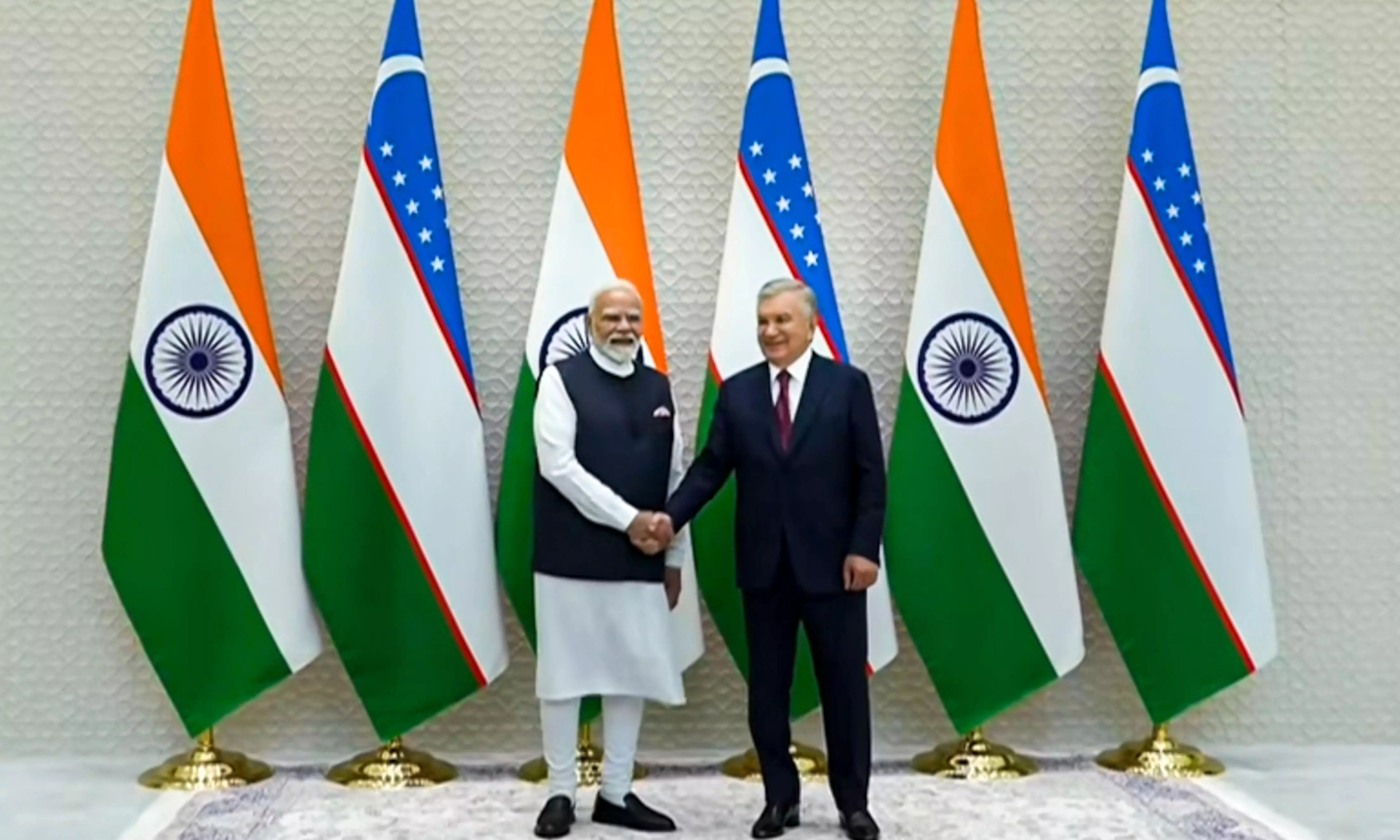
During their wide ranging talks, the two leaders held substantive discussions on bilateral strategic partnership, including trade and investment, innovation and start-up, digital public infrastructure and UPI, defence and security, healthcare and pharmaceuticals, critical minerals, agriculture, education, tourism, agriculture, space and people-to-people exchanges. Several agreements covering a wide range of areas, including mining, culture, education, tourism, ayurveda, were signed after the talks.
The PM appreciated the progress made in the long-term arrangement for supply of Uranium from Uzbekistan to India and reaffirmed the importance of strengthening cooperation in critical minerals. The leaders agreed to upscale bilateral trade targets from the current $1 bi of $5 billion by 2030. To take forward the Comprehensive Strategic Partnership in a meaningful manner, the two leaders agreed to set up a Foreign Ministers led mechanism and raise the Inter-Governmental Commission to the ministerial level.
In his opening remarks during the talks Mr Modi said Uzbekistan is at the heart of Central Asia, and at the heart of India’s engagement with the region. He said both countries will move forward by setting concrete goals within the framework of the elevated partnership. PM further said that the two countries are also formalising three sister-city and sister-state arrangements and both countries will establish a Coordination Council at the Foreign Minister level to provide direction to all aspects of bilateral cooperation.
In his opening remarks during the talks President Mirziyoyev said India is making truly outstanding advances in digitalisation, information technology, artificial intelligence, space exploration, and many other fields. Mirziyoyev added that India’s voice and influence in global affairs have grown even stronger and he is pleased to see all these achievements.
Following the talks, the two sides witnessed the exchange of MoUs and agreements covering a wide range of areas, including culture, higher education and research, capacity building, archives, economic collaboration, environment, tourism, mining, ayurveda and sister-state relations. A Letter of Intent for the restoration of the Buddhist sites of Fayaz Tepa and Kara Tepa in Uzbekistan was concluded. An MoU for the establishment of an ICCR Sanskrit Chair at the Tashkent State University of Oriental Studies was also finalised. PM announced 100 Lal Bahadur Shastri scholarships for Hindi students in Tashkent State University.
Later, in their joint statement, the two leaders condemned terrorism, including cross-border terrorism, in all its forms and manifestations, reiterated zero tolerance approach to terrorism and rejected justification of terrorism on any ground whatsoever. Leaders called for concerted actions against terrorist entities and for disrupting terrorism financing networks, safe havens and infrastructure. They stressed that those responsible for terrorism should be held accountable and their perpetrators, their backers, facilitators and affiliates should be brought to justice. The leaders also stressed on the importance of strengthening cooperation in law enforcement, intelligence-sharing, and combating violent extremism, and illicit drug trafficking, organized crime, and cyber threats.
President Mirziyoyev hosted a banquet lunch in honour of the Prime Minister. The Prime Minister thanked President Mirziyoyev for his gracious hospitality and invited him to visit India.
Earlier in the day Mr Modi attended a yoga programme organised by the Yoga Federation of Uzbekistan and later he reached the palace of Uzbekistan President Shavkat Mirziyoyev, where he was given a ceremonial welcome. After the talks Mr Modi paid floral tributes to former PM Lal Bahadur Shastri in Tashkent. This year marks the 60th anniversary of the passing away of the former PM. The PM also attended an event in Tashkent University before leaving for Bishkek where he will attend the Shanghai Cooperation Organisation summit.
