India Tourism Needs Vision, PPP Model To Manage Heritage Sites
India needs better tourism infrastructure, simpler visas and public-private partnerships to unlock its heritage potential and attract more international tourists.
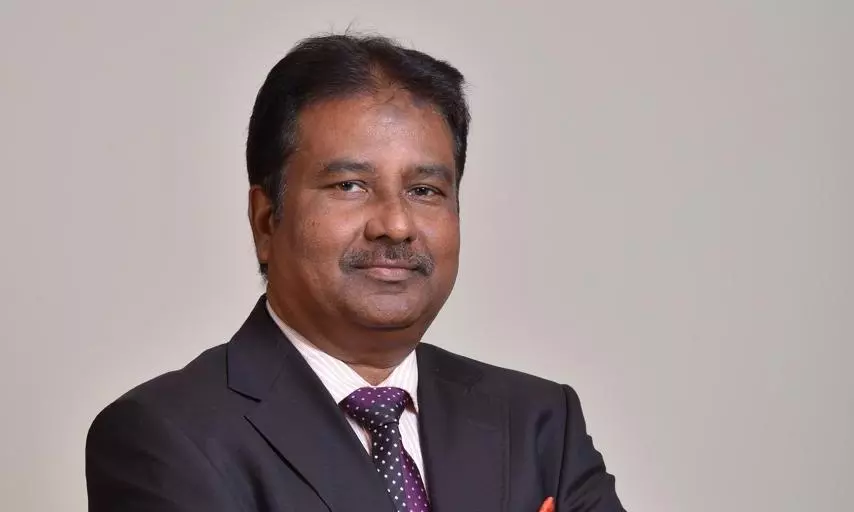
India needs visionary people at the top to address key concerns of the tourism sector and increase revenues. The government should set up a Chamber of Tourism and get experts to develop the sector and public-private partnerships to manage heritage sites, says Iqbal Mulla, President, Global Tourism Council.
Despite being among the top countries in the world in terms of World Heritage cultural sites, India is ranked 31st in the WEF's Travel and Tourism Development Index 2026. Why has India not been able to translate its enormous heritage and cultural advantage into a much larger international tourism market?
India has around 45 World Heritage sites and we have everything to offer tourists. I have been in the tourism trade for nearly 30 years and I have always wondered why we cannot draw more tourists to our country.
Unfortunately, we are not able to deliver what international tourists actually want. If tourism flows increase, foreign exchange earnings will obviously increase as well. Take a small country like Singapore, for example. It attracts around 30 to 40 million tourists a year, whereas India's international tourist arrivals are nowhere near that level.
India is virtually a continent. Different parts of the country have different languages, cultures and people. We have enormous potential, but unfortunately we have not fully understood the potential of tourism as a driver of economic growth.
The WEF report identifies tourist services, infrastructure and environmental sustainability as some of the biggest gaps. What are the most visible infrastructure deficiencies that international tourists encounter in India?
A tourist comes to enjoy life and spend time. Nobody wants to go to a place where safety is a concern. Insurance, infrastructure and visas are also important concerns.
We have been constructing highways, roads and metros, but nothing is being specifically developed around tourism destinations. Tourism spots are often neglected. In other developed countries, the first priority is to develop infrastructure around a tourist attraction.
We also need to market our tourism products much better. India has so many things to offer, but we are not promoting them effectively. Tourism needs to be treated as an important contributor to the overall growth of the economy.
What about cleanliness, waste management and environmental sustainability? Are these issues being adequately addressed?
Infrastructure will develop only when there is sufficient investment. We have so many World Heritage sites, and they should be allowed to participate in public-private partnerships, just as airports do.
Take the Taj Mahal, for example. It is managed by the Government of India, but there is very little infrastructure around it and safety arrangements are also a concern. Similarly, if you visit temples in southern India, getting access to them, performing rituals and even getting a proper road or passage can sometimes become difficult.
Infrastructure can be improved through public-private partnerships. At the same time, civic sense has to be developed and promoted.
Safety is particularly important. Today, solo women travellers may not feel comfortable travelling to many destinations. People travelling alone by bike, taxi or rickshaw may not know what facilities are available until they reach the destination.
The Centre and the states need to allocate adequate funds for tourism infrastructure. When you spend money on tourism, you generate revenue. It is not charity.
The government has allocated around Rs 2,400-2,500 crore annually for tourism in recent years, but actual utilisation has been much lower, at less than Rs 1,000 crore in several years. Why have we failed to utilise these allocations effectively?
The tourism portfolio has to be allotted to people who understand the subject. For years, funds have been allocated, but those responsible do not necessarily know how or where to utilise them.
Earlier, India had around 21 overseas promotional offices, but one by one they have been shut down. If the government believes these offices are expensive, it can consider public-private partnerships overseas.
We can employ people, create councils or chambers of tourism in different countries and involve local authorities, local tourism boards and the Indian tourism board. Together, they can promote inbound and outbound tourism, benefiting both sides.
There is a lack of vision. India has some of the best tourism experts. Bring them onto a council, seek their advice and utilise the budget in the right manner.
Has India's overseas tourism promotion also declined compared with a decade ago?
Compared with neighbouring and other countries, our promotional activity is negligible. India has nearly 20-30 states, and each state can conduct roadshows in different countries. Each state can have its own budget to promote its tourism products and attract visitors.
If a tourist comes to Kerala, they can travel to Mumbai. From Mumbai, they can go to Odisha, Kolkata, Rajasthan, Goa or Chennai. We need to promote India as an integrated tourism destination rather than promoting individual destinations in isolation.
The budget allocation is actually good. Even if the government does not provide the entire budget, there are people willing to invest in improving tourism.
For example, the Red Fort has been given to a private entity to operate. Similarly, if other tourism assets and World Heritage sites are opened up to public-private partnerships, the government can generate revenue without having to bear the entire investment.
If you develop infrastructure around monuments and tourism assets, people will be willing to pay. These monuments can also be used as backdrops for weddings, events and film shoots, generating additional revenue. If this is planned systematically, India has a lot to gain.
Foreign tourist arrivals are still below the 10.93 million recorded in 2019, while many countries have crossed their pre-pandemic levels. Why has India not recovered fully?
If you do not welcome people, nobody will come. The first point of contact is immigration and visas.
In countries such as the US and UK, visas can be valid for many years. Why can't India introduce two- or three-year visas or longer-duration visas? If someone wants to visit India and has to repeatedly submit the same documents, it becomes a deterrent.
Visa facilitation needs to be relaxed and procedures made simpler. I understand that security is an issue, but there are different ways of ensuring security.
Countries such as Bangkok, Hong Kong and Nepal have much easier visa regimes. India needs to build trust. When you start trusting people, people will start trusting you.
Is the relatively high cost of travelling within India making the country less competitive for budget-conscious international travellers?
India can cater to both high-end travellers and budget tourists. A tourist should be able to travel around India for a week for around $500-600 if they choose budget accommodation.
We have hostels, YMCAs, bed-and-breakfast facilities, two-star and three-star hotels. Tourists don't necessarily have to depend on taxis or chauffeur-driven cars. They can use rickshaws and other local transport.
The only condition is that safety has to be maintained. At the other end of the spectrum, India also has heritage hotels and palatial properties for high-end travellers. We need to cater to both segments.
If India wants tourism to become a much larger contributor to GDP, employment and foreign exchange over the next decade, what structural reforms should be prioritised?
We have to reconstruct and improve damaged infrastructure at World Heritage sites. Second, we need direct point-to-point accessibility and better connectivity.
We need to improve the facilitation of international flights. Goa, for example, used to receive charter flights every week. Many smaller beach destinations in other countries operate charter flights, but India does not have adequate facilities to handle them.
Our airports are crowded with domestic traffic. If we really want international tourists to come, flight facilitation and visa facilitation have to be given importance.
Most importantly, tourism requires vision and visionary people to develop it. We do not necessarily need enormous budgetary allocations for digital marketing. People around the world already know what India is and what India can offer.
We have everything to give tourists — our heritage, culture, diversity, languages and thousands of varieties of food. The only thing we require now is vision to bring all these elements together and address the issues holding tourism back.
