PM Modi and President Marcos Jr. elevate bilateral ties, unveil action plan and mark 75 years of diplomatic relations
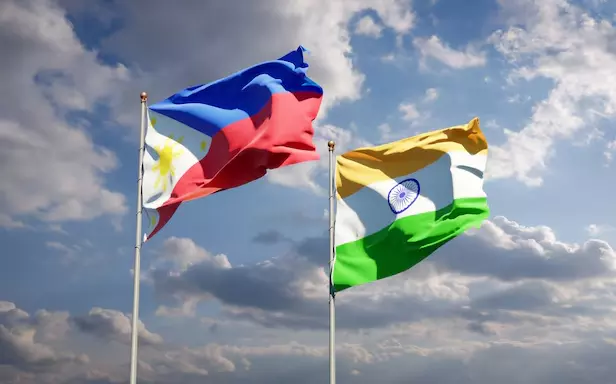
New Delhi: After talks between Prime Minister Narendra Modi and Philippines President Ferdinand R. Marcos Jr at the Hyderabad House in the national capital, the two nations inked 13 pacts, including the “declaration of a strategic partnership”. During talks, India and the Philippines supported a rules-based order and freedom of navigation. Both nations also decided to strengthen defence and security as well as trade and investment ties.
With Mr Marcos Jr by his side, Mr Modi, in his press statement after the talks, said, “India and the Philippines are friends by choice and partners by destiny. From the Indian Ocean to the Pacific, we are united by shared values. Ours is not just a friendship of the past; it is a promise to the future.”
The Prime Minister said: “The Philippines is an important partner in our Act East Policy and the Mahasagar vision. We remain committed to peace, security, prosperity, and a rules-based order in the Indo-Pacific region…”
Thanking the Southeast Asian nation for its support on the issue of combating terrorism, the Prime Minister said, “We express our sincere gratitude to the government of the Philippines and to the Philippines President for strongly condemning the terrorist attack in Pahalgam and for standing with us in our fight against terrorism.”
Mr Marcos Jr, who arrived on a five-day state visit to India that began earlier on Monday, said that he “carried a message of solidarity” to India in the wake of the Pahalgam terror attack and the fight against terrorism.
Terming the elevation of ties to the level of strategic partnership as a "momentous decision”, Mr Marcos Jr thanked India for its support for the “2016 award” even as Mr Modi nodded. In 2016, the Permanent Court of Arbitration (PCA) had ruled in favour of the Philippines and against China in a bitter row over territorial rights and had “concluded that there was no legal basis for China to claim historic rights within the South China Sea (SCS) areas falling within the nine-dash line”, but China had rejected the verdict and refused to recognise it.
In a thinly veiled criticism of China, the India-Philippines declaration on the establishment of the strategic partnership "expressed concern for the situation in the South China Sea, particularly with regard to coercive and aggressive actions that impact on regional peace and stability, and called on relevant parties to exercise self-restraint and commit to peaceful and constructive means to resolve and manage disputes".
It also stated "that the final and binding 2016 Arbitral Award on the South China Sea is a significant milestone and the basis for peacefully resolving disputes in accordance with international law" and "reaffirmed full respect and adherence to international law, particularly on the rights and obligations of states under the 1982 UN Convention on the Law of the Sea".
On bilateral trade, Mr Modi said, “Our bilateral trade is growing continuously and has crossed the $3 billion mark. To boost it further, we are prioritising an early completion of the review of the India-Asean free trade agreement. In addition, we have agreed to work towards a bilateral preferential trade agreement. Our companies are actively engaged in almost all areas, including information and digital technology, health, automobiles, infrastructure, and minerals...”
The Prime Minister extended full support to the Philippines as it is set to assume the chairmanship of Asean. He said: “We welcome the decision of the Philippines to grant visa-free entry to Indian tourists. India, in turn, has decided to extend the facility of free e-visas to tourists from the Philippines. Efforts will also be made to launch direct flights between Delhi and Manila within this year.”
At a special media briefing, ministry of external affairs secretary (East) P. Kumaran said that during the talks between India and the Philippines, “there was a discussion on defence cooperation, defence industry and defence platforms, including the BrahMos supersonic cruise missile".
Earlier in 2022, the Philippines had inked a $375 million deal to buy three batteries of the shore-based anti-ship variant of the BrahMos missiles from India for its Navy. India is also offering its expertise in shipbuilding for naval modernisation of the archipelago nation.
On the trade front, both nations decided to work towards a “bilateral preferential trade agreement”. To boost tourism, the Philippines has decided on visa-free entry for Indian nationals for up to 14 days, while India has decided to grant free e-visas to tourists from the Southeast Asian nation for a period of one year from August this year in a move that will boost tourism and people-to-people exchanges.
Among the pacts inked on Tuesday were ones for terms of reference for staff talks between the armed forces of India and the Philippines and another for enhanced maritime cooperation between the coast guards of the two nations.
As part of the strategic ties, both nations also agreed on collaborating and cooperating in the co-development and co-production of defence equipment to achieve the goal of self-reliance in defence production and encouraging joint initiatives in the establishment of defence R&D and supply chain ecosystems. The Philippines is also reportedly interested in Indian weaponry and platforms including the Akash surface-to-air missiles.
The two nations also decided to strengthen ties in other areas such as pharma, science and technology, space, connectivity, digital technologies, fintech, consular matters and cooperation with multilateral organisations. As part of development assistance, India will also be increasing the number of quick impact projects (QIPs) in the Philippines and is currently implementing six QIPs there.
Other pacts inked on Tuesday included ones on mutual legal assistance and transfer of sentenced persons that Mr Modi said will “further strengthen” the bilateral security partnership.
‘This year, India and the Philippines are celebrating 75 years of diplomatic relations. And in this context, this visit holds special significance. Though our diplomatic ties are recent, our civilisational connection goes back to ancient times. The Philippine version of the Ramayana — Maharadia Lawana — is living proof of our deep-rooted cultural bond," Mr Modi stated
The Prime Minister added: “…We will also cooperate in the development of sovereign data cloud infrastructure in the Philippines… We welcome the Philippines' decision to join the International Fusion Centre established by India for the Indian Ocean Region.”
During the briefing, the foreign ministry secretary (East) pointed out that India is already a top exporter of pharma to the Philippines. India is offering oil and gas consultancy and also its expertise in cyber security to the Southeast Asian nation, which also wants space technology and more investment from India. India has been contributing to food security in the Philippines through exports of non-basmati rice. The Philippines too has seaweed technology that India is interested in for its nutritious value.