India is Set to Begin Commercial Chip Production by 2025

The Prime Minister said: “The world trusts India, the world believes in India, and the world is ready to build the semiconductor future with India.”
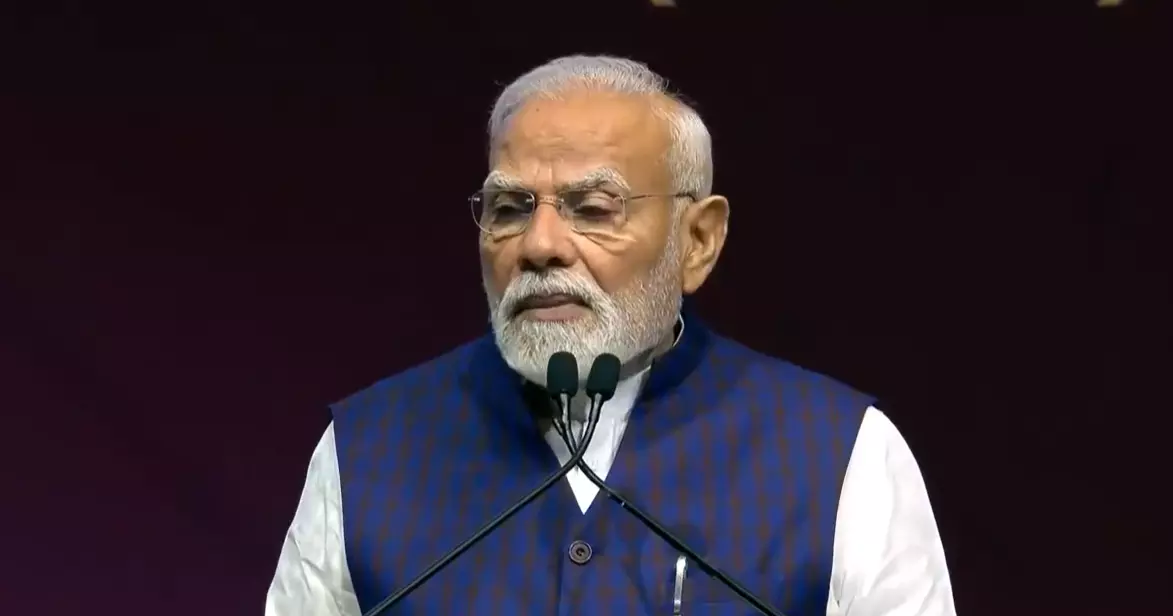
New Delhi: Prime Minister Narendra Modi on Tuesday said that 10 semiconductor projects worth over $18 billion were underway and the country is advancing towards the next phase of the India “Semiconductor Mission”. He also unveiled ‘Vikram-3210’, the country’s first made-in-India 32-bit chip (microprocessor).
Speaking at the inauguration of the Semicon India 2025 conference here, the Prime Minister said that with the speed at which India is progressing in the semiconductor sector, it is going to have a significant share in this $1 trillion global chip market.
The Prime Minister said: “The world trusts India, the world believes in India, and the world is ready to build the semiconductor future with India.”
"There is a saying in the world of semiconductors — oil was black gold, but chips are digital diamonds," the Prime Minister said.
“The global market for semiconductors is reaching $600 billion. And in the next few years, it will cross $1 trillion. And I believe, with the speed at which India is progressing in the semiconductor sector, India is going to have a significant share in this $1 trillion market,” Mr Modi said.
Lauding India's progress, Modi said, “In 2021, we started the Semicon India programme. By 2023, India's first semiconductor plant was approved. In 2024, we approved some more plants and in 2025, we cleared five more projects. Overall, an investment of $18 billion, i.e., more than Rs.1.5-lakh crores is being made in 10 semiconductor projects. This shows the world's growing trust in India.”
Emphasising that in the semiconductor sector speed matters, Modi said, “The shorter the time from file to factory and the less the paperwork, the sooner wafer work can begin.”
The Prime Minister stressed that the government is working with this approach. The national single window system has been implemented, enabling all approvals from both the Centre and states to be accessed on a single platform.
“As a result, investors have been freed from extensive paperwork,” Modi said and highlighted that semiconductor parks are being developed across the country under a plug-and-play infrastructure model, which offers facilities such as land, power supply, port and airport connectivity, and access to a skilled worker pool.
The Prime Minister noted that when such infrastructure is combined with incentives, industrial growth is inevitable. Whether through PLI incentives or design-linked grants, India is offering end-to-end capabilities. This is why investment continues to flow in.
Affirming that India is moving beyond backend operations and progressing towards becoming a full-stack semiconductor nation, Mr Modi reiterated that the day is not far when India’s smallest chip will drive the world’s biggest change.
“Our journey began late… but nothing can stop us now,” the Prime Minister said.
Emphasising that India’s semiconductor success story is not confined to a single vertical or a single technology, Mr Modi stated that India is building a comprehensive ecosystem—one that encompasses designing, manufacturing, packaging and high-tech devices, all within the country.
Modi stated that the Semiconductor Mission is not limited to establishing a single fab or producing a single chip. Rather, India is creating a robust semiconductor ecosystem that will make the nation self-reliant and globally competitive.
Underlining another key feature of India’s Semiconductor Mission, Modi said that the country is advancing in this sector alongside the world’s most advanced technologies.
“India’s focus is to empower emerging technologies through chips manufactured domestically,” Mr Modi said, pointing out that design centres being developed in Noida and Bengaluru are working on some of the world’s most advanced chips capable of storing billions of transistors.
The Prime Minister emphasised that these chips will power the immersive technologies of the 21st century.
Addressing the challenges faced by the global semiconductor sector, the Prime Minister affirmed that India is actively working to overcome them and said that India is currently working on the National Critical Mineral Mission and is committed to meeting its demand for rare minerals domestically. “Over the past four years, significant progress has been made on critical minerals projects,” he said.
