India, France Ink Rs 64,000 Crore Deal for 26 Rafale Jets

Dassault’s Rafale-M was selected over Boeing’s F/A-18 Super Hornet following carrier-qualification trials at INS Hansa in Goa, with the Navy citing better performance alignment with operational requirements
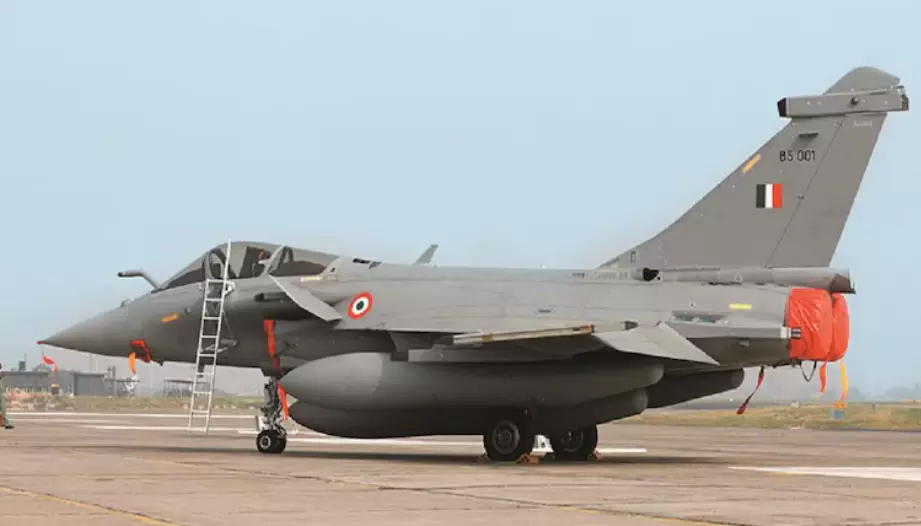
New Delhi: India and France on Monday signed an intergovernmental agreement for the procurement of 26 naval variants of the Rafale fighter jet, valued at approximately ₹64,000 crore, to bolster the Indian Navy’s air capability.
The deal — finalised at Nausena Bhawan in the presence of Defence Secretary Rajesh Kumar Singh — covers 22 single-seat Rafale-Ms and four twin-seat trainer aircraft, with deliveries slated to begin in 2028 and conclude by 2030. Training for naval aircrew will take place in both France and India.
These carrier-borne, 4.5-generation fighters will operate from INS Vikrant, replacing the Navy’s current MiG-29Ks. The agreement includes simulators, associated ground equipment, a weapons package, and performance-based logistics support. Additional spares and equipment will also augment the Indian Air Force’s existing fleet of 36 Rafales.
In line with the government’s Aatmanirbhar Bharat initiative, the pact provides for technology transfer to integrate indigenous munitions and establish local production facilities for Rafale fuselages, as well as maintenance, repair and overhaul (MRO) capabilities for engines, sensors and weapons. Officials expect these measures to generate thousands of jobs and spur revenue for dozens of MSMEs.
France’s Dassault Aviation manufactures the Rafale-M, which shares commonality with the IAF’s land-based Rafales, streamlining training and logistics across services. Earlier this month, the Cabinet Committee on Security, chaired by Prime Minister Narendra Modi, approved the acquisition—one of India’s largest single-platform fighter deals.
Dassault’s Rafale-M was selected over Boeing’s F/A-18 Super Hornet following carrier-qualification trials at INS Hansa in Goa, with the Navy citing better performance alignment with operational requirements.
