What Does It Take to Restore a 2,600 sq. km Grassland in Kutch?

18 Aug 2026 7:09 PM IST18 Aug 2026 7:09 PM IST
The relocation of 20 blackbucks from the Greens Zoological, Rescue and Rehabilitation Centre (GZRRC) in Jamnagar to Banni, following approval from the Central Zoo Authority (CZA), is one part of this larger effort.
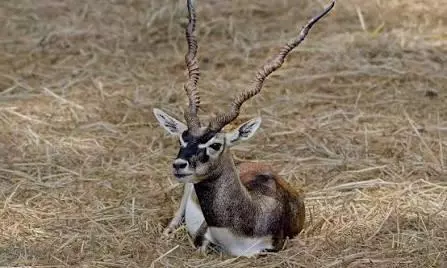
Representational Image
You cannot restore a grassland by restoring one species. A landscape like Banni survives through a delicate relationship between its habitat, herbivores, predators, scavengers and people. Restoring it, therefore, requires rebuilding the ecosystem as a whole not simply increasing wildlife numbers. At 2,600 sq. km, the Banni Grassland of Kutch demands a restoration approach that works at an ecosystem scale. Habitat recovery must go hand in hand with conservation breeding, genetic management, veterinary care, wildlife tracking and the infrastructure needed to operate across a challenging landscape.
The relocation of 20 blackbucks from the Greens Zoological, Rescue and Rehabilitation Centre (GZRRC) in Jamnagar to Banni, following approval from the Central Zoo Authority (CZA), is one part of this larger effort. The objective is not simply to increase the number of blackbucks in the landscape, but to strengthen the ecological processes that make a grassland function. Herbivores play a critical role in shaping grassland ecosystems. Restoring herbivore populations, therefore, can have effects that extend well beyond a single species. Similarly, rebuilding vulture populations can strengthen the ecosystem’s natural scavenging systems and contribute to overall ecological health.
This is why conservation breeding and reintroduction require careful planning. Species selection, genetic diversity, health screening, acclimatisation, post-release monitoring and an understanding of predator-prey dynamics all matter. Wildlife cannot simply be introduced into a landscape and expected to thrive. The conditions that allow it to survive must also be rebuilt. The work being undertaken in Banni, in collaboration with the Gujarat Forest Department and the Greens Zoological, Rescue and Rehabilitation Centre (GZRRC), offers an example of what conservation readiness can look like in practice. Vantara is strengthening field capabilities through purpose-built wildlife transport, portable bomas, all-terrain mobility and a mobile wildlife medical unit, with resources designed to help teams respond, treat and acclimatise animals where they are needed.
Technology and field infrastructure have an important role to play here. Tracking systems can help understand how released animals adapt to their surroundings, while veterinary capabilities allow teams to respond to health concerns in the field. Together, these tools can turn restoration from a one-time intervention into a long-term process of observation, learning and adaptation.
But perhaps the most important part of restoring Banni is recognising that the landscape is not empty. The Maldhari communities have lived alongside and depended on this grassland for generations. Any meaningful restoration model must therefore work with the people who understand the landscape intimately and whose lives are intertwined with it.
( Source : Deccan Chronicle )

Next Story