This Saint Was the Spiritual Guru to Mahatma Gandhi

Today, an Ashram Inspired by Him Is Enlightening Millions
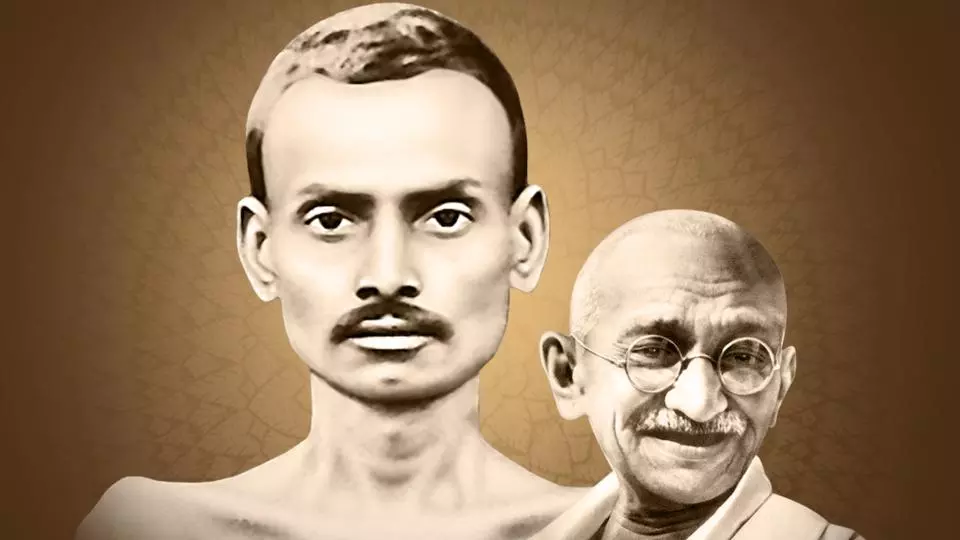
In the hills of South Gujarat, a spiritual retreat built around the teachings of Shrimad Rajchandraji draws seekers from across India and the world, and serves the tribal villages around it
Dharampur is not a town that turns up on most travel lists. It sits quietly in Gujarat's Valsad district, surrounded by forest, farmland and tribal hamlets, a couple of hours' drive from the Maharashtra border.
More than a century ago, a young poet-philosopher came here to meditate. A memorial now stands at the spot on the edge of town where he is said to have sat in sadhana. His name was Shrimad Rajchandraji, and Mahatma Gandhi regarded him as his spiritual guide.
Today, a short distance away, a 355-acre spiritual campus built around his teachings welcomes seekers from across India and abroad. On Gandhi Jayanti, it offers a reminder of a lesser-known chapter of the Mahatma's life, and of how that chapter continues to shape lives today.
The man Gandhi could not forget
Gandhi met Shrimadji in Mumbai in 1891, soon after returning from England as a young barrister. It was Shrimadji’s spiritual depth that stayed with Gandhi. The two remained in touch through letters after Gandhi left for South Africa. At a time of inner turmoil there, Gandhi sent him 27 questions on the soul, God and liberation, and received detailed answers in reply from Shrimad Rajchandraji.
Gandhi wrote and spoke about him for the rest of his life, even though Shrimadji died in 1901 at just 34. In one tribute, Gandhi was strikingly humble about the gap he saw between them. "We are all worldly people whereas Shrimad was not of this world," he wrote. "We will have to take many births whereas for Shrimad perhaps one birth is sufficient."
He also credited Shrimadji with teaching him compassion, the value that, along with truth and non-violence, would become central to his public life.
Why Dharampur
When Pujya Gurudevshri Rakeshji set out to create a permanent home for Shrimadji's teachings, he chose Dharampur, the place where Shrimadji had once meditated. The Shrimad Rajchandra Ashram was established here in 2001. It is now the International Headquarters of Shrimad Rajchandra Mission Dharampur (SRMD), which he founded in 1994 and which has grown to 136 centres across six continents.
The choice was symbolic, but it was also practical. Valsad district's tribal belt has long been among the poorest parts of South Gujarat, with limited access to healthcare and education. An ashram here could be more than a place of retreat. It could serve the people who lived around it.
Life inside the ashram
For those who come, the ashram is a place to slow down. Visitors attend discourses, meditate, and study Shrimadji's writings, including his best-known work, Shri Atmasiddhi Shastra, a 142-verse composition on the nature of the soul that he wrote in a single sitting in 1896.
Many also take part in seva, helping in the kitchens, the grounds or the Mission's service institutions nearby. The ashram draws people from all walks of life: families on weekend visits, students, working professionals and retirees. Devotees travel from within Gujarat and Maharashtra as well as from overseas centres in the UK, the US, Africa and elsewhere.
Much of the ashram's day-to-day running is handled by Atmarpits, members of the Mission who have taken a lifelong vow of celibacy and service. There are now 131 of them. Most took the vow as young adults, and many left professional careers to do so.
Despite the scale of the Mission, access to its founder remains surprisingly simple. The ashram has kept an open hour on weekdays, from 11.30 am to 12.30 pm, when visitors can come and meet Gurudevshri.
Compassion beyond the walls
What sets the ashram apart is how much of its work happens outside it. Gandhi once said it was from Shrimadji's life that he understood "the way of compassion." In Dharampur, that idea has taken physical shape.
Shrimad Rajchandra Hospital, a 250-bed charitable hospital, serves more than 500 villages and is the only hospital in the area performing paediatric open-heart surgeries. Shrimad Rajchandra Vidyapeeth was the first science college across 238 villages. A Centre of Excellence for Women trains and employs rural women, and animal care facilities give shelter and treatment to sick, injured and rescued animals. A university is rising nearby.
This work runs through Shrimad Rajchandra Love and Care, the Mission's humanitarian arm, which holds Special Consultative Status with the United Nations Economic and Social Council.
For many visitors, this is what stays with them. The prayer hall and the hospital ward are part of the same idea. The Mission's guiding line puts it simply: realise one's true self and serve others selflessly.
The teacher at the centre
Gurudevshri's own journey to Shrimadji began early. Born in Mumbai in 1966, he is said by the Mission to have been drawn to meditation from the age of four. He later made Shrimadji's work the subject of years of scholarship: a gold medal in his M.A. in Philosophy, followed by a doctoral treatise of more than 3,000 pages on Shri Atmasiddhi Shastra, for which the University of Mumbai awarded him a PhD in 1998.
What draws people to him is his ability to make old wisdom feel current. He decodes the teachings of the scriptures into plain language that speaks to everyday concerns such as stress, relationships and purpose. His teachings are not confined to any one tradition, and his audiences reflect that. Last week, his 60th birthday celebrations in Mumbai drew devotees from 24 countries.
Keeping the memory alive
Dharampur itself honours its link to the saint in quieter ways. The town's Lady Wilson Museum has a section dedicated to Shrimadji, and a road in Dharampur has been named Shrimad Rajchandraji Marg.
Beyond the town, the Mission has worked to place Shrimadji where he belongs in Gandhi's story. His portrait now hangs at Mani Bhavan in Mumbai, and portraits of Shrimadji and Gandhi together have been unveiled at Gandhi memorials in India and abroad. In 2017, the Prime Minister of India Narendra Modi released commemorative coins and stamps by the Government of India for Shrimadji’s 150th birth anniversary at Gandhi's Sabarmati Ashram.
For the seekers who make the journey to Dharampur, though, the tribute that matters most is simpler. It is the chance to sit where Gandhi's guide once meditated and to learn, as Gandhi did, what a life of compassion looks like.
