SC Asks Centre To Mull Sringent Law To Deal With Derogatory Remarks Against Disabled

The Court also stressed the need for a “neutral, independent and autonomous” body to regulate obscene, offensive or illegal content on online platforms.
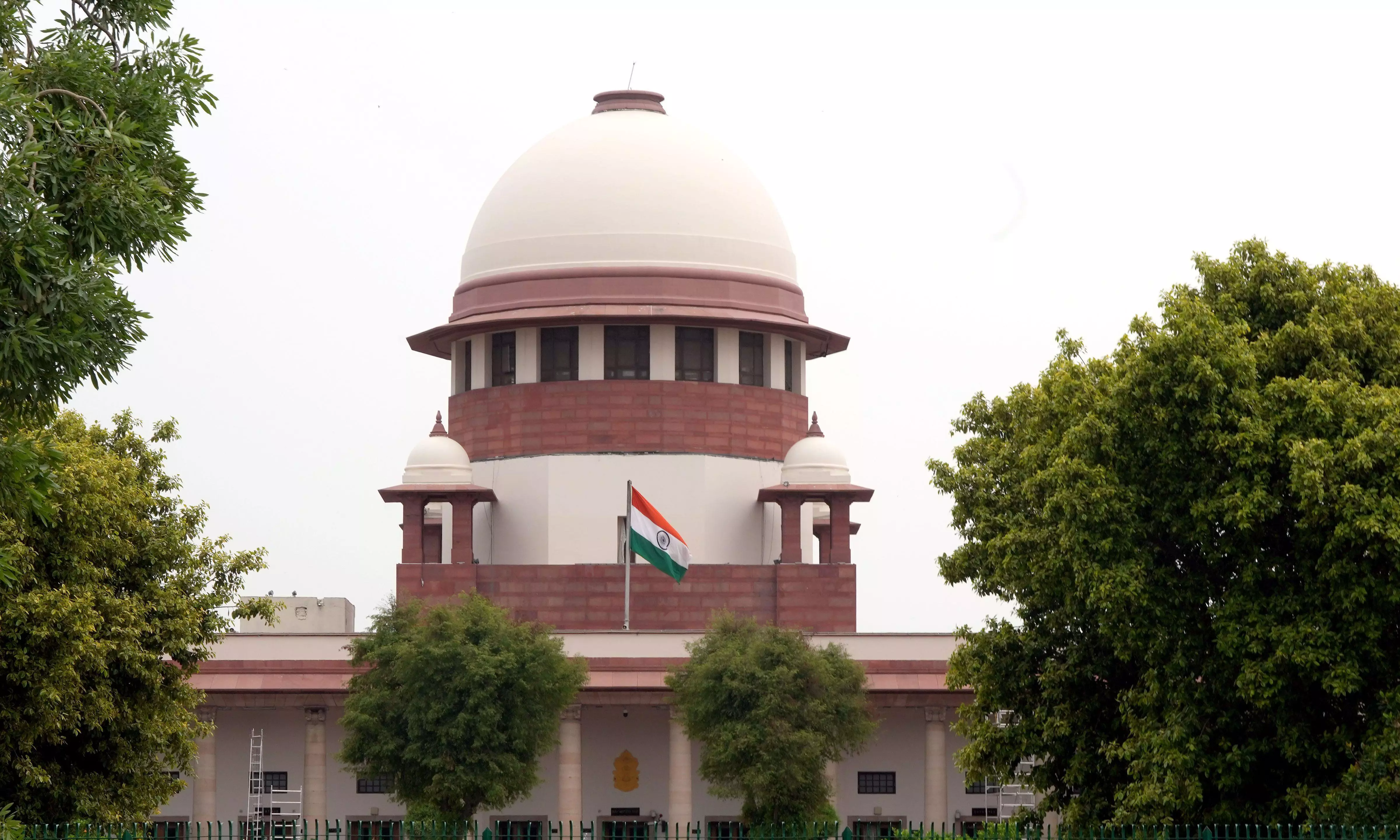
New Delhi: Underscoring the need for a stringent law to protect the dignity of persons with disabilities, the Supreme Court on Thursday asked the Centre to consider framing legislation that would make derogatory remarks or ridicule against persons with disabilities and those with rare genetic disorders a penal offence, on the lines of the SC/ST (Prevention of Atrocities) Act.
The SC/ST Act criminalises casteist slurs, discrimination, humiliation and violence against members of Scheduled Castes and Scheduled Tribes, and makes such offences non-bailable.
A bench of Chief Justice of India Surya Kant and Justice Joymalya Bagchi asked, “Why can’t you frame a stringent law on the lines of the SC/ST Act, which criminalises casteist remarks? There is punishment if you demean them.”
The Court also stressed the need for a “neutral, independent and autonomous” body to regulate obscene, offensive or illegal content on online platforms.
Appearing for the Centre, Solicitor General Tushar Mehta welcomed the Court’s observations, stating that humour cannot come at the cost of someone’s dignity.
On the issue of guidelines to regulate derogatory content targeting persons with disabilities, the Ministry of Information and Broadcasting informed the bench that new guidelines were currently being drafted. The Court directed the ministry to place the draft guidelines in the public domain for discussion and listed the matter for hearing after four weeks.
The Supreme Court was hearing a petition filed by the SMA Cure Foundation, which supports individuals affected by the rare genetic disorder Spinal Muscular Atrophy (SMA). The petition flagged jokes made by India’s Got Latent host Samay Raina and influencers Vipul Goyal, Balraj Paramjeet Singh Ghai, Sonali Thakkar and Nishant Jagdish Tanwar.
Advising the comedians to be mindful of their conduct in the future, the Court directed Mr. Raina and the others to hold two programmes or shows per month highlighting success stories of persons with disabilities to generate funds for their treatment, particularly for SMA patients. The Court said this would serve as a form of social penalty in lieu of harsher punitive measures.
The bench further noted that these influencers could invite persons with disabilities onto their platforms to promote awareness and raise funds for timely treatment of those suffering from rare diseases such as SMA.
Rejecting a plea to recall these directions on the ground that the comedians do not regularly host shows, the CJI said, “This is a social burden we are putting on you.” The Court also remarked that insensitive comments had been made even outside the country. “You and your team need to be very careful… Someone was making comments in Canada also. We know all of this,” the CJI said.
Senior advocate Aparajita Singh, appearing for the Cure Foundation, highlighted that many children suffering from SMA have achieved remarkable accomplishments. She added that parents of SMA patients are often forced to rely on crowdfunding for treatment. She said the foundation declined an offer from Samay Raina to donate ₹2.5 lakh, as the issue at stake was one of dignity.
Solicitor General Mehta told the Court that the issue extended beyond obscenity to “perversity” in user-generated content on platforms such as YouTube. “Freedom of speech is an invaluable right, but it cannot lead to perversity,” he said.
Attorney General R. Venkataramani and the Solicitor General also informed the bench that the Centre was in the process of finalising fresh guidelines.
