BMC To Study Causes For Tree-Falls In Monsoon

Brihanmumbai Municipal Corporation (BMC) would begin inspection, maintenance and mapping of manholes from January every year to ensure better preparedness before the onset of the monsoon.
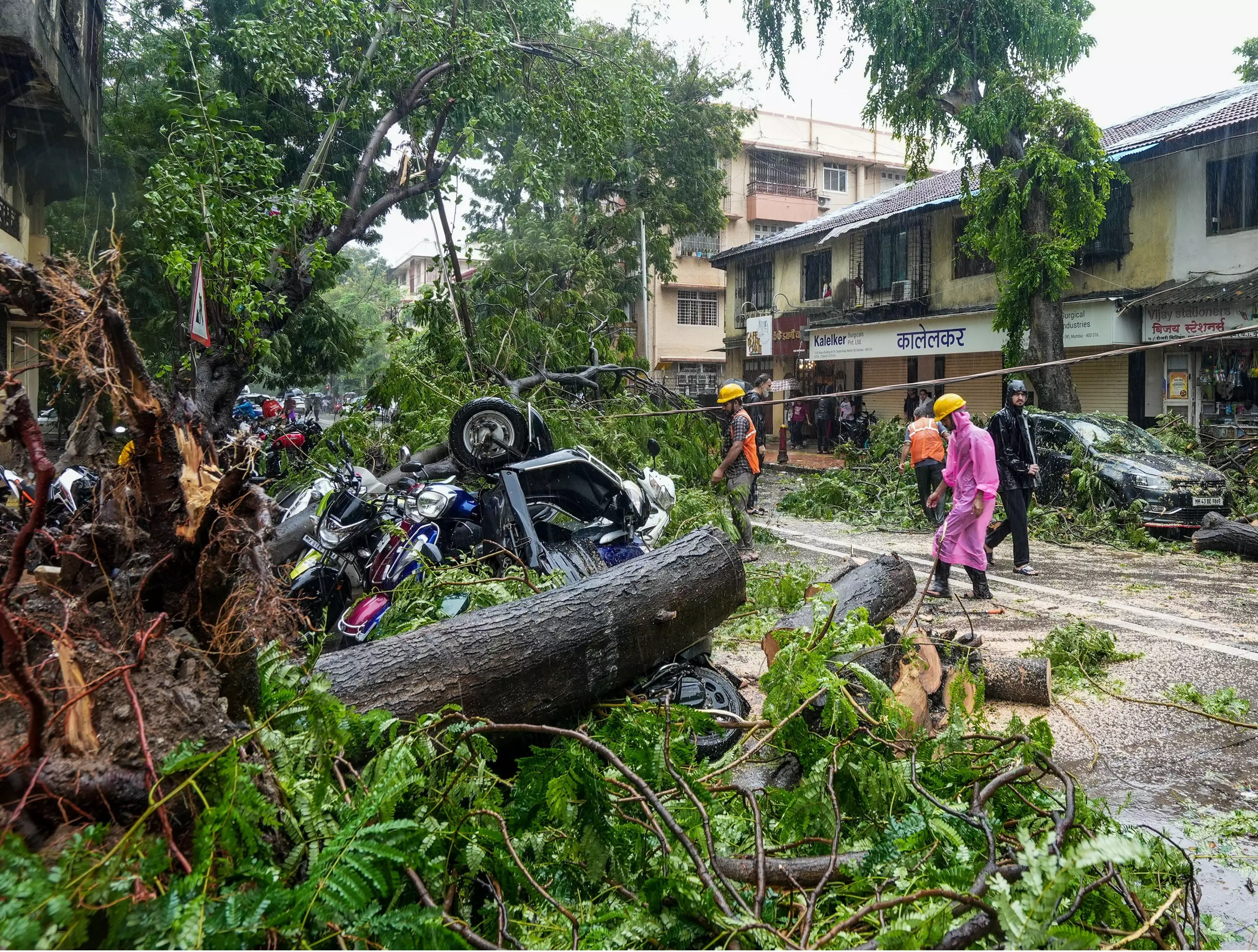
Mumbai : The Mumbai civic body will undertake a scientific study to determine the causes of tree falls during the monsoon, including whether concretisation of roads has any role in weakening trees, municipal corporation commissioner Ashwini Bhide said on Tuesday. She also said the civic body would begin inspection, maintenance and mapping of manholes from January every year to ensure better preparedness before the onset of the monsoon, remarks coming days after a 55-year-old man died after falling into an uncovered chamber amid heavy rains.
Addressing a news conference at the Brihanmumbai Municipal Corporation (BMC) headquarters, Bhide said it would be incorrect to draw a general conclusion at this stage that the ongoing road concretisation drive was responsible for the recent spate of tree-fall incidents.
Mumbai has recorded at least three fatalities, including an 11-year-old school student, over a week in tree-fall incidents.
"Trees are generally located on footpaths and not on carriageways. While construction activity near trees may cause some disturbance, there is no evidence at present to conclude that concretisation has led to tree falls," Bhide said.
She said nearly 1,700 km of roads have been concretised in Mumbai, but the available data on tree-fall incidents was too limited to establish any direct correlation.
"We will study the issue scientifically and seek expert opinion on how roadside trees and underground infrastructure can coexist safely. We want to address the problem at its roots rather than arrive at conclusions without adequate evidence," the civic chief added.
According to BMC data, the city recorded 687 tree falls in 2023, including 180 on BMC land and 507 on private land.
The number dipped slightly to 653 in 2024, with 171 incidents on BMC land and 482 on private land, before rising to 855 in 2025, of which 221 were on BMC land and 634 on private land.
"Tree falling is a thing that happens suddenly, and sometimes people escape with a small injury, or sometimes it becomes very fatal. We have been discussing this issue. We have been discussing how to safeguard trees." Bhide added.
She said Mumbai has more than one lakh manholes belonging to the storm-water drain and sewerage networks, besides over 20,000 sewer manholes, each governed by separate maintenance protocols.
While details of these manholes are available on the BMC's GIS platform, greater operational discipline and micro-level monitoring are required, Bhide said.
She said the civic body would begin inspection, maintenance and mapping of manholes from January every year to ensure better preparedness before the onset of the monsoon and ensure stricter monitoring of civic infrastructure, remarks coming days after a 55-year-old man died after falling into an open manhole amid heavy rains.
Referring to criticism by some elected representatives over the civic body's handling of monsoon-related incidents, Bhide said there was no difference of opinion between the administrative and elected wings of the BMC.
"Elected representatives raise issues brought to them by citizens, while the administration responds according to established procedures. We will continue to improve coordination and ensure accurate information reaches the public," she said.
