Kashmir Sikh Body Calls For Fresh Probe Into Chattisinghpora Massacre

The All Party Sikh Coordination Committee (APSCC) in Jammu and Kashmir, renewed its call for a fresh and transparent probe into the 2000 Chattisinghpora Massacre.
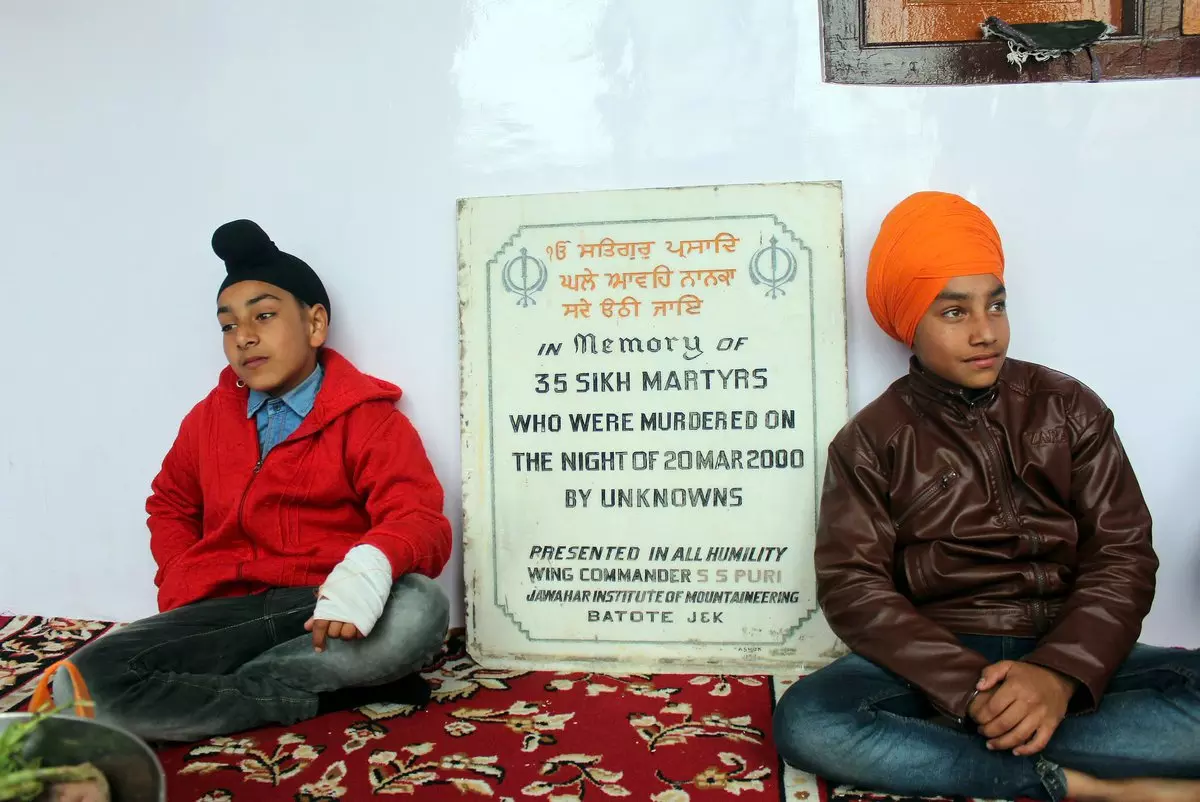
Srinagar : The All Party Sikh Coordination Committee (APSCC), an alliance of Sikh parties and groups in Jammu and Kashmir, on Saturday renewed its call for a fresh and transparent probe into the 2000 Chattisinghpora Massacre, stressing that justice continues to evade the victims’ families even after nearly three decades.
The massacre, which occurred on the evening of March 20, 2000, saw 35 Sikh men brutally killed at Chattisinghpora in Kashmir’s Valley’s southern Anantnag district, by unidentified gunmen. The attack took place just hours before the visit of then U.S. President Bill Clinton to India, a timing that has long fuelled questions and controversy surrounding the incident. The authorities had blamed the massacre on “Pakistan-sponsored terrorists”.
On the eve of the massacre’s anniversary, APSCC chairman Jagmohan Singh Raina urged the government to reopen investigations and empower the Justice Pandian Commission to further probe the case. He stressed that the Chattisinghpora massacre and the subsequent Panchalthan–Brakpora incident—where five innocent civilians were killed in a staged encounter and falsely portrayed as foreign militants responsible for the Sikh killings—are “deeply interlinked” events that must be understood together rather than examined in isolation.
Raina noted that despite the passage of 28 years, the Sikh community in J&K continues to wait for closure. “The government must identify and punish the real culprits instead of relying on unsubstantiated claims,” he said, adding that the official narrative has failed to withstand scrutiny.
The APSCC questioned the long‑held claim that militants were responsible for the massacre. Authorities had announced the killing of the alleged perpetrators in an encounter days later, but the Committee pointed out that no credible evidence has ever been produced to support this version. The Justice Pandian Commission later established that the individuals killed and labelled as militants in the Panchalthan-Brakapora encounter were, in fact, innocent civilians—deepening doubts about the credibility of the initial investigation.
The Committee further alleged that the bodies of those killed in the encounter were charred and buried hastily, while officials projected the incident as a successful operation against militants. “Such actions have only deepened suspicion and mistrust among the people,” the APSCC said, arguing that these inconsistencies have kept the case shrouded in mystery.
Successive probes, the Committee asserted, have failed to uncover the truth behind both the massacre and the subsequent killings. It warned that continued inaction would amount to “grave injustice” to the Sikh community of Kashmir, which has repeatedly sought accountability and transparency.
The APSCC also recalled the assurances made by then Chief Minister Farooq Abdullah, who had promised swift action and justice in the aftermath of the massacre. “Those promises remain unfulfilled to this day,” the Committee said, urging both the Union Territory administration and the Centre to initiate a credible reinvestigation that can finally deliver justice to the long‑suffering families.
