Sustainability and Authenticity Defining Luxury Homes in India

SCDA director - architecture, Jin Aik Oon, shares how global design thinking is blending with local context to shape India’s next generation of luxury homes.
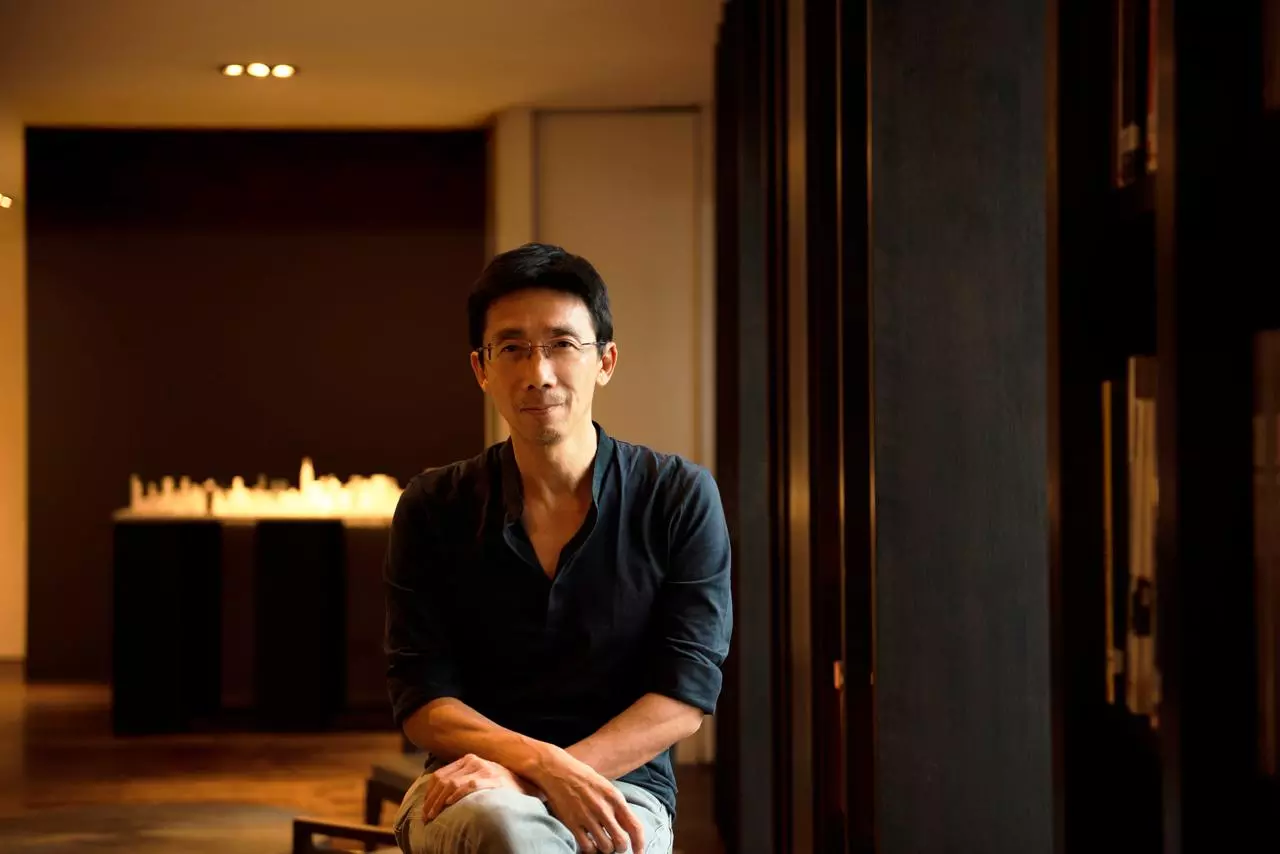
Across India’s fast evolving luxury housing market, a new pattern is becoming visible. Developers are increasingly turning to internationally renowned architects to shape high end residential projects, not simply for global prestige but to reinterpret Indian design sensibilities through a contemporary architectural lens.
One such collaboration is unfolding in Ahmedabad, where Singapore based architect Jin Aik Oon, Director of Architecture at SCDA, is working on By The Water, a luxury villa development by Surya Developers. The project reflects a broader shift in India’s real estate landscape where global design studios are being brought in to create homes that combine international architectural thinking with local cultural and climatic sensibilities.
For Oon, the project began far away from Ahmedabad. The first conversation about the development happened in Singapore when the developers visited his studio with the early outlines of a master plan.
“The owners came to see us in Singapore with the beginnings of a master plan for the whole estate,” he recalls. “From the very start it was clear that this was a special project because there was a singular unifying element in the plan, which is water.”
That idea of water eventually shaped the entire concept of the development, which will feature 99 villas arranged around canals and water bodies. According to Oon, water was never treated as a decorative feature but as the organising framework of the project.
“The aspiration was to create a community centred around water not just as an element but as a spinal organising principle for the entire master plan,” he says. “We asked ourselves how we could use water in a way that enriches the development and the lifestyles of the people who will live here.”
Design decisions were therefore guided by both experience and environmental sensitivity. “One obvious opportunity is the view,” he explains. “We wanted to maximise it so that most of the villas enjoy uninterrupted views of the water. But equally important was making sure the water itself is sustainable and ecologically responsible, especially in a city like Ahmedabad where water is precious.”
Over the years, Oon has watched the project evolve through several stages. His earliest memory of the site is from the period when the land was still being shaped. “We built a platform on the site and you could see the contours of the land being formed. At that time there was no water in the canals yet. It was a large construction site and we were waiting for the monsoon to eventually fill the lake.”
Later visits revealed the architecture slowly taking form. “When the villas were under construction it was mostly concrete and formwork. Now to see it completed is very satisfying. The architecture is quite restrained in its language but there is richness through layers of screens, indoor outdoor spaces and landscapes flowing into the interiors.”
That relationship between landscape and built space is central to the design approach. For Oon, architecture in such environments must respect the natural elements it engages with. “Landscape and water are powerful forces. If they are orchestrated well, they can be incredibly rewarding. But you also need humility in the design because these elements bring practical challenges. Light, moisture and weathering all affect how materials behave over time.”
Balancing openness with privacy and comfort was another important design consideration. “When you have water in front of you there is always the temptation to open everything up. But you also have to think about thermal comfort, shade and privacy while maintaining that connection with the landscape.”
Although this is not SCDA’s first project in India, the Ahmedabad development represents a different scale and typology for the firm.
“Our practice has been around for thirty years and we have worked in India for much of that time,” Oon notes. “We have projects in cities like Mumbai and Delhi, and this is actually our second project in Ahmedabad. But the nature of this one is quite different because it is a villa community shaped around water and landscape.”
The collaboration between local developers, Indian architects and an international design studio was also key to the project’s direction. “I think the synergy between the owners, the local architect and the international designer is very important. When everyone shares a similar design discipline and way of thinking, the outcome tends to be stronger.”
Interestingly, the inspiration for the project itself came from abroad. Oon says the developers were influenced by residential communities they had seen in Singapore, particularly waterfront neighbourhoods built around canals and lagoons.
“They had visited Sentosa in Singapore and were inspired by those waterfront communities. They wanted to explore whether something similar could be replicated in Ahmedabad.”
For Oon, designing luxury homes in today’s global market also involves responding to evolving expectations of buyers. Across cities such as New York, Shanghai and Singapore, he sees a growing convergence in what affluent homeowners seek.
“The world has become very international. When you design luxury housing today, whether it is in Asia or in the United States, the expectations are surprisingly similar.” Yet he believes the defining factor for successful luxury homes lies in authenticity.
“People want the luxury of space, of course. But they are also looking for authenticity. They want something that feels rooted in the place where it exists.” Sustainability, he adds, has also become central to residential design.
“Sustainability is on everyone’s mind now. At all levels of society people are thinking about how buildings respond to the environment,” Oon says. As India’s luxury housing market continues to expand, projects like By The Waters reflect a growing willingness among developers to invest in design driven homes that draw from both global expertise and local identity. For architects like Oon, the challenge is to balance the two.
“The goal is always to create spaces that have a dialogue with nature and with the people who live there. If the architecture allows that relationship to unfold naturally, then the design has succeeded.”
