From Enterprise AI to Healthcare Innovation: Kalyana Krishna Kondapalli on Building Governed Intelligent Systems

24 March 2026 4:30 PM IST24 March 2026 4:30 PM IST
As artificial intelligence transitions from experimental deployments to mission-critical enterprise systems, the focus is increasingly shifting toward governance, accountability, and real-world impact.
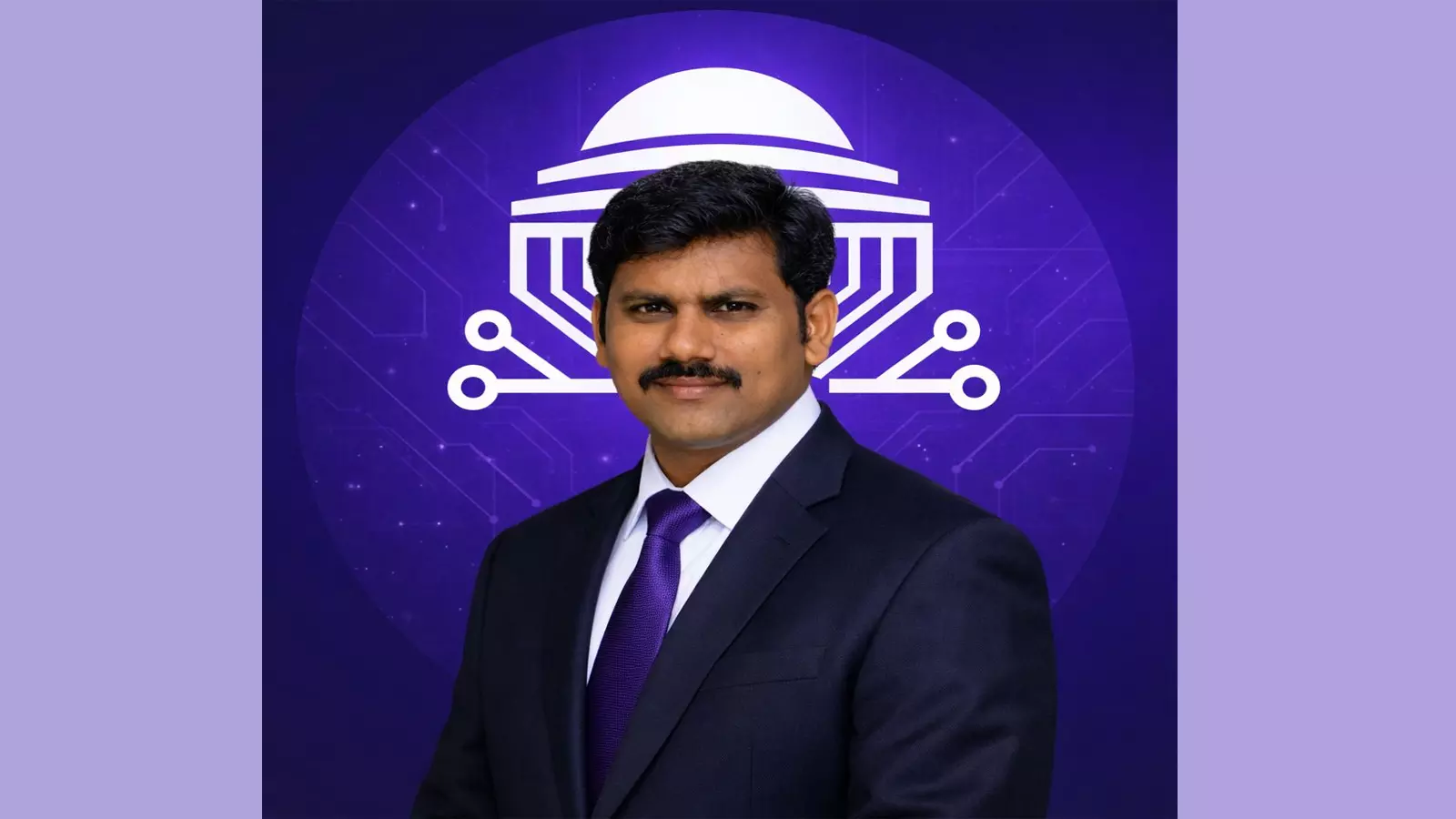
Kalyana Krishna Kondapalli, Director of Technology and Chief Technology Officer at Gen AI Global and CEO of Mytecz | Image by Arrangement
As artificial intelligence transitions from experimental deployments to mission-critical enterprise systems, the focus is increasingly shifting toward governance, accountability, and real-world impact. Across industries—from cybersecurity to healthcare—organizations are seeking ways to integrate AI that is not only powerful but also transparent and reliable.
Kalyana Krishna Kondapalli, Director of Technology and Chief Technology Officer at Gen AI Global and CEO of Mytecz, has been working at this intersection, developing systems that combine autonomous intelligence with structured oversight. His work spans enterprise AI platforms, cybersecurity frameworks, and healthcare innovations, reflecting a broader effort to align advanced technologies with practical and responsible deployment. In this conversation, he discusses his work, innovations, and the evolving role of AI across sectors.
Your work spans AI, cybersecurity, and healthcare. How did this journey begin?
My journey started with an interest in bridging theoretical AI concepts with real-world applications. Early on, I focused on machine learning, agentic systems, and data governance. Over time, this evolved into building systems that can operate reliably in complex enterprise environments.
The goal has always been to transform complex technologies into operational ecosystems that are efficient, secure, and scalable across industries and geographies.
What is your role at Gen AI Global, and how does the organization contribute to AI adoption?
At Gen AI Global, I serve as Director of Technology and CTO. The organization brings together professionals working in generative AI and digital transformation, including initiatives connected to global professional education ecosystems.
My work focuses on architecting autonomous systems capable of performing complex business functions while remaining under explicit human control. This balance between autonomy and oversight is critical, as organizations increasingly look to deploy AI in production environments rather than experimental settings.
Governance in AI is a growing concern. How do you address this in your work?
Governance is central to AI adoption. In my work, I design systems that include structured audit trails, defined escalation paths, and clear accountability mechanisms.
This ensures that AI systems are not treated as black boxes but as controlled, auditable entities that can be trusted in enterprise operations.
Your patent portfolio reflects significant innovation in cybersecurity. Can you elaborate?
One of my key patent applications is “Artificial Intelligence–Driven Cybersecurity System and Its Method Thereof” (Indian Patent Application No. 202541091843).
This system focuses on behavioral anomaly detection, identification of zero-day threats, and real-time mitigation in cloud-native environments. It integrates reinforcement learning for automated response and federated learning for secure intelligence sharing.
The aim is to create adaptive systems capable of responding to evolving threats while maintaining robustness and security across distributed infrastructures.
You’ve also developed innovations in healthcare. What challenges are you addressing?
Healthcare systems, especially multi-hospital networks, face challenges in managing resources such as bed allocation, patient flow, and compliance.
My work on the AI-Driven Secure Bed Allocation Ecosystem for Multi-Hospital Networks applies predictive AI, blockchain, and intelligent automation to address these issues. The system enables real-time coordination across facilities while ensuring compliance with healthcare regulations.
How does your platform HayanCare build on this work?
HayanCare is an extension of this patented system and is currently under development as an AI-powered hospital management platform.
It integrates predictive analytics, blockchain, and intelligent automation to streamline bed allocation, optimize staff deployment, and maintain regulatory compliance. The platform also uses biometric authentication, natural language processing of clinical notes, and policy-driven smart contracts to ensure secure and auditable processes.
The goal is to improve patient outcomes, reduce waiting times, and enhance operational efficiency across hospital networks.
Collaboration appears to be a key part of your work. Can you share some examples?
Collaboration is essential in building effective AI systems. At Creative Sense Solutions in Malaysia, I have focused on integrating AI-driven cybersecurity frameworks into digital product development, emphasizing governance and threat mitigation.
Similarly, my work with Module3.ai in the United States centers on enhancing security and compliance within AI-driven drug development environments.
I also collaborate with Spark Intelligence Lab in the United States, where we pilot and implement emerging AI technologies. These partnerships facilitate cross-border innovation, foster knowledge transfer, and support mentorship for emerging researchers.
What kind of impact have your AI systems had in enterprise environments?
In enterprise AI, my focus has been on developing governed AI agent workforce platforms. These systems allow AI agents to perform business functions with defined authority, escalation mechanisms, and auditable decision-making processes.
In one implementation, an AI-driven sales workforce system achieved a 90 percent reduction in response times, reduced staffing requirements by 83 percent, and delivered estimated annual savings of $800,000.
These results demonstrate how AI can drive efficiency while maintaining control and accountability.
Your work also includes academic research. How does that influence your approach?
Research plays a critical role in shaping practical solutions. My publications in platforms like IEEE Xplore explore AI applications in cybersecurity, healthcare operations, and neurology.
Bridging research with implementation ensures that systems are both scientifically rigorous and operationally viable.
You are also associated with professional organizations. What role do these affiliations play?
I am involved with organizations such as the National Cyber Security Research Council and the National Cyber Security Standards.
These affiliations support collaboration, policy development, and the promotion of best practices in cybersecurity and AI governance. They also provide a platform for contributing to broader industry standards.
How would you describe your leadership philosophy?
My approach combines technical depth with strategic thinking. I focus on building systems that are innovative but also practical and safe. Mentorship and collaboration are important aspects of my work, as innovation often happens at the intersection of disciplines. I also emphasize ethical AI deployment, ensuring that governance, risk management, and accountability are embedded into every system.
What do you see as the future of AI, cybersecurity, and healthcare?
These domains will continue to converge. AI will play a central role in optimizing operations, strengthening cybersecurity, and improving healthcare delivery.
The future will be defined by systems that are not only autonomous but also transparent, auditable, and aligned with ethical and regulatory standards.
What lies ahead for your work?
With ongoing pilot projects, research collaborations, and continued innovation, my focus remains on expanding the capabilities of AI while ensuring responsible deployment.
As organizations navigate digital transformation and evolving cybersecurity risks, there is a growing need for systems that balance innovation with accountability. That’s where I see my work continuing to contribute.
( Source : Deccan Chronicle )

Next Story