Bihar’s Verdict and the Strategy That Shaped It

Months before the first rally, Shah began laying the framework which included reviewing constituency data, anticipating risks, recalibrating social coalitions and ensuring BJP–JD(U) coordination
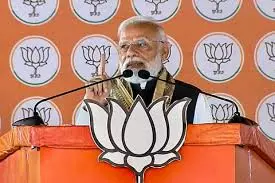
The Bihar Assembly election has delivered a clear and emphatic mandate. The NDA’s sweeping victory with 202 seats in total, the BJP securing 89 seats as the single-largest party and the JD(U) close behind at 85 has fundamentally shifted Bihar’s political landscape. What was expected to be a tight contest ended instead in a decisive rout of the Mahagathbandhan. The Opposition alliance was not just pushed aside but comprehensively decimated as voters rallied behind a united and well-prepared NDA campaign.
Much of that preparation can be traced back to Amit Shah, whose imprint was visible on nearly every strategic layer of the NDA’s effort. Shah knew that Bihar’s election was never going to be an ordinary political contest. With shifting caste equations, fragmented alliances and a surging youth electorate, the state demanded a campaign that was both grounded in micro-level realities and agile enough to respond to rapid political churn. What ultimately took shape was a machinery that understood Bihar’s political soil with precision, a blueprint shaped by Shah’s election acumen.
Months before the first rally, Shah began laying the framework which included reviewing constituency data, anticipating risks, recalibrating social coalitions and ensuring BJP–JD(U) coordination. His early internal forecast that the NDA would cross 160 seats, reflected a granular understanding of the state’s emerging political mood, shaped through repeated internal reviews and outreach cycles.
This early preparation allowed the campaign to move into its high-energy phase with clarity. Once the organisational scaffolding was set, Prime Minister Narendra Modi’s rallies gave the alliance the broader momentum it needed. His welfare-led messaging, emphasis on stability and wide appeal across caste groups helped set a unifying tone. Senior leaders such as Dharmendra Pradhan and Vinod Tawde then ensured the message stayed consistent across districts. They worked closely with state units, supervised communication streams and kept coordination with allies smooth, even in constituencies with tight contests.
A key part of the NDA’s strategy lay in quiet but persistent problem-solving, one of Shah's key strengths. One of the most significant challenges was internal dissent. Nearly 100 BJP rebels were active at one stage, risking vote splits in several constituencies. Shah’s three-day intervention in Patna, where he held direct conversations with dissidents, re-negotiated local equations and pulled most rebels back into the fold, proved crucial. Constituencies that could have fractured ended up holding firm for the NDA.
The NDA’s social outreach also bore Shah’s signature,a layered, constituency-specific effort that avoided over-reliance on any single caste block. Extremely Backward Classes saw persistent engagement; Mahadalit, Pasi and Paswan voters were mobilised with support from the LJP; Koeri–Kurmi coordination was strengthened in tandem with JD(U). Upper-caste groups were consolidated through targeted meetings, while welfare-driven messaging reached women and small but strategic pockets of Muslim voters. For the first time in years, this multi-layered approach punctured the Opposition’s traditional strongholds.
Equally important was the narrative the NDA built and maintained. Development was presented as a continuous story—roads, railways, flood-control work, hospitals, industrial projects and the expansion of public services. Shah’s introduction of the “Triple M” formula—Mahila, Modi and Mandir—gave the cadre a simple framework to guide booth-level conversations. Local units adopted it quickly, using it to keep voter outreach sharp and issue-focused.
What Bihar ultimately demonstrates is that elections in complex states are no longer won through charisma or headline messaging alone but through architecture—data-heavy preparation, precise social engineering, calibrated narratives and disciplined execution. The BJP is expected to rely increasingly on this Bihar model in upcoming contests.
At the heart of that model is Amit Shah’s strategic craft. His style—early planning, crisis containment, coordination discipline and constituency-level calibration—has shifted from being an auxiliary strength of the party to the central design philosophy guiding its campaigns.
The Bihar mandate is not just a victory; it is a preview of the political grammar that is likely to shape India’s next major electoral battles.
The article is authored by Dr Suvrokamal Dutta is an acclaimed International Conservative Political Economic and Foreign Policy Expert.
