Amit Shah’s Historic Tenure and the Power of Political Will

8 Oct 2025 4:34 PM IST8 Oct 2025 4:34 PM IST
Record 2,258-day tenure marked by decisive action against insurgencies, legislative reforms, and modernising the Home Ministry
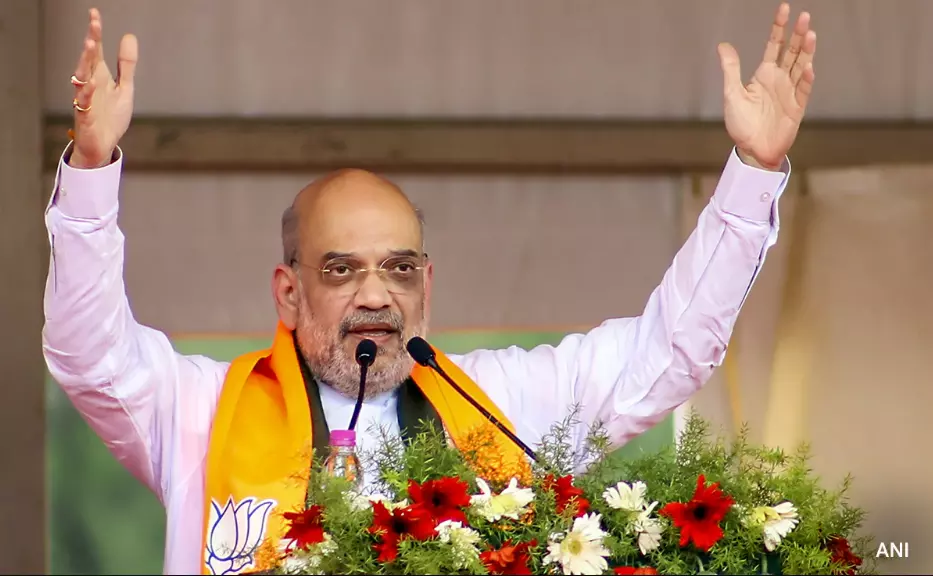
Amit Shah’s historic tenure as India’s Home Minister stands out for continuity and political will, transforming the ministry into a proactive force addressing insurgencies, security challenges, and sweeping legislative reforms.
Last month, Amit Shah crossed a milestone no other man in his chair has — he is now the longest-serving Union Home Minister, marking 2,258 days in office. The Home Ministry, traditionally seen as a caretaker of law and order, has rarely been associated with continuity or long-term vision. Shah’s tenure changes that perception. More than the number of days, Shah’s record tenure stands out not merely for its longevity, but for how that continuity, coupled with political will, allowed him to confront some of India’s most stubborn internal challenges.
For decades, successive governments grappled with insurgencies, terrorism, and legal frameworks inherited from the colonial era. Yet many of these issues remained frozen in time, seen as too sensitive, too complicated, or too politically costly to resolve. Shah’s tenure broke with that pattern. Backed by the confidence of Prime Minister Narendra Modi and armed with the freedom to act decisively, he approached these challenges with both firmness and a willingness to experiment.
The decline of Maoist violence is one such story. What was once described as India’s gravest internal threat has withered over the past six years. Violence has fallen by more than 80% since the 2010 peak. Only 18 districts remain seriously affected today. Security forces were strengthened, top commanders neutralised, and pathways for surrender expanded. The approach wasn’t just muscle — it was a combination of pressure, reconciliation, and development, an approach that whittled away at a movement once thought intractable.
In the Northeast too, Shah applied the same mix of strength and dialogue. Where earlier governments struggled to manage insurgencies, his ministry pushed through peace accords with armed groups while maintaining a strong security presence. Over 10,000 militants laid down arms since 2019, and violence has dropped dramatically — over 70% in incidents and more than 80% in civilian deaths compared to a decade ago. The region, long synonymous with unrest, has begun a slow but steady shift toward peace.
Legislation has been another arena where Shah left his stamp. The abrogation of Article 370 and the reorganisation of Jammu and Kashmir was perhaps the boldest step taken by any Home Minister in decades. The Citizenship Amendment Act (CAA), passed in 2019, fulfilled a political promise that had lingered for years. The replacing of colonial-era Indian Penal Code (IPC), Code of Criminal Procedure (CrPC) and Indian Evidence Act to Bharatiya Nyaya Sanhita (BNS), Bharatiya Nagarik Suraksha Sanhita (BNSS), and Bharatiya Sakshya Adhiniyam (BSA) was also another long-pending overhaul that was executed under his leadership. Few expected such sweeping reforms to come from a ministry that once moved slowly, almost cautiously.
Shah’s vision for internal security went beyond fighting legacy battles. He broadened the Home Ministry’s scope to address cybercrime, narco-terrorism, drone threats, and other emerging challenges. His emphasis on inter-agency cooperation and technology-driven policing highlighted a forward-looking approach, preparing the system for threats of the future as much as those of the past.
What sets his tenure apart, though, is not just what was done but how it was made possible. Home Ministers in India have rarely stayed long enough or had the political space to push through big changes. Coalition governments and shifting priorities meant the ministry was often reactive. Shah’s record run gave him time — and the political will of the Modi government gave him cover. Together, they turned a department of firefighting into one of reform.
As he makes history with his record tenure, Amit Shah’s legacy rests on two things: the problems he confronted head-on, and the way continuity of leadership made it possible. By staying the course where others hesitated, he has redefined what the Home Ministry can be — not just a guardian of order, but an agent of transformation.
The author, Dr Suvrokamal Dutta, is an International Conservative Political Economic and Foreign Policy Expert.
( Source : Guest Post )

Next Story