How Governor-General Rajaji Engaged In Hectic Parleys To Avert Military Action:1948

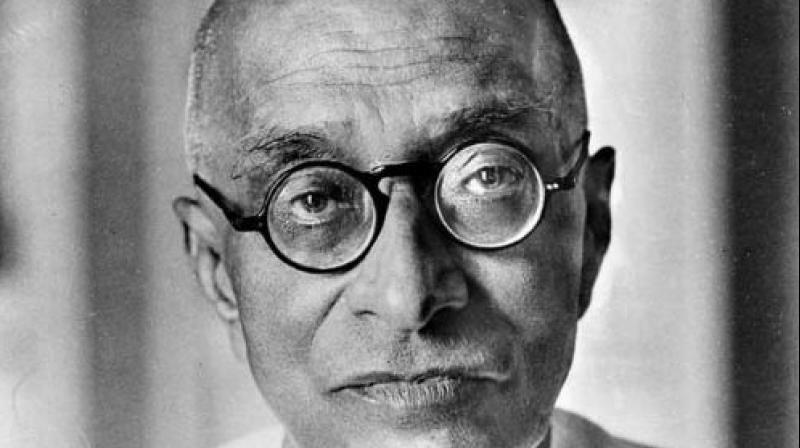
New Delhi: The pivotal role India’s first Home Minister and Deputy Prime Minister Sardar Vallabh Bhai Patel played in the liberation of Hyderabad in September 1948 is well known. Declassified documents have now revealed behind-the-scene diplomatic efforts Governor General C Rajagopalachari made to avert military action to achieve a peaceful settlement.
As soon as he took over as the Governor General in June 1948, Rajaji looked for details of the negotiations between his predecessor Lord Mountbatten and the Nizam but he found that some letters were missing. He shot off a letter to Mountbatten (he used to address him ‘dear Dickie’) requesting him to share copies of letters he had written to the Nizam. In particular, Rajaji wanted Mountbatten to make public his last telegram to Osman Ali Khan sent on June 18, 1948.
Given the sympathetic attitude of some British MPs towards the Nizam, Rajaji asked Mountbatten to explain to the British polity that as the Governor General he had gone “as far as possible to accommodate the Nizam without injury to the future of India as well as of Hyderabad.”
Mountbatten wired back saying ‘the June 18 telegram was entirely personal, unofficial and private message’ and it would be unethical to publish it. Mountbatten followed up with a letter explaining his position: “It has always been the custom for previous Viceroys not to pass on to their successors the personal records of their own discussions and personal letters. Certainly, Wavell passed nothing on to me.”
On one hand, Rajaji was trying to create a favourable opinion on Delhi’s position regarding Hyderabad in Britain and the United Nations, on the other, he was engaging with the Nizam for a peaceful outcome.
On August 23, 1948, the Nizam cabled Rajaji saying Hyderabad ‘wanted to live as a good neighbour in peace and tranquility’ and would ‘welcome an honourable settlement acceptable to both the parties.’ A week later, Rajaji wrote back to the Nizam, pointing out that ‘unrestrained activities of private armies, enjoying the support of the official machinery, have created a state of terror in Hyderabad.’
As a way out, Rajaji suggested the Nizam should ban the Razakars and invite the re-posting of an adequate military force from the Union of India at Secunderabad. He also assured that the Nizam’s prestige and position would be safeguarded ‘in any political solution.’ Mir Osman Ali Khan, in a telegram sent on September 5, rejected both suggestions and said ‘the matter of allowing Indian troops to remain in my territory is out of the question. My own troops are able to satisfactorily safeguard the life and property of my subjects.’
Rajaji appraised Mountbatten of Nizam’s response to his suggestions and informed him on September 8 that Delhi was left with no option but to ‘re-station’ the Indian army in Hyderabad. This, he said, will be ‘pure and simple police action.’ The Nizam, he said, could still save the day and “this can be helped by advice from his friends in London, including the Press,” Rajaji wrote. At the same time, he noted that the Nizam’s adamant attitude was ‘a result of pulling the strings from Karachi.’
Meanwhile, Osman Ali Khan relented a bit. He sent a telegram on September 11 to Rajaji saying he would “take adequate action concerning the Razakar movement once the border situation improves and the present situation eases a little.” In his reply, Rajaji noted that ‘Indian troops were withdrawn as a gesture of trust when the Standstill Agreement was reached, but law and order have now completely broken down in Hyderabad’, so re-stationing the Indian troops in Hyderabad was the only way out.
Referring to reports that Indian troops were advancing towards Hyderabad, the Nizam on September 13 cabled Rajaji requesting the Union of India to reconsider its decision. Mountbatten too wrote to Rajaji “I beg of you to counsel caution.” Rajaji replied to him: “I depend on you and Edwina entirely to correct the impressions in Britain that India has been moved by a warlike spirit.” The Police Action finally took place on September 17, and the Nizam had to sack the Laik Ali ministry and disband the Razakars. He cabled Rajaji accepting that the Laik Ali ministry had not permitted him “to make friends with India when the time was good.”
Dinesh C Sharma is a journalist and researcher based in New Delhi. His upcoming book is on the making of modern Hyderabad.
