Implementation of Swachh Bharat, other missions to be focus in 2017: Venkaiah

The minister says there is a new-found spirit of competition among states and cities in giving positive results.
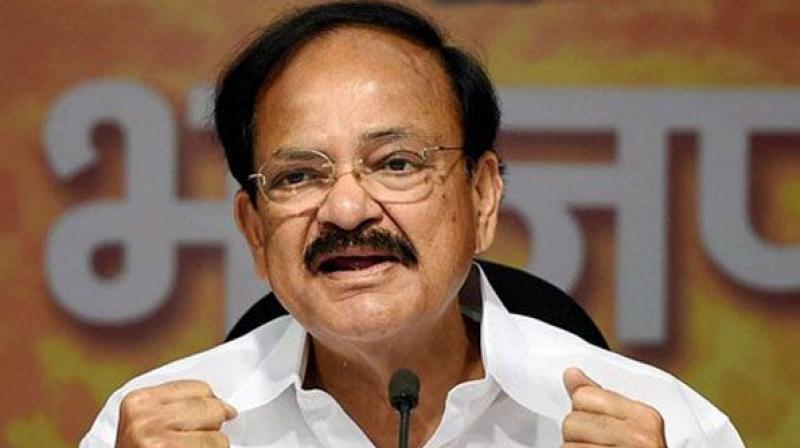
New Delhi: Implementation of urban missions, including Swachh Bharat, will continue to be the focus area of the new year, said Urban Development and HUPA Minister M Venkaiah Naidu, who has set a target of achieving enhanced
outcomes within stipulated time frames.
The year 2016 was hectic for his ministries which succeeded in getting the Real Estate Bill passed in Parliament and in giving momentum to Swachh Bharat Mission in urban areas, getting close to half-way mark of mission targets in
constructing toilets.
"On the whole, 2016, the first year of execution of new missions has been encouraging. We would like this momentum to be further enhanced so that intended outcomes are realised within stipulated time frames," he said.
He said new urban missions, except Swachh Bharat Mission, were launched in 2015 after year-long "extensive consultations" with states, urban Local Bodies and other stakeholders.
"City governments were required to adopt new approaches in place of the earlier business. They rose to the occasion to a large extent and that is evident in the pace of implementation," he said.
Naidu also said there was a "new-found spirit of competition" among states and cities in giving "positive results" adding that the ease of doing business in urban areas is "improving rapidly".
The year saw the selection of 60 cities in three rounds for financial assistance from the Centre to develop them as smart cities.
Swachh Bharat Mission in urban areas got close to half-way mark of mission targets in building toilets during this year.
As against the target of building over 66 lakh individual household toilets, about 27.82 lakh have already been built and construction of another 21.43 lakh toilets is nearing completion as the mission gained momentum in 2016. While 5.08 lakh community and public toilet seats are required to be built by 2019, already 1.07 lakh toilet seats have been built so far and construction of another 1.28 lakh
toilet seats in nearing completion.
As many as 87 smart cities have undertaken credit rating exercise with 16 of them completing the process. Of the over 81,000 urban wards in the country, 39,995 wards have reported 100 per cent door-to-door collection of municipal solid waste.
A major highlight of 2016 being enactment of Real Estate (Regulation and Development) Act and subsequent notification of Real Estate Rules for five Union Territories without legislatures by the Ministry of Housing & Urban Poverty Alleviation (HUPA) and by the Ministry of Urban Development for Delhi.
Some states too have come out with such rules. This legislation that came into being after a long wait of 8 years has been widely welcomed.
Under Deen Dayal Antyodaya Yojana-NULM, meant for enhancing employability and enhancing incomes of urban poor, 7.38 lakh beneficiaries were skill trained, 1.18 lakh urban poor were assisted for self-employment through subsidised loans and 1.43 lakh self-help groups were formed.
Towards improving the 'Ease of doing business', Ministry of Urban Development issued 'Model Building Bye-laws' providing a framework for online approvals for building and construction projects in urban areas including simplified environmental and other clearances within 30 days besides promoting green construction technologies.
To enhance ease of doing business, integrated online building permission system commenced during 2016 in Delhi and Mumbai under which approvals are being accorded in less than 30 days.
