16 J&K Tourist Spots Shut After Pahalgam Terror Attack Reopened

L-G Manoj Sinha hands over Govt job letter to Slain Horse-handler Aadil’s spouse
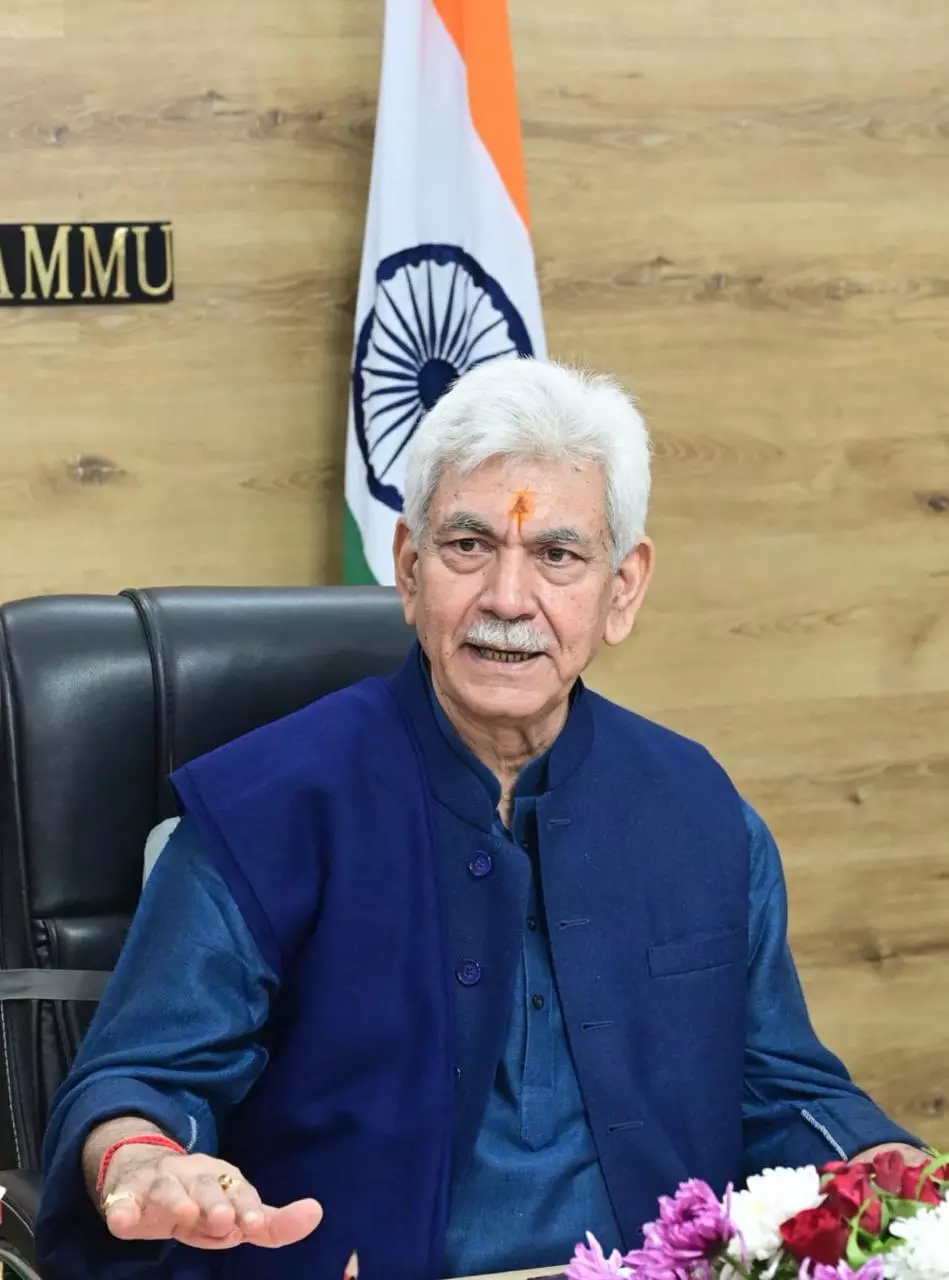
SRINAGAR: The Jammu and Kashmir authorities have reopened eight of the 48 ‘destinations’ that were shut for tourists following the April 22 terror attack in Baisaran meadow near the Valley’s premier resort Pahalgam, leaving 25 Hindu holidaymakers and a local Muslim horse-handler dead.
Announcing this, Lieutenant Governor Manoj Sinha said on Saturday that the government decided to throw eight destinations in the Kashmir Valley open again to the visitors after a security review. Eight more tourist spots have been reopened for visitors in the Jammu region as well.
“We decided to reopen a set of tourist spots to the public after thorough deliberations involving the Divisional Commissioners and Inspectors General of Police of both Jammu and Kashmir divisions and other officers,” he told reporters in Pahalgam. He added, “These with other destinations were closed after the April 22 terror attack as a precautionary measure. After assessing the situation it has been decided that the closed destinations will be reopened for tourists in a phased manner.”
He said, “Tourists have started arriving in large numbers again. The Central government is also facilitating official meetings and visits by parliamentary delegations here (Kashmir), which will further boost confidence and contribute to an increase in tourist footfall.”
Reiterating the administration has implemented robust security measures to reassure visitors, Sinha said, “All security arrangements are in place. I appeal to tourists to visit in large numbers. Everyone involved is fully active on the ground, and the administration is committed to ensuring a peaceful experience for each guest.”
Talking about the upcoming annual pilgrimage to revered cave-shrine of Amarnath in the lower Himalayas in the Pahalgam region, the Lt. Governor said, “This is the people’s yatra. It will help in improving your economy and reviving tourism. We have strengthened the security grid at all key locations to ensure safety. Enhanced security deployments include increased presence of J&K Police, Army, CRPF, and other Central Armed Police Forces (CAPFs). I appeal to all pilgrims and tourists to visit in large numbers”. He added, “Public cooperation is essential in ensuring the yatra is peaceful and successful.”
As the recent inauguration of the Udhampur-Srinagar-Baramulla Rail Link (USBRL) has sparked widespread enthusiasm among people in J&K and across India, the Lt. Governor said, “Railway officials informed me that bookings are already full for the next ten days. People are showing overwhelming interest, which reflects growing confidence and normalcy.”
In the Valley Anantnag district, Betaab valley and parks and other recreation centres in the Pahalgam market area, and Verinag, Kokernag and Achabal gardens have been reopened whereas Srinagar’s Badamwari or the almond clove, Duck Park along the City’s Foreshore Road and nearby Lakeview Park (often referred to as Taqdeer Park) and Bagh-e-Shagoofa situated on the banks of Nigeen Lake will also be, once again, accessible to the public.
In Jammu division, tourist spots Sarthal, Baggar, Devi Pindi, Sehar Baba Waterfall, Sulha Park, Gul Danda, Jai Valley, Panchari have also been reopened, the Lt. Governor said.
Due to security concerns set off by the Pahalgam carnage, the J&K authorities had on April 29 declared 48 resorts, gardens and other recreational area-mostly offbeat or outlying-eateries and boarding houses across the scenic Kashmir Valley off-limit to domestic (Indian) and foreign tourists “as a precautionary measure”.
The decision had followed the concerned authorities receiving a report from the security agencies strongly recommending temporary closure of these “destinations” for logistic reasons. The report had said that it was not possible to provide security to the visitors at these places.
The official sources here had said, “Assessing the situation, the dominant view of the security authorities was that due to the challenging topography and ground factors full security measures are simply not feasible at these places.” The sources had added that, at least, for the time being when the J&K police and other security forces are engaged in widespread counter-terror operations across the region, there are significant challenges in maintaining or enhancing security in these off-beat and secluded places visited by tourists.
Out of the 48 “destinations” temporarily closed for tourists only a few are popular. These include Srinagar’s Badamwari, Mahadev Hills, Dachigam National Park, nearby Buddhist Monastery and Astanpora area (popular for paragliding).
In Baramulla, the places which are popular among tourists and were “temporarily” declared out of bounds for them include Wular, the largest freshwater lake in South Asia and Watlab, a plateau type tourist village located on the west side of it. Babareshi, the site of the mausoleum of the 15th century Sufi-Reshi saint Baba Payamuddin Reshi-revered by both Muslims and Hindus- tucked away in dense forests down the premier ski resort of Gulmarg too was closed for tourists.
In neighbouring Budgam, Yousmarg, Tousamaidan and Doodhpathri meadows located in the embrace of the mighty Himalayas and like Baisaran where the terror attack took place on April 22 are surrounded by dense forests also figured in the off-limits destinations.
In southern Anantnag district, the Martand Sun Temple, a medieval-period Hindu shrine, Verinag Mughal which also is a major tourist attraction and Sinthan Top and Margan Top, the mountain passes which had in the recent past witnessed heavy rush of tourists as these remain covered with snow beyond the winter months too were shut for tourists.
The list also included Srinagar’s historic Jama Masjid (Grand Mosque) and a couple of neighbourhood eateries renowned for serving Kashmiri Wazwan cuisine and frequented by tourists. The other “destinations” closed for tourists were either lesser-known gardens, waterfalls, other recreational spots, guest houses or eateries.
While the authorities had justified the decision calling it a “transitory but necessary temporary measure to ensure no harm comes to any of our gusts”, many people had turned to social media platforms to criticise it, asserting that it will spread fear and discourage tourists from visiting the Valley.
However, the J&K Tourism Department officials had clarified that all major tourist destinations across the Valley including Pahalgam, Gulmarg, Sonamarg, Dal Lake, and (Srinagar’s) Mughal Gardens are open and secure and continue to welcome visitors. They had said that only some lesser-known offbeat destinations—accounting for merely 4-5 percent of the overall tourist footfall—have been closed temporarily as a precautionary measure.
Meanwhile, Lt. Governor Sinha on Saturday visited the residence of slain horse-handler Syed Aadil Hussain in Pahalgam’s Hapatnaar area and handed over a government job letter to his wife Gulnaz Akhter, reassuring her of full government support.
“I visited the home of Aadil, who lost his life in a terrorist attack while saving tourists. This visit was a solemn commitment. We had assured the family of all possible support, and today’s step reflects our efforts to stand by them in this hour of grief,” Sinha told reporters. He added, “Financial assistance was also provided to his family by the Ministry of Home Affairs through the J&K administration, and many states extended help as well. Today, his wife has been given a permanent job.” Terming it as a gesture of state support, Sinha said that the decision to provide a permanent job to the Aadil’s spouse was taken to honour his sacrifice and to ensure the family does not face financial hardship in the aftermath of the tragedy.
