CPM MLAs lead attack, term it Centre's plan to usurp power of states.
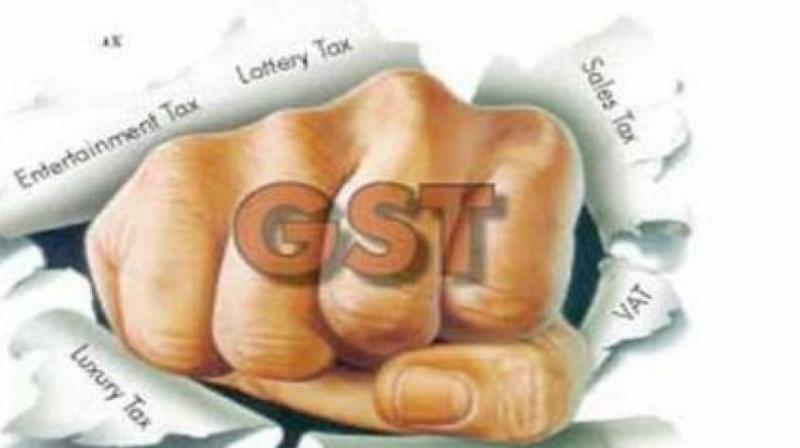
THIRUVANANTHAPURAM: There was absolute condemnation of the GST in the Assembly during the discussion on Goods and Services Tax Bill, 2017, on Tuesday. While the LDF members presented the GST as part of Prime Minister Narendra Modi’s grand plan to usurp the power of the states, and were highly critical of the poor preparedness before the roll out, the Congress members were disappointed with the shape that GST had acquired under Narendra Modi. And there was the general consensus that prices have gone up post GST, and the government was unable to do anything about it.
The CPM members, in keeping with the Central Committee resolution adopted during the July 24-26 meeting exhorting party cadres to participate in protest movements against GST, were especially critical. Contradicting finance minister Dr Thomas Isaac’s oft-repeated stand, CPM MLA Suresh Kurup said it would be naive for the state to set great store by the gains from taxing services. “Kerala’s contribution to the services tax kitty of the Centre in the pre-GST period was a paltry 1.5 per cent,” he said. Isaac, during his reply, said that this was because taxes on financial services and other major services provided for those in Kerala, say for instance banking services, were billed as collections from states where the headquarters of the service provider was situated, in most cases Mumbai.
“Now, under GST, the tax will come to the place where the service is received,” Isaac said. CPM’s young MLA M. Swaraj said esoteric graphs and percentages had clouded the reality about GST, a statement seen as an indirect attack on Isaac who is inclined to use academic tools to elaborate economic concepts. “There is no point in hiding behind technicalities when asked why prices are not coming down,” Swaraj said. Independent MLA P. C. George said Isaac had betrayed his party by being moré excited about GST than even Modi. Isaac told George that all his interventions in the GST Council were with the backing of his party.
Mr Isaac, however, conceded three things. One, the GST will rob the state of its powers. “We can’t take a decision on issues very specific to us, say for instance reducing tax on dry fish,” Isaac said. Two, prices have gone up despite taxes on them actually falling. Three, the regime will hit small scale units hard as units that were earlier exempted from excise tax will now come under the ambit of the GST.
Opposition leader Ramesh Chennithala said that though his party was not against GST, it was unfortunate that the GST rate was not capped at 18 per cent. Isaac described the Congress stance as “distributionally regressive”. “I plead guilty for having argued forcefully to raise the upper ceiling in the GST Council,” he said and added: “It was only because the upper limit was raised that we could lower the 6 per cent rate to 5 per cent, and also introduce a slab for zero rated products. Nearly 40 percent of goods are included in the zero slab,” Isaac said.