IIT Guwahati Develops Low-Cost System to Remove Two Groundwater Contaminants

The researchers have developed a rotating-anode electrocoagulation (RA-EC) reactor that achieved up to 98.2 percent removal of arsenate and 91.8 percent removal of fluoride during their experiments.
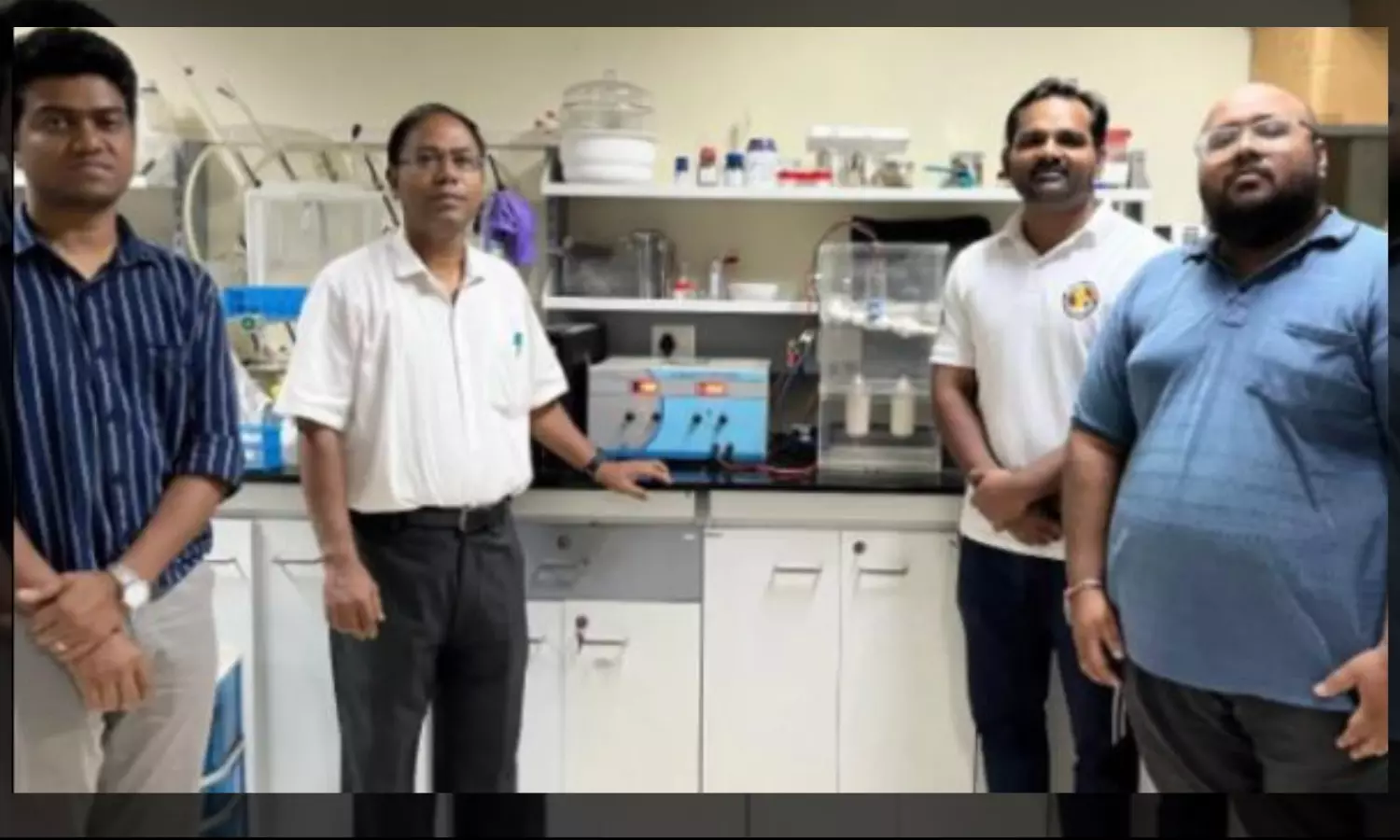
Guwahati: In a major achievement researchers at the Indian Institute of Technology Guwahati have developed a new water-treatment technology that can remove two major groundwater contaminants — arsenic and fluoride — simultaneously within minutes. The low-cost system could eventually help communities in areas where groundwater contamination makes access to safe drinking water difficult.
The researchers have developed a rotating-anode electrocoagulation (RA-EC) reactor that achieved up to 98.2 percent removal of arsenate and 91.8 percent removal of fluoride during their experiments. According to IIT Guwahati, the estimated operating cost was between Rs 18 and Rs 58 for treating 1,000 litres of water, depending on the concentration of contaminants.
Groundwater is an important source of drinking water for millions of people in India. However, naturally occurring contaminants such as arsenic and fluoride can make groundwater unsafe when present at elevated levels.
According to Prof Mihir Kumar Purkait of IIT Guwahati's Department of Chemical Engineering, treating both contaminants together is particularly challenging because they behave differently during conventional purification processes and can compete for removal sites. The IIT Guwahati researchers therefore focused on developing a system that could tackle both pollutants in a single treatment process.
This new IIT Guwahati technology could make arsenic- and fluoride-contaminated water safer to drink.
Conventional electrocoagulation systems use electrodes to generate chemical species that help capture contaminants from water. IIT Guwahati's researchers modified this approach by replacing a stationary aluminium electrode with a rotating aluminium anode.
The movement of the electrode continuously improves mixing inside the reactor and enhances the transfer of contaminants towards the reacting surfaces. It also helps renew the electrode surface and promotes the formation of aluminium hydroxide flocs.
When electricity passes through the reactor, aluminium ions and hydroxide ions are generated. These combine to form microscopic flocs that can capture arsenic and fluoride. The contaminants can then be separated from the treated water through processes including adsorption, coagulation and precipitation.
According to the researchers, rotating the electrode also helps address electrode passivation, a limitation that can reduce the efficiency of conventional electrocoagulation systems.
The team examined how factors such as rotational speed, current density, electrode spacing and treatment time affected the system's performance.
The researchers also tested the technology under more realistic groundwater conditions, including the presence of naturally occurring ions such as calcium, magnesium, bicarbonate, sulphate and phosphate. The system was also evaluated using real groundwater samples collected from Assam, according to IIT Guwahati. The study was led by Prof Mihir K. Purkait and research scholar Mukesh Bharti from the Department of Chemical Engineering, IIT Guwahati.
The estimated operating cost of Rs 18–Rs 58 per 1,000 litres is one of the notable aspects of the research. However, the figure comes from the researchers' initial demonstration and should not be interpreted as the final cost of a commercially deployed treatment plant.
If successfully scaled, the technology could potentially be used in decentralised rural water-treatment systems and community drinking-water facilities. The researchers also see applications in treating arsenic- and fluoride-contaminated groundwater and certain industrial wastewater streams.
The research team plans to develop a pilot-scale continuous-flow version of the reactor, which would move the technology closer to practical field deployment.
