High Import Reliance on Gulf Puts India’s Inflation and Exchange Rate at Risk: CEA

60 percent of our LPG is imported, over 90 per cent via the Gulf. 38 per cent of annual remittances originate in Gulf countries.
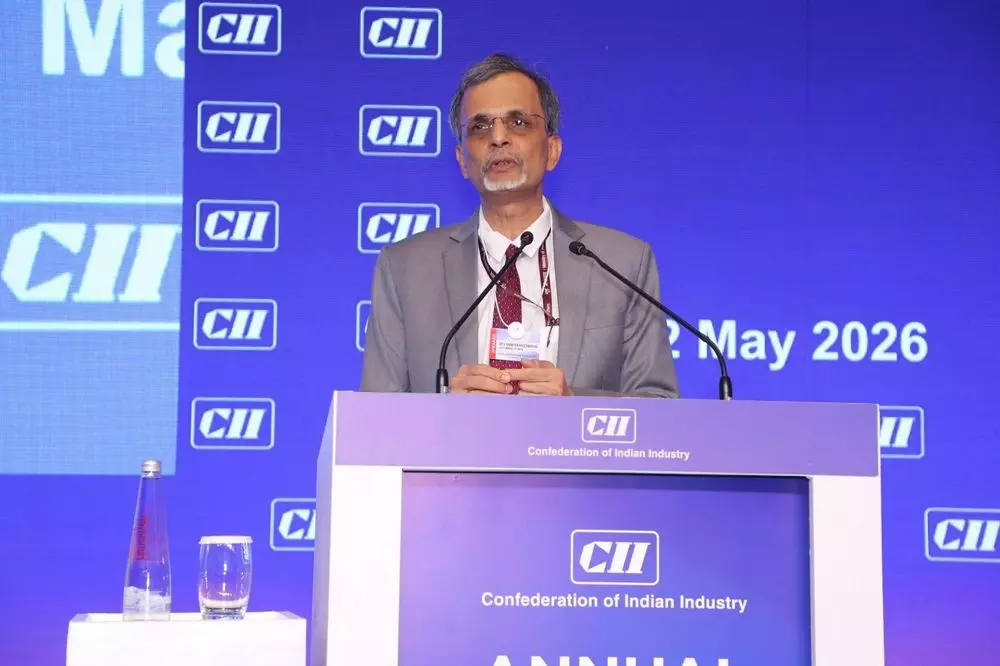
New Delhi: Chief economic advisor (CEA) V Anantha Nageswaran on Tuesday said that the ongoing West Asia crisis is a live ‘balance of payments stress test’, with direct consequences for inflation, the current account, and the exchange rate, but India's fiscal consolidation path, infrastructure investment and reforms provide it a base to navigate the current environment of conflict.
The CEA also said that 87 per cent of India’s crude requirement is imported, of which 46 per cent is transiting through or near the Strait of Hormuz, where the seven-day moving average tanker traffic has fallen to five vessels. 60 percent of our LPG is imported, over 90 per cent via the Gulf. 38 per cent of annual remittances originate in Gulf countries.
“The West Asia crisis, therefore, is not a foreign policy concern that occasionally bleeds into economic planning. It is a live balance of payments stress test, with direct consequences for inflation, the current account, and the exchange rate. Managing the current account credibly, financing it, and preventing further currency depreciation are the central macroeconomic imperatives of FY27," Nageswaran said, while speaking at the CII session here.
The Strait of Hormuz has been effectively shut over the past two months after the US and Israel attacked Iran, pushing global crude prices higher by over 60 per cent. “India's import bill is expected to balloon since it imports about 90 per cent of its domestic crude oil needs, thereby denting India's foreign exchange reserves. However, India’s macroeconomic foundations, fiscal consolidation path, infrastructure investment, and reform record, provide a base from which the country can navigate this environment effectively,” he said.
The West Asia crisis is likely to widen India’s current account deficit (CAD) and lead to a weaker balance of payments (BoP). As per various estimates, India’s CAD, which happens when a country's total imports of goods and services exceed its total exports and income receipts from abroad, is likely to rise to about 1.3 per cent of GDP from about 0.8 per cent in FY26.
Nageswaran further said that India's fiscal consolidation path, infrastructure investment, and the reform record of recent years provide the foundation, but the strategic context demands more than sound macro-management. “It demands a rethinking of how we position ourselves in a structurally altered world,” he said.
Noting that currently, he said that the world is geopolitically contested and dotted with active conflicts and emerging economies that continue to plan on the assumption that the pre-2020 global economic architecture will reassert itself will be making a strategic error.’ “Geo-economic fragmentation, technology bifurcation, the permanent repricing of geo-political risks, and the uneven cost of an industrial policy transition are the structural parameters within which economic policy will be made for the foreseeable future,” he added.
