Government Ramps Up 5-kg LPG Sales Without Address Proof

Over 90,000 cylinders sold in a Single Day
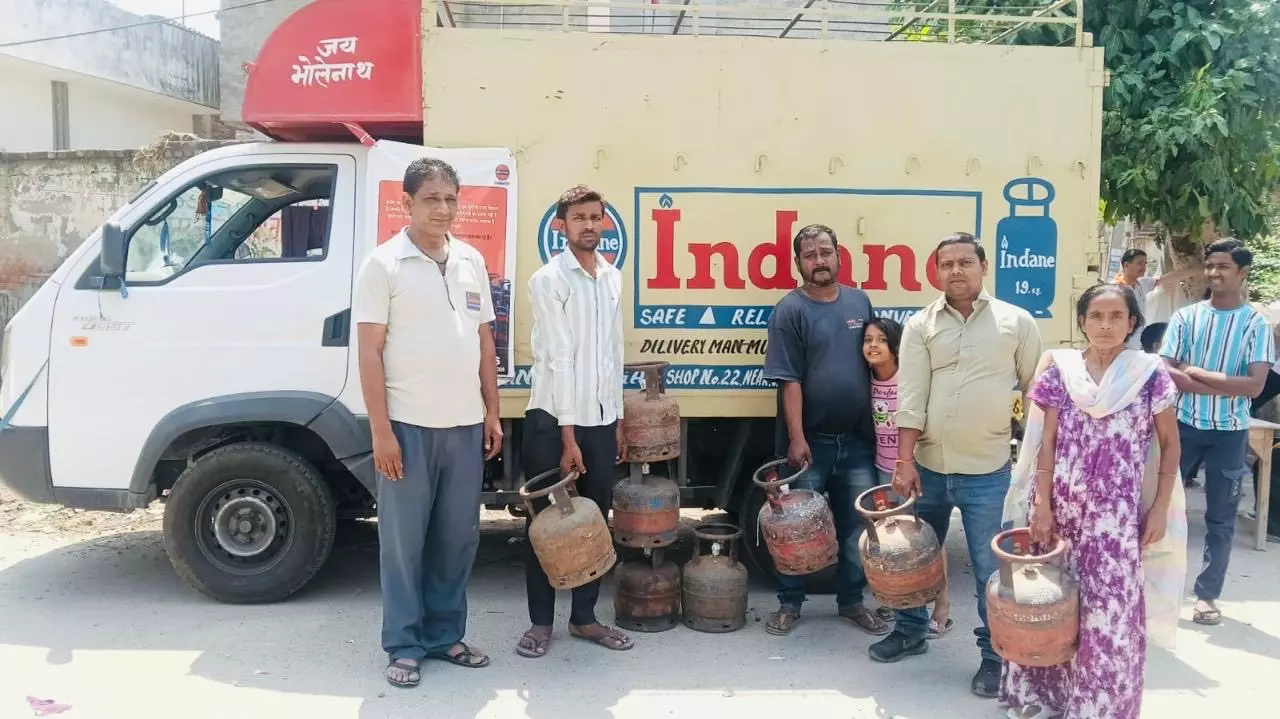
New Delhi: The government on Sunday said that sale of small 5-kg LPG cylinders has been stepped up significantly as easy access to 5 kg FTL cylinders without address proof is available across-the-counter at LPG distributorships. In order to ramp up supplies to meet demand, the government also said that over 90,000 such cylinders have been sold on Saturday alone.
Unlike the subsidised domestic 14.2-kg cylinders, the 5 kg bottles, called FTL cylinders, are priced at market rates and do not require any address proof for procurement from a nearby LPG distributorship. “There are no reports of shortages at LPG distributor points, with more than 51 lakh domestic cylinders delivered during the day and online bookings accounting for 95 per cent of total demand,” the Ministry of Petroleum and Natural Gas said in a statement.
“The 5 kg FTL cylinders are available at nearby LPG distributorships and can be purchased by showing any valid ID proofs. No address proof is required. Since March 23, 2026, about 6.6 lakh 5 kg FTL cylinders have been sold, and more than 90,000 cylinders on Saturday alone,” the ministry said.
“A three-member committee of executive directors of IOCL, HPCL and BPCL, in consultation with state authorities and industry bodies finalises the plan for the sale of Commercial LPG in the states/UTs. A total of 78833 MT of Commercial LPG has been sold since March 14, 2026,” the ministry said.
The government has prioritised supplies of domestic LPG and piped natural gas (PNG), particularly for households and essential services such as hospitals and educational institutions, while boosting refinery output and managing demand by extending LPG refill intervals.
Commercial LPG supplies have been capped at 70 per cent of pre-crisis levels, with smaller cylinders being made widely available to ease pressure on demand. On natural gas, the government said full supplies are being maintained for households and transport, while supplies to fertiliser plants are set to rise to about 90 per cent of average consumption from April 6, supported by incoming LNG cargoes.
