On LGBTQ+ rights, Bhagwat said members of the community were an integral part of society but added that marriage, in Indian tradition, was an institution for family formation.
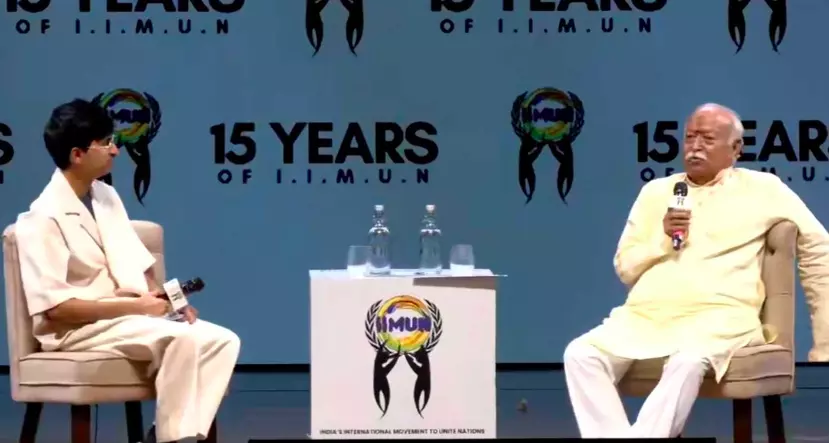
Mumbai:RSS chief Mohan Bhagwat on Thursday said Generation Z should not be viewed as anti-national and called for dialogue with young people, against the backdrop of recent student protests over examination paper leaks.
Speaking at the 15th anniversary conference of the India International Model United Nations (IIMUN) in Mumbai, Bhagwat said Gen Z and Gen Alpha were “more honest and sincere” than the present generation and had a genuine commitment to patriotism and service.
“If Gen Z is protesting, it should not be seen as anti-national. They are our own people and the next generation. Dialogue should be held with them in a warm and friendly manner. I think Gen Z and Gen Alpha are more honest and sincere than the present generation and have a genuine commitment to patriotism and service,” he said.
Interacting with around 2,000 students at the event, Bhagwat said youth taking to the streets should be seen as citizens seeking “system correction”.
“We must understand that if Gen Z is raising its voice, it is not doing so merely for the sake of protesting, but because of a genuine problem or grievance. Their concerns should therefore be taken seriously and addressed,” he said.
On education, Bhagwat reiterated support for allocating six per cent of GDP to the sector and said it should not be treated as a commercial activity. He also cautioned against excessive dependence on social media and urged verification of information through authentic sources.
“Those who have become role models and public icons should act responsibly, keeping in mind that they must not push their supporters into a pit,” he said.
He said protests should aim at improving systems rather than targeting individuals and described them as a healthy part of the democratic process if intended to bring reforms. He added that timely dialogue could prevent escalation.
“If an effective process of dialogue had been maintained from the outset, the situation might not have escalated into protests. Timely dialogue and resolution of grievances are the most important aspects of a democracy,” he said.
On LGBTQ+ rights, Bhagwat said members of the community were an integral part of society but added that marriage, in Indian tradition, was an institution for family formation.
“The LGBTQ+ community is an integral part of our society. However, in our tradition, marriage is not merely an arrangement for two people to live together; it is a social institution that creates a family. Therefore, instead of altering the institution of marriage, a separate legal framework should be created under which same-sex partners can live together. Society will accept such an arrangement,” he said.