It is a win-win deal for both India and New Zealand.
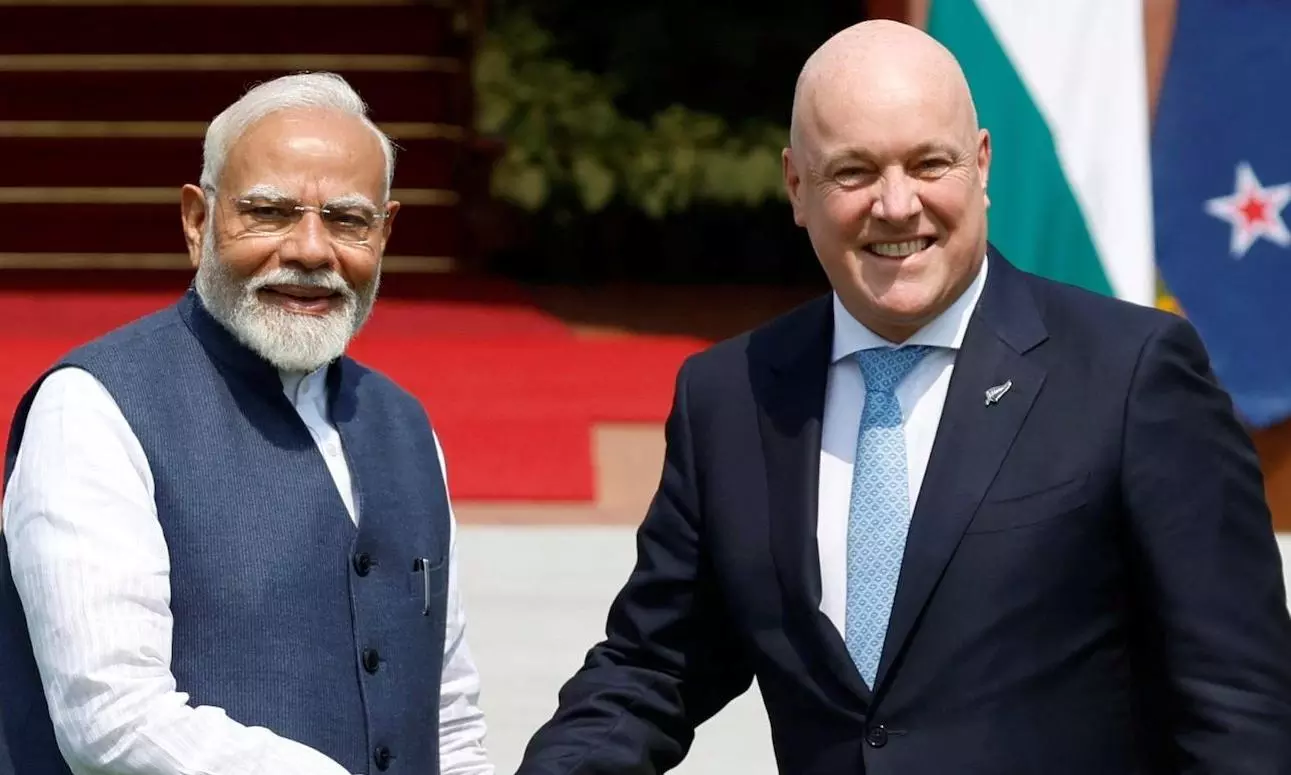
India’s free trade agreement (FTA) with New Zealand, announced on Monday, is part of the country’s effort to reduce its overdependence on any single nation or economic bloc. The government has so far signed free trade deals with Australia, the UK, Japan, Oman and South Korea. New Delhi chose to pursue selective free trade agreements after major economies turned isolationist and walked back on their commitments under the World Trade Organisation (WTO) regime. The erratic nature of the Donald Trump administration also appears to have taught a lesson or two to the Narendra Modi government.
It is a win-win deal for both India and New Zealand. Under the agreement, India has allowed duty concessions on 54.11 per cent of New Zealand’s exports, including sheep meat, wool and coal, from day one. On sensitive farm products — which had blocked the India-US trade deal — New Delhi and Auckland agreed to manage trade flows through tariff-rate quotas, supported by minimum import prices and safeguard measures, providing a template for addressing the issue of farm imports.
Auckland has vast untapped potential for exploiting natural resources such as coal, limestone, gold, silver and fisheries, which will be opened up to Indian companies. On its part, New Zealand will reduce barriers for Indians seeking education or career opportunities. Further, under the Working Holiday Visa programme, New Zealand will allow multiple-entry visas for 1,000 young Indians each year for a period of 12 months.
Trade negotiations with Canada, the European Union and the United States are at advanced stages, widening market access for Indian exporters. These bilateral trade agreements, unlike the earlier strategy of multilateral trade pacts, are expected to allow the world’s fourth-largest economy to negotiate its trade policy without becoming an appendage of either the US-led grouping or the China-led bloc.