Former CJI D.Y. Chandrachud, in his opinion submitted to the joint committee of Parliament, dismissed the Opposition's criticism that the synchronisation of Lok Sabha and state Assembly polls violated the Constitution's basic structure, saying the Constitution never mandated holding national and state elections separately.
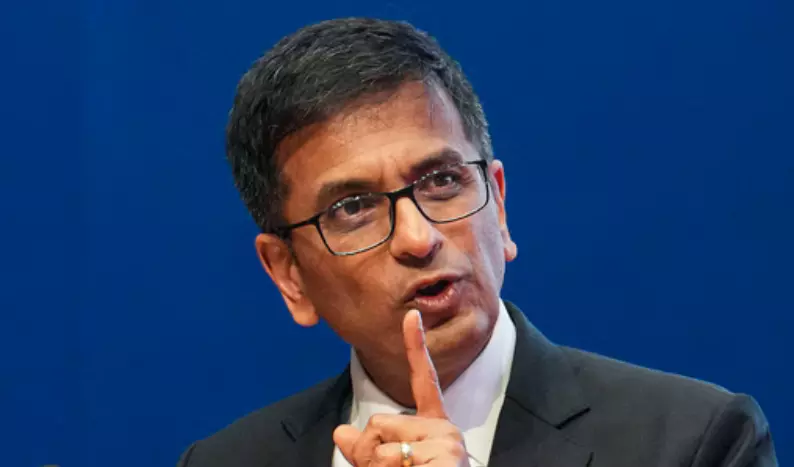
New Delhi: Former Chief Justices of India have reportedly endorsed the constitutionality of the ‘one nation, one election’ (ONOE) concept, while conveying their views to a parliamentary committee on the Bill proposing simultaneous polls. They have also raised concerns over its various aspects, including the power given to the Election Commission, and offered suggestions.
Former CJI D.Y. Chandrachud, in his opinion submitted to the joint committee of Parliament, dismissed the Opposition's criticism that the synchronisation of Lok Sabha and state Assembly polls violated the Constitution's basic structure, saying the Constitution never mandated holding national and state elections separately.
He joined his predecessor, former CJI Ranjan Gogoi in questioning the sweeping powers granted to the Election Commission in the proposed constitutional amendment law without laying down any guidelines for the exercise of the discretion, according to the opinion submitted to the parliamentary panel, PTI reported.
Justice Chandrachud and another former CJI, Justice J.S. Kehar, are scheduled to appear before the committee headed by BJP MP P P Chaudhary on July 11 so that members can interact with them.
Questioning the vast powers the Bill sought to bestow on the EC, Justice Chandrachud said such unbounded authority could enable the poll body to curtail or extend the tenure of a state Assembly beyond the constitutionally-mandated five years, under the pretext that simultaneous elections with the Lok Sabha were not feasible.
The Constitution must define, delineate and structure the circumstances under which the ECI may invoke this power, he added.
Former CJI U.U. Lalit and Justice Ranjan Gogoi had appeared before the committee in February and March, respectively. During the interaction, Justice Gogoi had agreed with the concerns of some members over the excessive power given to the EC, sources told PTI.
Justice Lalit had suggested that simultaneous polls should be rolled out in a staggered manner and not at one go, as he had said that cutting short the remaining terms of assemblies with substantive tenure left for the purpose of synchronising election cycles could be legally challenged.
All three ex-CJIs have not questioned the constitutionality of the concept of simultaneous polls.
Justice Chandrachud said in his written opinion that simultaneous elections will not infringe upon the voters' right to elect their representatives and that the Bill ensures that electors remain continuously represented by their duly elected MPs or MLAs.
He said that arguments opposing simultaneous elections were based on the premise that the electorate was naive and could be easily manipulated.
He said the argument that staggered elections were a part of the Constitution's basic structure (or form part of the principles of federalism or democracy) does not hold. Staggered timing of elections cannot be considered as a feature of the original Constitution, let alone an immutable feature, PTI reported.
His opinion is not without notes of caution over some of the bill's features or the likely implications if it is to be enacted.
Justice Chandrachud appeared to share the concern that simultaneous elections could marginalise smaller or regional parties due to the dominance of better-resourced national parties, saying it is a significant policy aspect that warrants legislative attention.
“To ensure a level playing field among political parties, the rules governing electoral campaigning, particularly those relating to campaign finance, must be strengthened,” Justice Chandrachud said, PTI reported.
While the Representation of the People Act, 1951 and the Conduct of Election Rules, 1961, impose ceilings on the amount a candidate may spend during the election campaign, there are no corresponding limits on the expenditure incurred by political parties themselves, he noted.
This gap in regulation weighs in the electoral process towards parties with greater financial resources, he said.
As the Bill says that the term of a House elected after a midterm poll will be only for the remainder of the five-year term, Justice Chandrachud has said the ability of the government to take any meaningful project will be minimised if its tenure is only of a year or less as the Model Code of Conduct will come into force around six months before the next polls.
Several MPs in the panel have also raised this point about the likely priorities and strength of a government elected for a short period.