Fadnavis Defends Karjat Project, Cites Clean Energy Benefits

Fadnavis, who also holds the Energy portfolio, said the pumped-storage hydropower project was environmentally friendly.
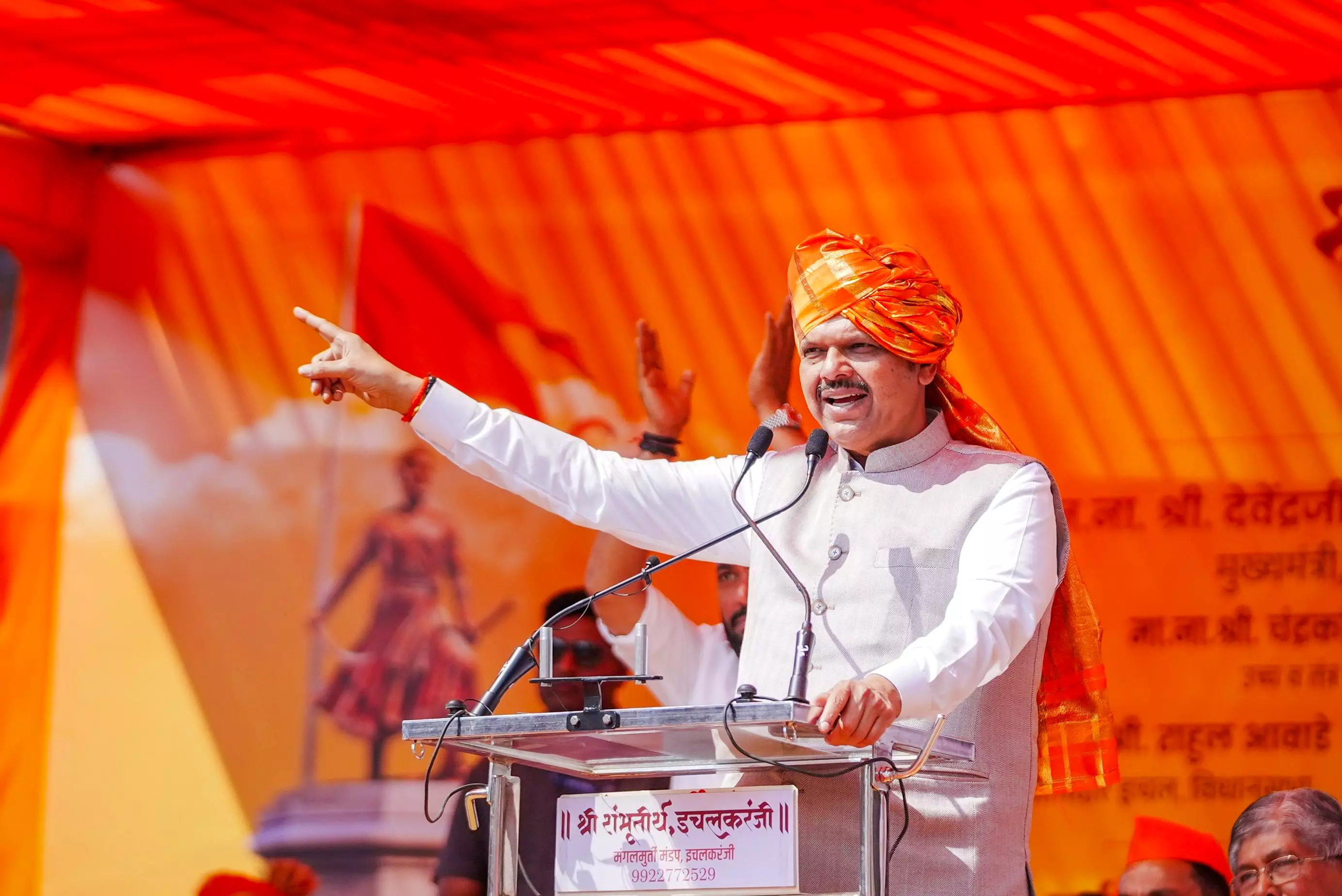
Mumbai: Maharashtra Chief Minister Devendra Fadnavis on Tuesday defended the proposed 3,000 MW pumped-storage hydropower project by Gujarat-based Torrent Power in Karjat taluka of Raigad district, saying the environmental damage caused by it would be temporary compared with its long-term clean energy benefits. Amid opposition from environmentalists and political parties over tree-felling in the Sayedongar area, Fadnavis said 90,000 trees would be planted and twice the project area would be allocated to the Forest Department. He argued that the project would help ensure round-the-clock clean energy. Meanwhile, Shiv Sena (UBT) leader Aaditya Thackeray challenged the Chief Minister to a public debate in Karjat over the environmental impact of the proposed pumped-storage hydropower project.
The Chief Minister’s remarks came a day after Shiv Sena (UBT) leaders Aaditya Thackeray and Sanjay Raut visited the site of the tree-felling in the Saidongar area of Karjat taluka in Raigad district on Monday. The Opposition has alleged that 32,000 trees in the Karjat-Bhimashankar region are being felled in the name of development, causing severe environmental damage. The felling of thousands of large trees has triggered widespread public anger.
Fadnavis, who also holds the Energy portfolio, said the pumped-storage hydropower project was environmentally friendly. “We are currently generating power through solar and wind energy in the state. However, these sources cannot provide electricity round the clock. Solar power is unavailable after 5 pm, while wind power generation is affected when there is no wind. This also affects grid stability. As a result, we are unable to supply renewable energy 24x7. Across the world, pumped-storage systems are being used to stabilise the grid by balancing solar and wind power generation. These systems provide clean energy during peak hours,” he said.
The Chief Minister claimed that generating an equivalent 3,000 MW of electricity through coal-based power plants would require 28 crore trees. He said 90,000 trees would be planted as part of the proposed project and that the Forest Department would be provided with twice the area allocated for the project. In addition, 60,000 trees would be planted at the site.
Describing pumped-storage technology as environmentally sustainable, Fadnavis said the project would have an operational life of around 80 years and would use technology developed entirely in India, eliminating the need to depend on China.
“The damage being caused now is temporary, but we will prevent damage thousands of times greater in the future,” Fadnavis said, defending the project amid environmental concerns.
Responding to demands that the project be relocated to other places in the state, he said the Western Ghats offered some of the most suitable locations for pumped-storage hydropower projects, as such facilities could not be developed just anywhere. He also maintained that the Karjat site was suitable for the project.
Citing China’s pumped-storage plans, Fadnavis said the country had already developed 60,000 MW of capacity and planned to add another 1,60,000 MW by 2030. Thus, more than 2 lakh MW of pumped-storage capacity would be ready. “If India wants to reduce pollution caused by coal-based power generation, pumped storage is one of the solutions,” the Chief Minister said. The Centre had classified pumped-storage projects as green projects, arguing that their environmental impact should be assessed over their entire life cycle.
Meanwhile, Shiv Sena (UBT) leader Aaditya Thackeray on Tuesday criticised the BJP-led Mahayuti government for allowing the diversion of land in ecologically sensitive forest areas of the Sahyadri mountain ranges and tiger corridors in Vidarbha. He alleged that the government was insensitive to environmental concerns and warned that such decisions could push Maharashtra towards ecological problems, including drought.