Student organisations and digital-rights advocates have questioned the deployment of facial recognition systems at a public demonstration
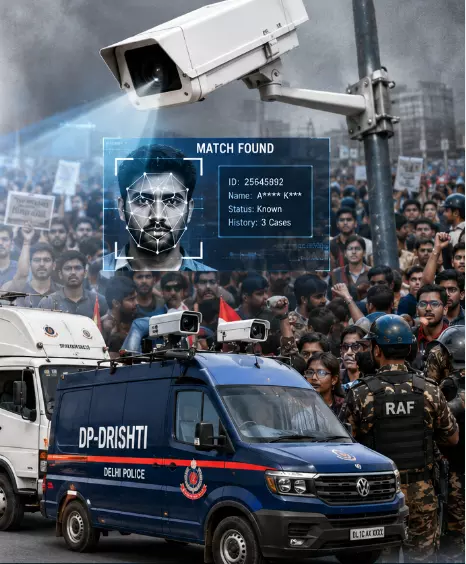
AI-generaged image
Even as the CRPF reportedly examines allegations of “unjustified” and excessive force, including the use of pellet guns by Rapid Action Force personnel, the Delhi Police’s deployment of facial recognition technology during the July 20 student protest has triggered a wider debate over surveillance, privacy and civil liberties.
Defending the use of AI-enabled Facial Recognition System cameras, DP-Drishti and Ikshana surveillance vans, and mobile command vehicles, Delhi police said the technology helped identify more than 2,500 people with criminal backgrounds and prevented anti-social elements from entering the protest site.
Student organisations and digital-rights advocates have questioned the deployment of facial recognition systems at a public demonstration. They argued that indiscriminate scanning of protesters, particularly in the absence of a clearly defined legal framework, could undermine privacy and have a chilling effect on the constitutional right to peaceful assembly.
The parallel controversies over crowd-control methods and technology-driven surveillance have intensified calls for accountability and greater transparency over the conduct of security agencies during the protest.
The Delhi Police has also indicated that its investigation into the alleged conspiracy behind the clashes will continue even if the cases registered over the protest are withdrawn. Investigators are reportedly examining CCTV footage, digital evidence, mobile phone records and witness accounts to identify those suspected of planning or instigating the violence.
Official figures put the number of injured students at nearly 70, including one protester who reportedly lost an eye after being hit by pellets. Police, however, claimed that around 200 security personnel were also injured in the clashes.
( Source : Deccan Chronicle )


Next Story