Explained in 5 minutes: What was the Pathankot attack?

1 Jan 2026 8:02 PM IST1 Jan 2026 8:02 PM IST
On January 2, 2016, India faced a major terror attack as militants stormed the Pathankot Air Force Station, highlighting vulnerabilities at military bases.
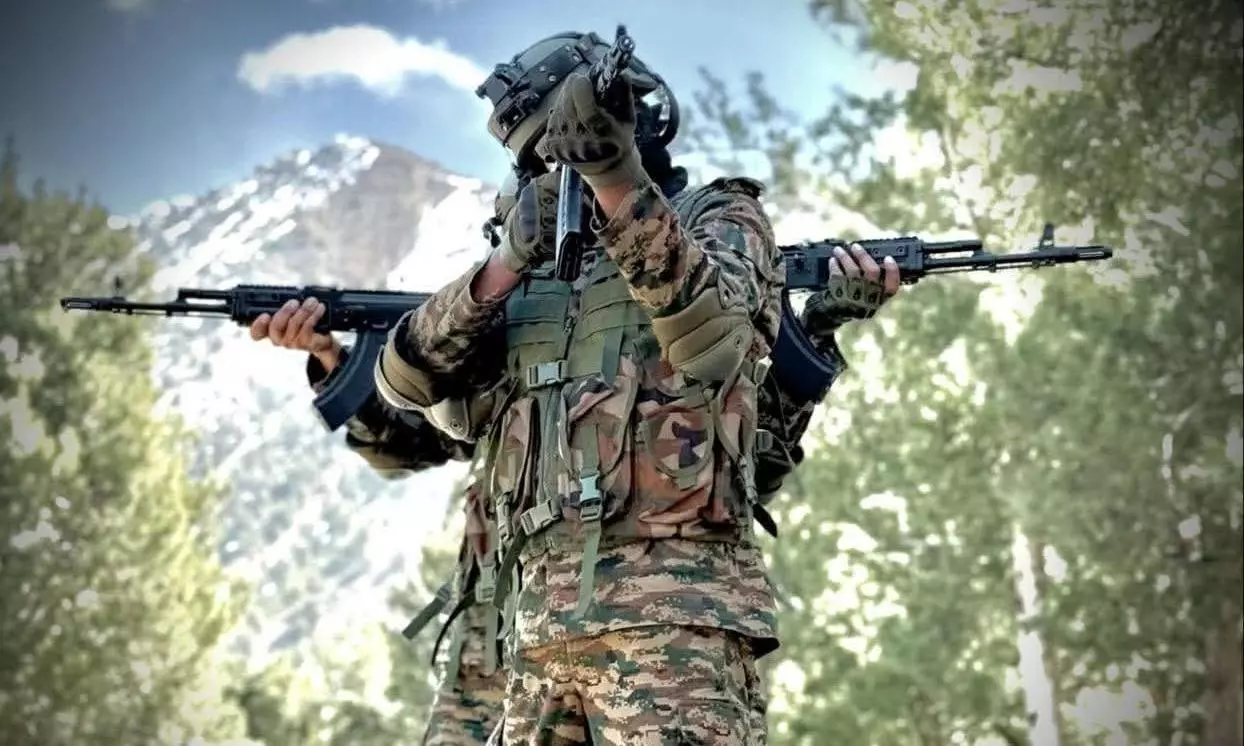
Representational Image
On January 2, 2016, India witnessed one of its most significant terror attacks when heavily armed militants stormed the Pathankot Air Force Station in Punjab, a strategically vital military base near the India-Pakistan border.
What happened?
In the early hours of January 2, four to six terrorists infiltrated Indian territory after crossing the international border from Pakistan. Disguised in Indian Army uniforms, they entered the Pathankot Air Force Station, which houses key assets including attack helicopters.
The attackers were armed with AK-47 rifles, grenades, and explosives. A prolonged gun battle followed, lasting nearly four days, making it one of the longest counter-terror operations in Indian history.
Casualties
Seven Indian security personnel were killed, including officers from the National Security Guard (NSG) and the Defence Security Corps.
All terrorists were neutralised.
No aircraft or major strategic assets were damaged.
Who carried out the attack?
Indian authorities identified the attackers as members of Jaish-e-Mohammed (JeM), a Pakistan-based terror group. Intercepted phone calls, GPS data, and other technical evidence linked the attackers to handlers across the border.
India officially accused Pakistan-based elements of orchestrating the attack. Pakistan denied state involvement but later detained some JeM members, though prosecutions failed to reach a conclusive end.
Why was the Pathankot attack significant?
It occurred just days after a diplomatic outreach, including Indian Prime Minister Narendra Modi’s surprise visit to Lahore in December 2015.
The attack exposed security vulnerabilities at high-value military installations.
It marked a shift in terrorist strategy — targeting air bases rather than civilian locations.
The incident strained already fragile India-Pakistan relations, slowing down peace talks.
The response and aftermath
Following the attack:
India conducted a detailed security audit of all air bases.
Perimeter security, surveillance systems, and coordination between agencies were strengthened.
The National Investigation Agency (NIA) took over the probe and confirmed JeM’s role.
Ten years later
A decade on, the Pathankot attack remains a grim reminder of cross-border terrorism and the persistent security challenges faced by India. It also stands as a turning point that reshaped how sensitive military installations are protected across the country.
( Source : Deccan Chronicle )

Next Story