Escalating Unrest in PoJK Draws Strong Reactions from J&K Leadership

Omar Abdullah Calls for Immediate End to Targeting of Innocent Civilians in Held Territory
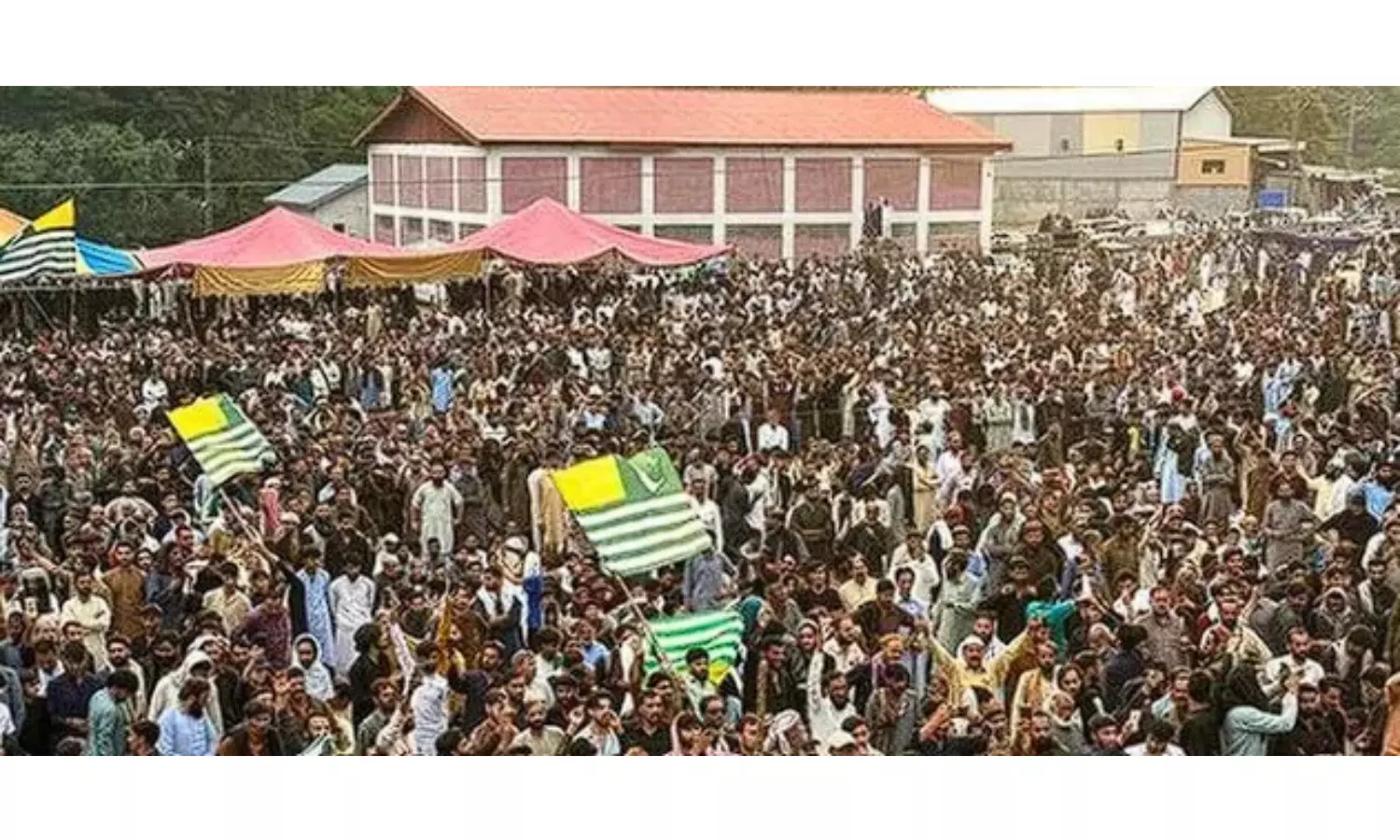
Srinagar: A growing chorus of political leaders in Jammu and Kashmir has expressed deep alarm over the rapidly deteriorating situation in Pakistan‑occupied Jammu and Kashmir (PoJK), where widespread protests have been met with severe force.
Voices across the political spectrum have urged Islamabad to halt the crackdown, restore calm, and respect the dignity and rights of the people living under its administration. They have also pressed New Delhi to articulate its position more clearly, given India’s long‑standing claim over the region.
Chief Minister Omar Abdullah said on Thursday that reports of brute force being used against protesters in PoJK were deeply troubling. He stressed that the targeting of innocent civilians must stop and expressed hope that peace would soon return to the region as well.
Commenting on the terminology used by a reporter who referred to PoJK as “Azad Kashmir,” Abdullah—smiling as he spoke—warned him in a light‑hearted manner that such phrasing could invite trouble. He joked that the reporter should edit the remark out to avoid unnecessary questioning by police.
Former Chief Minister and PDP president Mehbooba Mufti also voiced anguish over the unfolding events. Calling the visuals from across the Line of Control (LoC) “deeply heartbreaking,” she urged Pakistan to adopt a humane approach and choose dialogue over force. In her post on ‘X’, she wrote that peaceful protesters were being met with brute force and insisted that their demands were genuine and deserved to be heard. She argued that no nation strengthens itself by disempowering its own people or silencing them at gunpoint, urging an immediate end to the crackdown and the firing on civilians. Kashmiris, she said, deserve dignity, justice, and the right to be heard.
The BJP’s J&K unit issued a sharply worded statement condemning Pakistan’s “ruthless repression” of people in PoJK. The party claimed that more than 30 protesters had been killed within 48 hours by firing by Pakistani soldiers. It accused Pakistan of attempting to hide the scale of the violence by imposing communication blackouts and restricting media access, asserting that awarding death penalties to protesters demanding basic rights only exposed the brutality of the crackdown.
Earlier National Conference president and former Chief Minister Farooq Abdullah intensified his criticism of the Central Government, urging New Delhi to speak out on the reported killings and human rights violations in PoJK. He argued that if India repeatedly asserts that PoJK is an integral part of the country, it cannot remain silent when people there face violence and hardship. Abdullah said he had already appealed to the UN Human Rights Commission, the Prime Minister, and the External Affairs Minister to intervene and take note of the worsening situation. He insisted that India’s claims over the territory must be matched with concern for the people living there.
The unrest in PoJK has escalated sharply over the past week, with protests led by the Joint Awami Action Committee (JAAC) met by heavy force. Civil society groups and local media reported that Pakistani security forces opened fire on demonstrators in Rawalakot, Mirpur and nearby areas, resulting in significant casualties. Estimates vary due to communication blackouts, but reports suggest between 19 and 30 people may have been killed over two days, with dozens more injured.
Rawalakot witnessed one of the deadliest crackdowns in recent memory on Monday. Eyewitnesses and JAAC leaders alleged that security personnel used live ammunition and tear gas against unarmed protesters participating in a long march toward Muzaffarabad. Some accounts reported 21 deaths on Monday alone, while others claimed 25 fatalities that day and five more on Tuesday. The blackout of electricity and mobile networks has made independent verification extremely difficult.
Videos circulating online show chaotic scenes of protesters fleeing amid gunfire, while hospitals struggled to treat the influx of injured civilians. Activists alleged that security agencies removed bodies from certain locations to suppress evidence and prevent the true scale of the violence from emerging. JAAC leaders described the events as a “massacre” and appealed to international human rights organisations for urgent intervention.
The situation remains fluid, with fears that further escalation could deepen the humanitarian crisis. Leaders in Jammu and Kashmir continue to call for restraint, accountability, and a renewed focus on the rights and dignity of the people of PoJK.
