Election Commission clears air on data manipulation
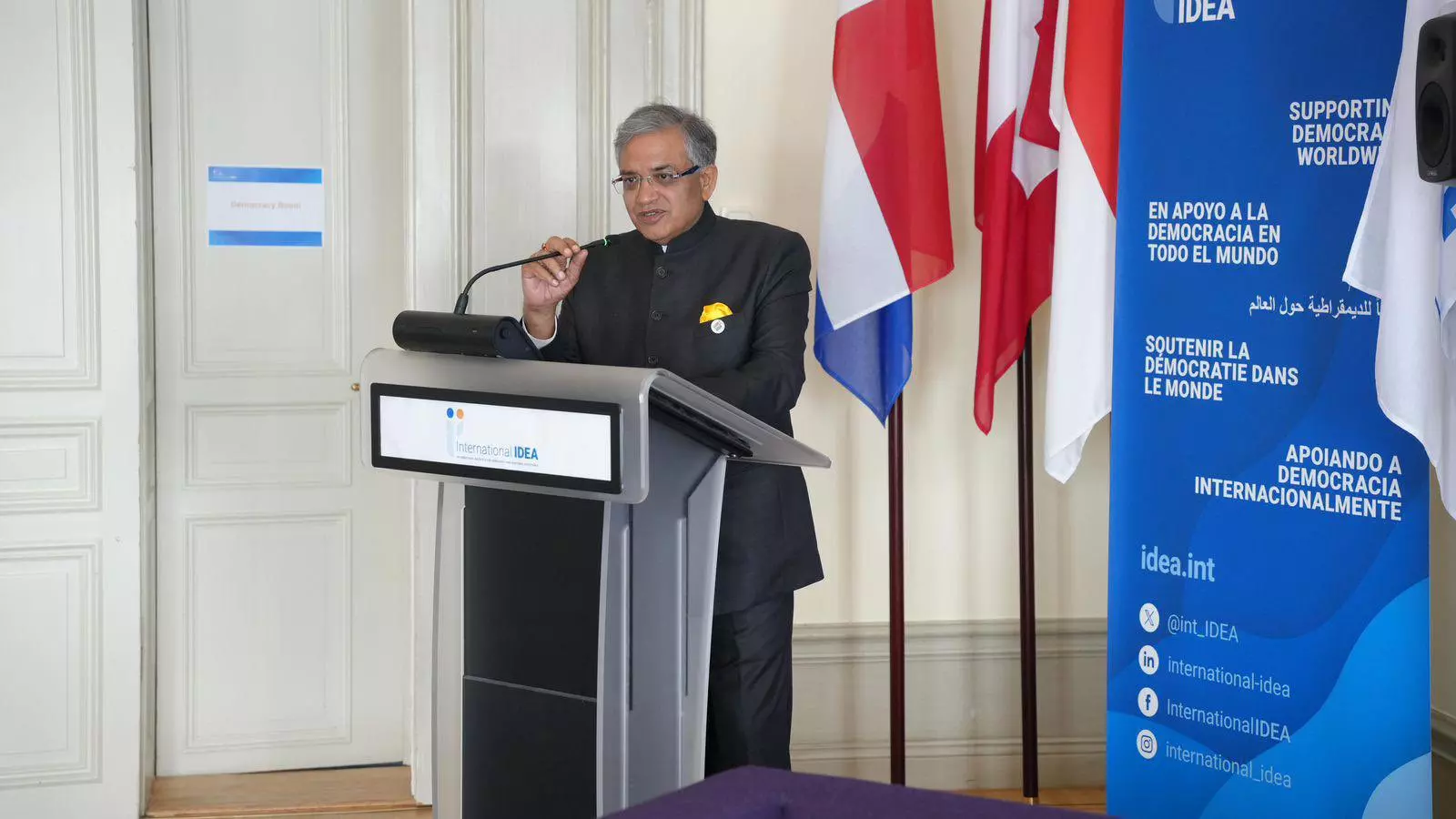
New Delhi: Amid allegations of voter data manipulation, Chief Election Commissioner (CEC) Gyanesh Kumar emphasised that the preparation of electoral rolls in India is among the most rigorous and transparent exercises in the world.
Delivering the keynote address at the Stockholm International Conference on Electoral Integrity in Sweden, Kumar said that electoral rolls are shared annually with recognised national and state political parties, both during revisions and prior to elections, in accordance with legal provisions. He noted that this practice has been in place since 1960, with the system allowing for claims, objections, and appeals to ensure accuracy and accountability.
Reinforcing the integrity of India’s electoral process, the CEC reiterated that the preparation of voter lists is a meticulous and transparent exercise that strengthens public confidence in democratic participation.
Kumar also highlighted the massive scale of election operations conducted by the Election Commission of India (ECI), particularly during parliamentary elections. He emphasised that these are carried out under the close scrutiny of political parties, candidates, general observers, police and expenditure observers, and the media, who, he noted, serve as concurrent auditors throughout the process.
Underscoring the complexity and scale of coordination involved, he said that with over 20 million personnel, comprising polling staff, security forces, observers, and agents of political parties, the ECI becomes the world’s largest operational organisation during elections, surpassing the combined workforce of many national governments and major global corporations.
On the sidelines of the conference, Kumar held bilateral meetings with his counterparts from Mexico, Indonesia, Mongolia, South Africa, Switzerland, Moldova, Lithuania, Mauritius, Germany, Croatia, Ukraine, and the United Kingdom. These discussions focused on voter participation, electoral technology, diaspora voting, and institutional capacity-building.

