Indian Subcontinent Saw Invasions Driven By Territorial Expansion, Religious Motives Since 7th Century: NCERT Book

A new NCERT Class 9 Social Science textbook traces invasions and resistance in the Indian subcontinent from the seventh century onward.
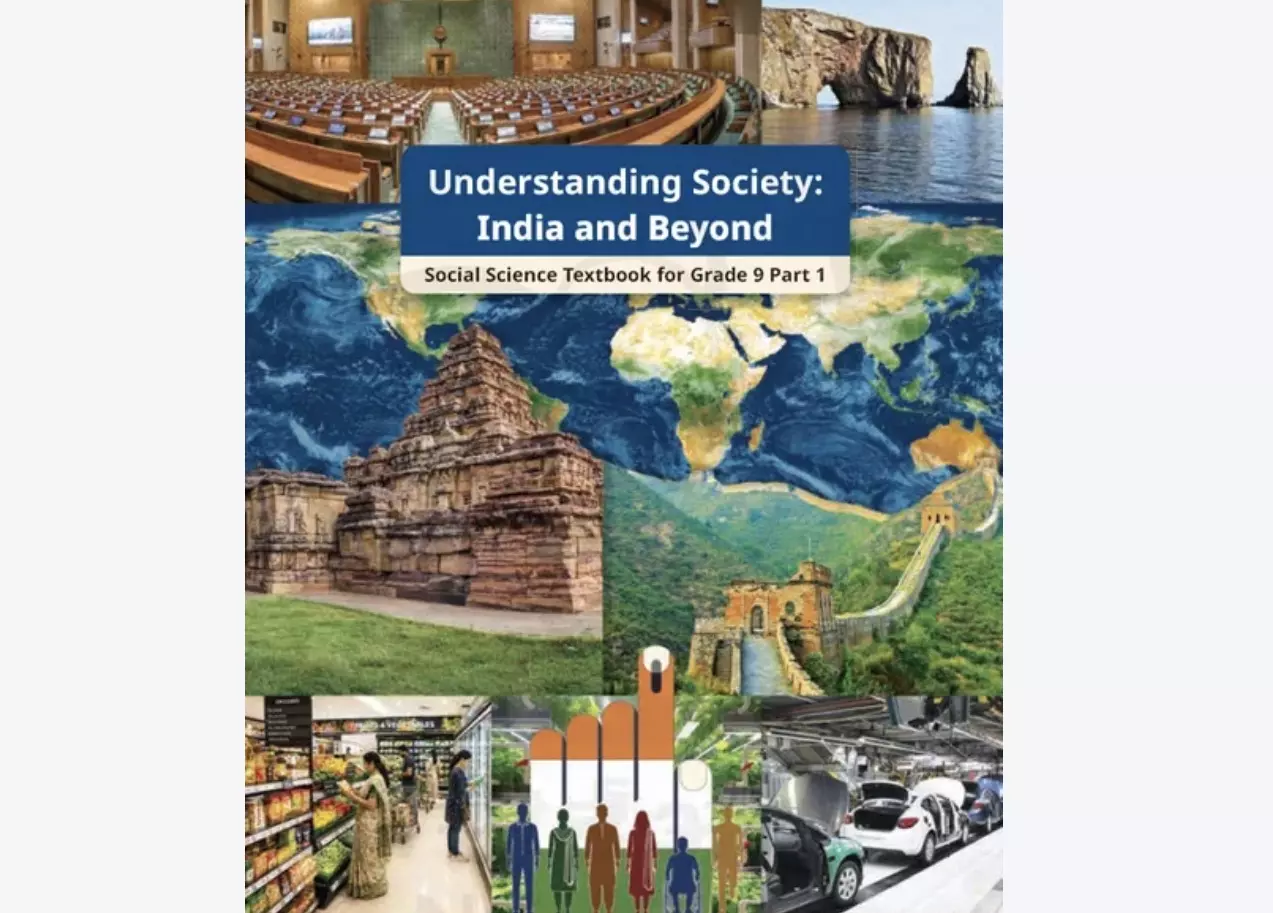
The Indian subcontinent witnessed successive invasions since the 7th century driven by territorial expansion and religious motives, according to the new Class 9 social science textbook of the NCERT.
The book, ‘Understanding Society India and Beyond-Part 2’ was released on Tuesday, six months after the new academic session began. The first part of the textbook was released in June.
“From seventh century onwards, the Indian subcontinent witnessed successive phases of invasions driven by territorial expansion and religious motives. It may also be noted that the surplus agrarian produce of the fertile plains fed by perennial river systems contributed to the people's economic well being and and also became a major reason for the invasions,” the textbook read.
The chapter titled “Resistance and Resilience” documented how and when Indian rulers and communities mounted resistance against Arab, Turkish, Mughal and European forces.
“From the mid 7th century, Arab forces launched invasions by sea and land. These early invaders were confronted and repulsed by Indian rulers across Deccan, Malwa, Kashmir and Rajasthan. Mahmod, the Sultan of Ghazni (in-present day Afghanistan and northeastern Iran), launched his first invasion in 1001 and against Jayapala of the Hindu Shah dynasty,” it reads.
The chapter went on to document how during 11th and 12th centuries, northern and western India bore the brunt of Turkish invasions, while peninsular India remained free from Turkish control.
The book also detailed the resistance of Jats against Mughal empire. It said the community which lived in the Ganga-Yamuna doab (the area between two rivers), faced heavy taxation and exploitation and rebelled under Gokul Jat in 1669.
“The economic hardships combined with Aurangzeb's religious policies led to growing resentment amongst the Jats. The Mughal forces struggled for several months to suppress the 1669 uprising and the Jats continued their resistance,” the chapter reads.
The textbook detailed Sikh resistance and the martyrdom of Guru Arjan Dev and Guru Tegh Bahadur. It explained the growing Mughal state intervention in Sikh affairs from the early 17th century due to the community's expanding socio-cultural influence.
Also documented in the chapter are Battle of Dewair near Udaipur in 1582 and Ahom resistance in Assam, including the Battle of Saraighat in 1671.
“Resistance and resilience are closely linked. Resilience is the backbone of resistance. While a political cause or leadership provides the condition for resistance, the ability to endure comes from resilience. Together resistance and resilience help explain how Indian society sustained itself through different ages, particularly the period under study.
“This period is characterised by both conflict and cooperation, rather than being merely a story of invasion and resistance,” it said.
The book also said the worship of Goddesses was a long standing tradition in India and many kings and princes since the seventh century continued to invoke goddesses such as Kali, Durga, Bhavani and other forms of Shakti as protectors in times of conflict.
“Annamaraja, ruler of Bastar is believed to have received his sword from Manikyadevi (Danteshvari) while Kumara Kampana (Vijayanagara) was believed to have used a goddess-given sword against the Sultanate forces at Madurai. Similarly, Shivaji is also traditionally believed to have obtained a sword from goddess Tulja Bhavani,” it reads.
According to NCERT chief Dinesh Saklani, “Social Science learning at this (secondary) stage is expected to cultivate analytical and discursive abilities, encourage critical inquiry, promote intercultural understanding, and enable learners to participate with confidence and responsibility in civic and social life.”
“It is in this spirit that Understanding Society: India and Beyond, the Grade 9 Social Science textbook for the Secondary Stage, has been conceptualised and developed,” he said.
It also documented accounts of lesser known women rulers ranging from Queen Naiki Devi of the Chaulukya Kingdom to Rani Abbakka Chowta of Ullal.
Queen Naiki Devi was credited with defeating Muhammad Ghori at Kasahrada near Mount Abu in 1178. The chapter titled 'Resistance and Resilience' which has documented successive invasions of Indian subcontinent since seventh century also examines opposition by the Hindu Shahi rulers, Chandellas, Solankis and Chauhans to Turkish invaders.
Rani Abbakka Chowta, who ruled Ullal in present-day Karnataka from 1525 to 1570, repelled Portuguese naval forces. Queen Rudramarevi of the Kakatiya dynasty was also mentioned in the textbook for her resistance to the Delhi Sultanate.
Lesser known resistance stories mentioned in the textbook include Muthu Virappa Nayak of Madurai, who is believed to have refused to bow to a ceremonial slipper sent by the Mughal court and instead placed his own foot inside it.
The textbook also noted that the Gingee (Senji) Fort in Tamil Nadu, held successively by the Vijayanagara Nayakas, Bijapuri Sultans, Mughals, Marathas, French and English, was declared a Unesco World Heritage Site in 2025.
The textbook also featured Tarabai and Ahilyabai Holkar under the theme 'The Mighty Maratha Women'.
