Increased Number Of Indian Students Opting For Non-traditional Courses: Study

21 April 2025 6:36 PM IST21 April 2025 6:36 PM IST
Student interests diversify, spanning AI, data science, nursing, law, arts, design, and architecture.
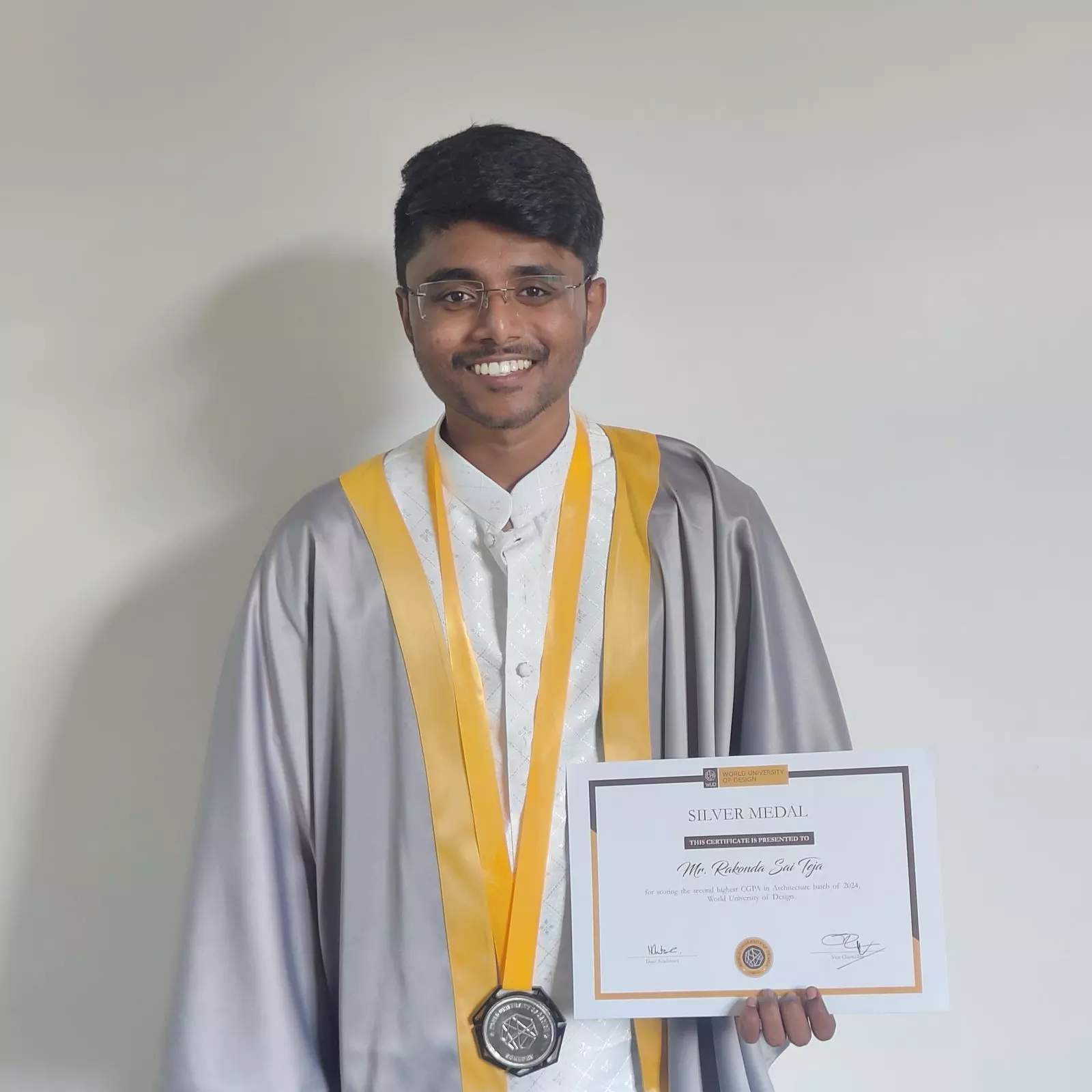
Rakonda Sai Teja (By arrangement)
In recent years, Indian students have increasingly embraced non-traditional courses, choosing from a broad spectrum of fields that reflect global trends and offer opportunities for international exposure. While traditional programs in STEAM continue to be popular due to their strong career prospects, there has been a clear shift toward non-traditional areas such as Fashion, Design, Communication, and architecture.
From emerging fields like artificial intelligence, data science and machine learning and other prominent courses like nursing, law to non-traditional disciplines such as performing arts, communication design, interior architecture & design, the growing diversity in student interests highlights a new wave of academic curiosity. This trend is clearly reflected in their evolving course selections that help them build a career while the trend of universities and colleges offering non-traditional courses is also catching up. While in the past, science and technology courses have always been the first choice among students from southern India, a fraction of students now want to explore unconventional courses. According to a recent report, Telangana has seen a major reduction in core engineering seats, a staggering 70% drop in core engineering seats since 2020, as more students shun traditional courses to pursue new-age streams.
The report further highlighted that despite the limited seats in core engineering, about 25% remain vacant every year. A study conducted by the All India Council for Technical Education (AICTE) indicates that the demand for specialized design courses has increased by nearly 40 percent in the last decade, reflecting the diverse scope and growing popularity of design-related careers among Indian students.
Hailing from Hyderabad, Telangana, Rakonda Sai Teja was always enthusiastic about art and architecture since the 8th standard and decided to study architecture at the World University of Design (WUD) in Sonipat. His project on the Chettinad region also helped him receive the prestigious Chancellor’s Silver Medal at WUD.
“I designed the Chettinad Cultural Heritage Centre, a project that reflected my interests in southern culture. Being a South Indian, I was always drawn to the architecture of Southern India and incorporated its unique style and elements into my design, which ultimately earned me the best thesis award”, said Rakonda Sai Teja, who recently completed his Bachelor of Architecture (B. Arch) from World University of Design.This change may appear unexpected at first, but it is a deliberate action taken by students looking for specialized fields with lots of promises. According to the earlier report Titled “The Current Learning Landscape: Learner’s Perspective” the research reveals that just 29% of college students favor the traditional degree curriculum in India. In contrast, a significant majority—around 65.41%—believe apprenticeship-linked degrees are more valuable, reflecting a growing shift towards courses that offer practical skills and career-building opportunities.
"We at World University of Design offer a diverse range of courses in the creation streams of Architecture, Visual Communication, Fashion Design, Design, Fine and Performing Arts. Our commitment is to prepare students for the future in these non-traditional areas through industry partnerships, professional workshops, and exclusive mentorship opportunities with leaders in the field, providing them with real-world insights that enhance their readiness," said Dr. Sanjay Gupta, Vice Chancellor of World University of Design.
He further added, "We are seeing a growing number of students from across the country choosing our university, with a notable rise in students from southern India, now embracing new-age courses alongside traditional fields like medicine and nursing."This change is closely linked to evolving job trends, increased post-study work opportunities, technological advancements, and shifting societal demands. Beyond niche fields, Indian students are also increasingly pursuing advanced, industry-specific programs such as Industrial Engineering, Textile Design, Animation & Game Design, and other professional courses tied to Industry 4.0. Notable Indian universities, such as the National Institute of Design, BITS Pilani, and the World University of Design, are introducing a range of innovative programs like Art Communication Design, Product Design, Transportation Design, Fashion Communication and Animation. These new-age courses aim to offer world-class education within India, reducing the need to study abroad.Students now want to examine opportunities in unexplored areas.
Increased awareness, high risk appetite and desire to pursue hobbies are making the student chuck conventional courses and try out something new and different.Several positive reforms, including the National Education Policy (NEP) and the UGC's announcement encouraging universities to introduce apprenticeship and internship-embedded degree programs, highlight the need for our education system to better align with the aspirations of today’s youth.
To achieve this, there is a growing demand for the universalization of employability-focused courses that equip students with the practical skills needed in the workforce.
( Source : Deccan Chronicle )

Next Story