EC Says ECINet Decentralised, Rejects Form 6 Questions

The ECI said it neither operates nor controls access to ECINet's day-to-day functioning and provides only centralised cybersecurity protection.
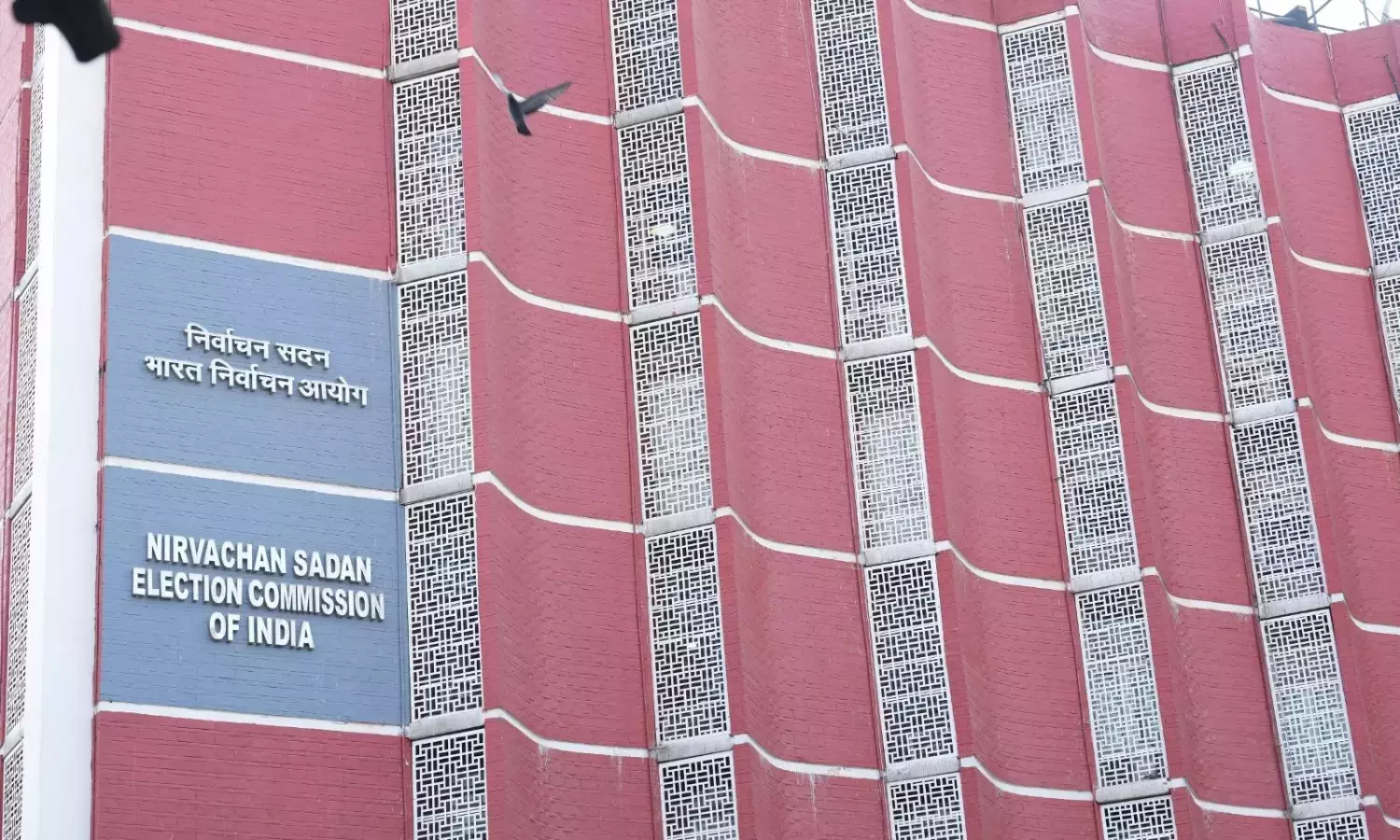
New Delhi: In a bid to counter criticism over the functioning of its ECINet software and changes linked to voter registration, the Election Commission of India (ECI) on Thursday clarified that ECINet is a decentralised platform accessible to state and Union Territory election officials for performing their statutory duties.
The ECI said it neither operates nor controls access to ECINet's day-to-day functioning and provides only centralised cybersecurity protection. It also clarified its position on the contentious issue of an additional declaration linked to Form 6 for new voters during the Special Intensive Revision (SIR).
“ECINet is a decentralised platform designed in accordance with the RP Act, 1950, RP Act, 1951, and instructions issued by the ECI from time to time. As per law, booth-level officers (BLOs), assistant electoral registration officers (AEROs), electoral registration officers (EROs), district election officers (DEOs) and chief electoral officers (CEOs) perform their respective statutory functions on ECINet using unique IDs and passwords. No one else can perform their statutory functions on ECINet, including any other officer of the ECI,” an ECI official said.
The official said the ECI provides cybersecurity protection to ECINet to ward off hacking attempts. The platform faced around 68 lakh malicious attempts on the counting day of Assembly elections held earlier this year, he said.
Referring to the deletion of 97 names from the electoral rolls in Goa, ECI officials attributed it to an error by the electoral registration officer (ERO), who had mistakenly rejected claims submitted by voters after they were issued notices and furnished the required documents.
“These 97 voters had gone to the ERO, who heard them. But on the ECINet app, he mistakenly clicked the ‘not satisfied’ option, which led to rejection of their claims. The ERO quickly realised his mistake and tried to roll back that step, which the software does not allow. ECINet allows an action only once,” officials said.
They said the next authority who could order the inclusion of the names on appeal was the sub-divisional magistrate (SDM). “Hence, inclusion and deletion of names are statutory powers of state polling officials which no one can take away,” they said. It was not immediately clear whether the 97 voters appealed to the SDM. The SIR exercise in Goa concluded in February.
However, a report in The Indian Express said that between February 11 and 17, the Goa Chief Electoral Officer’s office wrote eight times to senior deputy election commissioner Gyanesh Bharti, with copies to director-general of IT Seema Khanna, seeking a rollback option that would allow EROs to reverse the deletions following a Supreme Court direction.
According to the report, the requests went unanswered as the deadline for publication of the final electoral roll approached and the provision was not enabled in time, leaving the 97 voters out of the final roll.
On questions over the legality of an additional declaration linked to Form 6 for new voters during the SIR, ECI officials said the provision was introduced as part of the SIR process and had subsequently been upheld by the Supreme Court. They said the decision was unanimous and signed by all three Election Commissioners.
Officials said that under Sections 14 and 19 of the Representation of the People Act, 1950, a person whose name is not on the electoral roll or who attains the age of 18 on January 1, April 1, July 1 or October 1 can register as a voter as part of the regular updation of electoral rolls without waiting for a revision exercise.
They said Special Summary Revision (SSR) and SIR are undertaken under Section 21(3) of the Act and there is no legal requirement to conduct both together.
Citing official documents, ECI officials said the declaration requirement formed part of the June 24, 2025, Bihar SIR order. The same provision was included in subsequent SIR orders covering 12 states and Union Territories in October 2025 and 19 states and UTs in May 2026, with unanimous approval.
The ECI maintained that Form 6 itself had not been amended and that an additional declaration form was introduced to make the process easier for voters. Those furnishing the declaration need not submit other documents, officials said, adding that the provision had been uniformly applied during the SIR across states and UTs.
Officials also cited a May 27 Supreme Court judgment which, they said, held that the SIR exercise did not conflict with the Representation of the People Act or the Registration of Electors Rules, 1960, and was traceable to Section 21(3) of the Act read with Article 324 of the Constitution.
The clarification came after a media report said Election Commissioner Vivek Joshi had recorded that Form 6 could not be changed through SIR instructions without amending the Registration of Electors Rules, 1960, and that Election Commissioner S.S. Sandhu had concurred with this view. The report said Sandhu subsequently described the reported change as “unauthorised and illegal”.
