Eastern Bhubaneswar Needs Greater Seismic Attention: NCS Study

The NCS study found that shear-wave velocity in the upper 30 metres ranged from 360 to 760 metres per second across much of the city, indicating relatively firm ground.
Bhubaneswar: The eastern parts of Bhubaneswar, particularly areas along the Kuakhai and Daya rivers, are more vulnerable to earthquake-induced ground shaking than the city's central and western zones, according to a seismic microzonation study conducted by the National Centre for Seismology (NCS).
Presenting the findings, NCS Director Dr G. Suresh said the eastern belt had softer soil, deeper bedrock and a greater potential for amplification of seismic waves, warranting stricter attention to building design and construction.
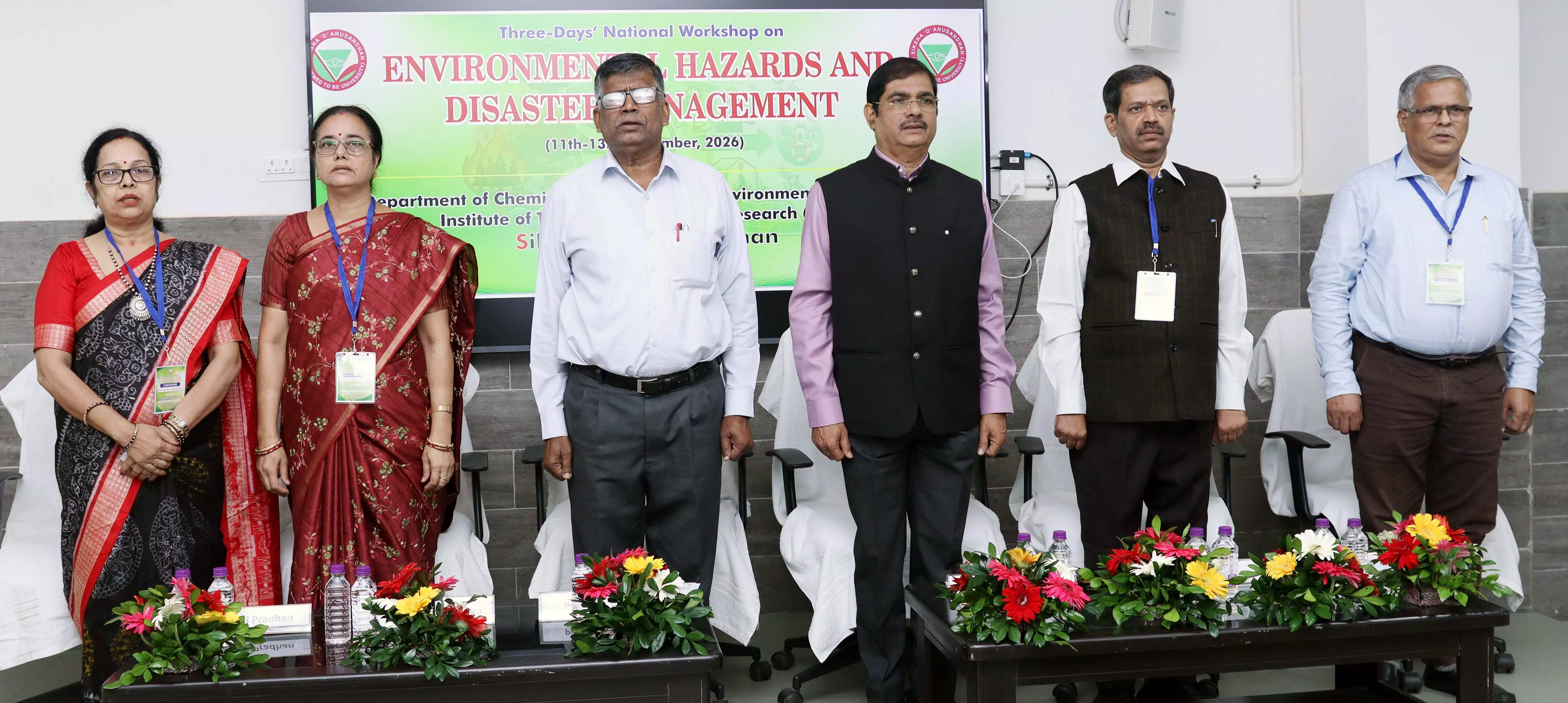
Addressing a national workshop on 'Environmental Hazards and Disaster Management' at SOA Deemed to be University here on Wednesday, Dr Suresh said Odisha fell under Seismic Zones II and III, with the Mahanadi valley stretching from Jharsuguda and Sambalpur through Angul, Cuttack and Bhubaneswar to Paradip and Puri classified as a moderate-risk Zone III region.
The NCS studied 420 sq km of the Bhubaneswar Development Plan Area in July 2025, measuring ground vibrations at 1,650 locations, drilling boreholes up to 30 metres and analysing more than 1,200 soil samples.
The study found that shear-wave velocity in the upper 30 metres was 360-760 metres per second across much of the city, indicating relatively firm ground. However, it dropped to 184-360 metres per second in the eastern areas, suggesting softer soil. Engineering bedrock was found at depths of 2-20 metres in the western and central parts, compared with up to 86 metres in the east.
The NCS also found that soil conditions could amplify earthquake shaking up to three times. In areas such as Jagamara, peak ground amplification ranged from two to five times, while the microzonation map indicated ground acceleration of 0.14-0.17 g, nearly twice the 0.08 g design value prescribed for Zone III under the national building code.
Similar concerns were identified in Chakeisiani, Pahala, Old Town and Uttara.
Dr Suresh said the overall hazard index was low across most of Bhubaneswar but moderate to high in parts of the eastern belt. He stressed that the findings should prompt better engineering rather than public alarm.
“Tall buildings, bridges and other structures in the eastern part of the city need more attention than those in the centre and the west,” he said, emphasising the need to assess local ground conditions before construction.
SOA Vice-Chancellor Prof. Pradipta Kumar Nanda presided over the inaugural session. The three-day workshop was jointly organised by the university's Centre for Environment and Climate and the Department of Chemistry of its Institute of Technical Education and Research.
